

30 Stunning Outdoor LED Strip Lighting Ideas for Your Home?
Your home’s exterior has incredible potential, but as darkness falls, all its beautiful features disappear. You’re looking for a way to add drama, safety, and a high-end feel to your property, but traditional bulky floodlights feel dated and harsh.
Modern LED strip lighting is the solution. From subtle under-rail deck lighting and floating stair effects to dramatic landscape highlights and functional cove lighting, these 30 ideas will show you how to transform your home’s exterior into a sophisticated and inviting masterpiece.
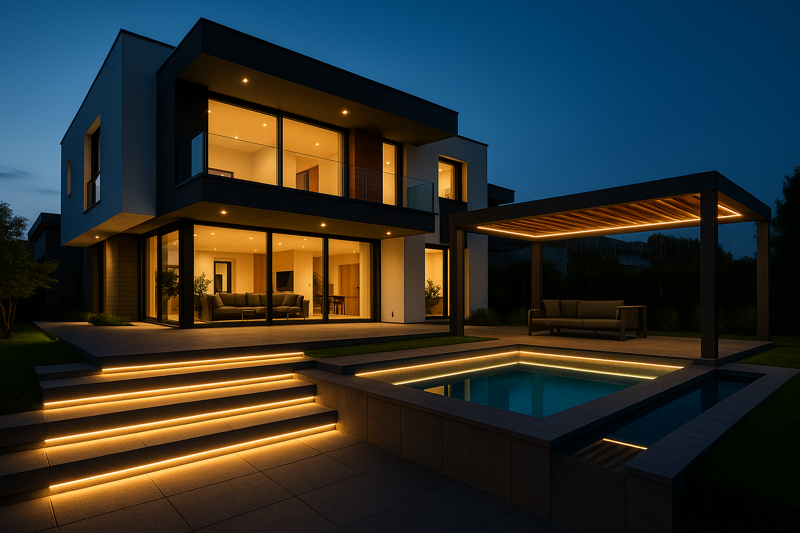
As someone who manufactures these lights, I’ve seen them used in ways I never could have imagined. They are far more than just a light source; they are a design tool. For a professional, mastering these applications is the key to offering clients truly unique and high-value lighting solutions. This isn’t just a list of ideas; it’s a playbook for creating emotion, enhancing architecture, and adding major curb appeal. Let’s explore the possibilities, from the ground up.
How Can You Transform Patios and Decks into Outdoor Living Rooms?
Your deck or patio is a key entertaining space, but it’s unusable after dark without harsh, glaring floodlights. You want to create an inviting, resort-like ambiance that encourages guests to stay and relax.
Use indirect lighting to define the space and create a warm glow. Install LED strips under railings, along the base of retaining walls, or beneath the coping of patio edges. This hides the light source while providing soft, functional, and beautiful illumination.
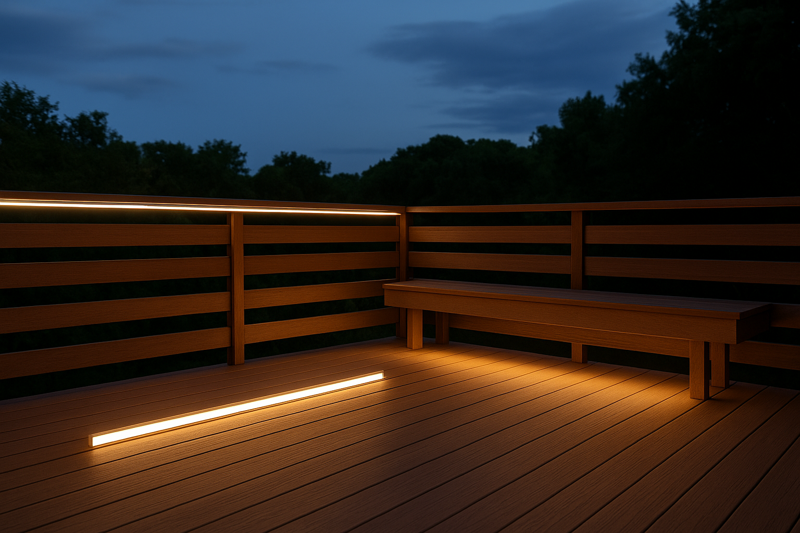
This is one of the most popular and effective applications for outdoor LED strips. The goal is to see the light, not the fixture. By tucking the strips away, you eliminate glare and create a seamless, integrated look. This technique makes spaces feel larger and more intentional. For a contractor or designer, it’s a simple way to add a "wow" factor that clients immediately love. The key is using a high-quality, dimmable, and weatherproof (IP67) strip that will provide consistent color and brightness for years to come.
A Deeper Dive into Deck and Patio Ideas
Let’s break down some specific, high-impact techniques for these spaces.
-
Under-Railing Illumination1
This is the classic, can’t-miss application. Mounting an LED strip on the underside of a deck or patio handrail provides perfect pathway lighting without any glare.
- Safety: It clearly illuminates the deck edge and any nearby steps.
- Ambiance: It casts a soft, downward glow that creates a relaxed atmosphere.
- Installation: Use a diffused-cover aluminum channel to protect the strip and create a smooth, dot-free line of light.
-
Floating Bench and Planter Effect2
Create architectural drama by making built-in features appear to float.
- Technique: Install a strip light tucked deeply underneath the overhang of built-in benches, large planters, or outdoor kitchen islands.
- Effect: The light washes the surface below, creating a shadow gap that tricks the eye into seeing the object as floating weightlessly above the ground. It’s a high-end designer trick that is surprisingly easy to achieve.
-
Perimeter and Edge Lighting3
Define the boundaries of your space.
- Under-Coping: Tucking a strip light under the coping (the overhanging edge) of a stone patio or retaining wall is a fantastic way to highlight the texture of the stonework and clearly mark the edge of the space.
- In-Floor (Advanced): For a truly integrated look, special floor-rated aluminum channels can be set into concrete or between deck boards. This requires careful planning but creates an incredibly clean, modern look. This must use an IP68-rated strip.
Here are a few more deck and patio ideas to consider:
| Idea Number | Application | Best For | Professional Tip |
|---|---|---|---|
| 1 | Under-Railing Lighting | Safety and ambiance on any deck. | Use a 45-degree angle channel to direct light inward. |
| 2 | Floating Bench Seating | Modern decks with built-in furniture. | Place the strip far back to hide the source and maximize the shadow. |
| 3 | Patio Under-Coping | Highlighting texture on stone or paver patios. | Choose a warmer color temperature (2700K-3000K) to enhance natural materials. |
| 4 | Integrated Pergola Lighting4 | Defining an overhead entertaining space. | Route channels inside the beams for a seamless, built-in look. |
| 5 | Outdoor Kitchen Task Light5 | Illuminating countertop prep areas. | Mount strips under upper cabinets or shelves. Use a high CRI strip for accurate color. |
| 6 | Bar Top Glow6 | Creating a focal point for an outdoor bar. | Install a strip under the overhanging edge of the bartop. |
| 7 | Hardscape Wall Washing | Highlighting beautiful retaining walls. | Graze the light down the wall from a hidden lip at the top. |
How Can You Make Steps and Pathways Both Safer and More Dramatic?
Stairs and walkways are a major trip hazard at night. You need to illuminate them for safety, but you want to do it in a way that enhances your home’s architecture rather than just bolting on a clumsy fixture.
Turn stairs into a stunning architectural feature by tucking LED strips under each tread. This "floating stairs" effect provides perfect, glare-free pathway lighting that is both incredibly safe and visually spectacular, guiding visitors with a line of light.
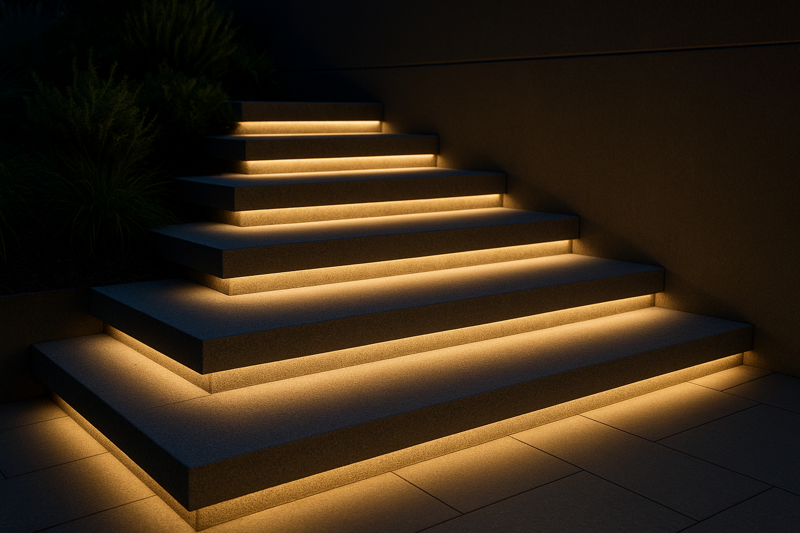
This application is the perfect marriage of form and function. It solves a critical safety problem in the most elegant way possible. From a contractor’s perspective, this is a high-value upgrade that homeowners are excited about. The effect is so dramatic that it becomes a central feature of the home’s evening profile. The key here is durability and waterproofing. Given their location near the ground, these strips must be at least IP67 and housed in a sturdy aluminum channel to protect them from foot traffic, water, and debris.
A Deeper Dive into Pathway and Stair Ideas
Illuminating horizontal and vertical pathways requires specific techniques.
-
The Classic Floating Stair
This is the gold standard for stair lighting.
- Placement: The strip is mounted in a channel on the underside of the stair tread’s "nosing" or overhang.
- Effect: It washes light down the face of the riser below and onto the step, clearly defining each step without creating any upward glare for the person walking.
- Wiring: This requires careful planning to run low-voltage wires discreetly. Often, a channel can be routed into the side stringer of the staircase to hide the wiring runs for a perfectly clean installation.
-
Pathway Edging
For long walkways, lighting the path is key.
- Low-Level Definition: Install a continuous strip along the base of a short landscape wall or the edge of a raised planter bed that runs parallel to the walkway. This creates a clear visual guide.
- Hidden Source: Like with decks, the goal is indirect light. The strip itself should be hidden, with only its soft glow visible on the path surface.
-
Handrail Integration
If your stairs or pathways have handrails, they are the perfect place for lighting.
- Continuous Guide: Integrating a light into the underside of a handrail provides an uninterrupted line of light that guides users all the way up or down the path.
- Code Compliance: In many areas, lighted handrails can help meet building code requirements for staircase illumination in a much more attractive way than traditional fixtures.
Here are more ideas for safely and beautifully illuminating walkways:
| Idea Number | Application | Best For | Professional Tip |
|---|---|---|---|
| 8 | Under-Tread Stair Lighting | The ultimate in stair safety and drama. | Use a very slim, diffused channel. Pre-wire during construction if possible. |
| 9 | Pathway Side-Wall Lighting | Long, straight walkways next to a wall. | Mount the channel about 6-12 inches (15-30cm) off the ground for a good spread. |
| 10 | Handrail Underside Illumination | Stairs and ramps requiring continuous guidance. | Ensure the channel and strip are IP67 rated, as they are very exposed. |
| 11 | Driveway Edge Marking | Defining a driveway for parking and curb appeal. | This is a job for heavy-duty, IP68 in-ground channels. |
| 12 | Single Step Definition | Highlighting a potentially hazardous single step-up. | A single, short strip under the step nosing is all that’s needed. |
| 13 | Ramp Lighting | Accessibility ramps that need to be safe at night. | Use the handrail technique for smooth, even lighting. |
| 14 | Stepping Stone "Splash" | Modern, minimalist landscape paths. | Place a small, upward-facing IP68 "puck light" next to each stone. |
How Do You Use Light to Showcase Your Landscaping and Garden?
You’ve invested time and money into beautiful trees, flower beds, and garden features, but they all vanish into a black void at night. You want to highlight your landscape’s best features and create a sense of depth and magic.
Use light like a paintbrush. Place uplights at the base of architectural trees, tuck strips into garden walls to silhouette plants, and backlight translucent panels or water features to create glowing focal points. It’s about creating contrast, shadow, and mystery.
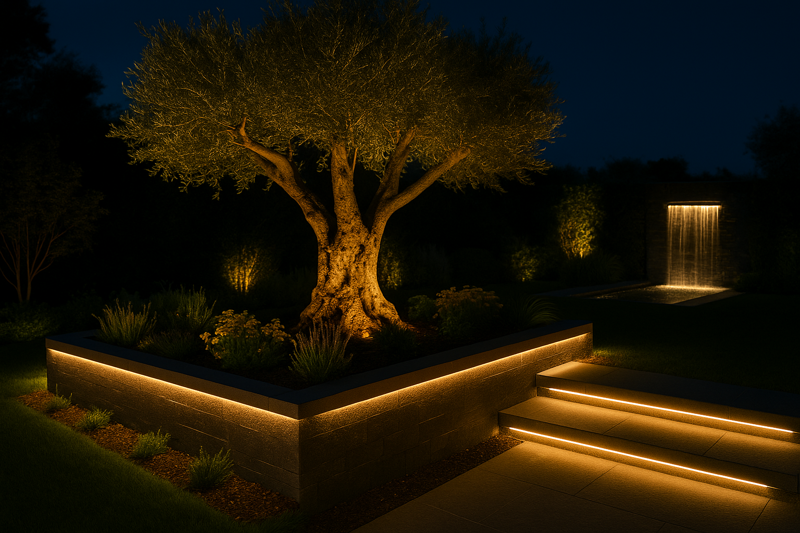
This is where a lighting professional can truly show their artistic side. Landscape lighting isn’t just about visibility; it’s about creating a scene. Unlike a single, powerful floodlight that flattens everything, using multiple, smaller, hidden LED sources allows you to "sculpt" the yard with light and shadow. You can draw attention to a beautiful Japanese maple while letting other areas fall into soft shadow. For these applications, you need robust, fully waterproof IP67 or IP68 products that can withstand being buried, soaked, and exposed to soil and fertilizers.
A Deeper Dive into Landscape Lighting Ideas
Let’s explore specific techniques for making your garden come alive after sunset.
-
Architectural Uplighting7
This is the technique for highlighting specimen trees, columns, or textured walls.
- Technique: While traditionally done with spotlights, a short, powerful strip of light placed at the base of a tree with textured bark (like a pine or oak) can create a beautiful "grazing" effect that shows off the texture.
- Placement: Position the light to one side to create more interesting shadows, rather than aiming it straight at the center.
-
Flower Bed and Garden Wall Silhouetting8
This is an indirect lighting technique that focuses on shapes.
- Garden Walls: Mount a strip on the back of a low garden wall, aiming it back at a fence or taller wall behind it. This creates a soft glow and perfectly silhouettes any plants in front of it.
- Raised Beds: Tuck a strip under the top lip of a raised flower bed. This washes light down the face of the bed, highlighting its material, and also spills a soft halo of light onto the plants or mulch within.
-
Water Feature Magic9
Water and light are a magical combination.
- Submerged Glow10: Place a fully submersible IP68 LED strip inside a fountain basin or along the back edge of a waterfall weir. The light refracts through the moving water, creating a stunning, shimmering effect. Always use low-voltage (12V or 24V) strips for this for safety.
- Pond Edging: Conceal an IP67 strip under the coping around a koi pond to provide a gentle glow that reflects off the water’s surface, allowing you to see the fish at night.
Here are more ideas for turning your garden into a nighttime oasis:
| Idea Number | Application | Best For | Professional Tip |
|---|---|---|---|
| 15 | Tree Trunk Grazing | Highlighting trees with interesting bark. | Use a short, high-output IP67 strip in a ground-mounted channel. |
| 16 | Flower Bed Edge Glow | Defining the shape of garden beds. | An easy and highly effective way to bring order to a sprawling garden at night. |
| 17 | Waterfall Backlighting | Creating a glowing sheet of water. | Must be an IP68 strip. Silicone is best as it resists mineral buildup. |
| 18 | Pond Surface Reflection11 | Creating beautiful reflections in still water. | Hide the source under the coping so you only see the reflected light. |
| 19 | Silhouette Wall Wash | Creating plant silhouettes. | Great for ornamental grasses and ferns. |
| 20 | Gazebo or Pavilion Ambiance12 | Turning a garden structure into a focal point. | Weave strips into the roof structure for a "starlight" effect. |
| 21 | Fence Line Downlighting | Creating depth and defining property lines. | Mount a continuous strip on top of a fence, aiming down. Adds security and style. |
| 22 | Glowing Planters | Turning standard pots into light features. | Wrap a strip around the inside lip of a large planter or use a translucent pot. |
How Can You Use Strips on the House Itself?
Your home’s architecture has character—unique rooflines, textures, and details. You want to highlight these features to give your home a premium, custom-designed look at night.
Use "grazing" and "cove" lighting techniques. Graze light down textured surfaces like stone or brick to reveal detail, and hide strips in soffits or eaves to create a soft, ambient "halo" effect that makes the roofline appear to float.
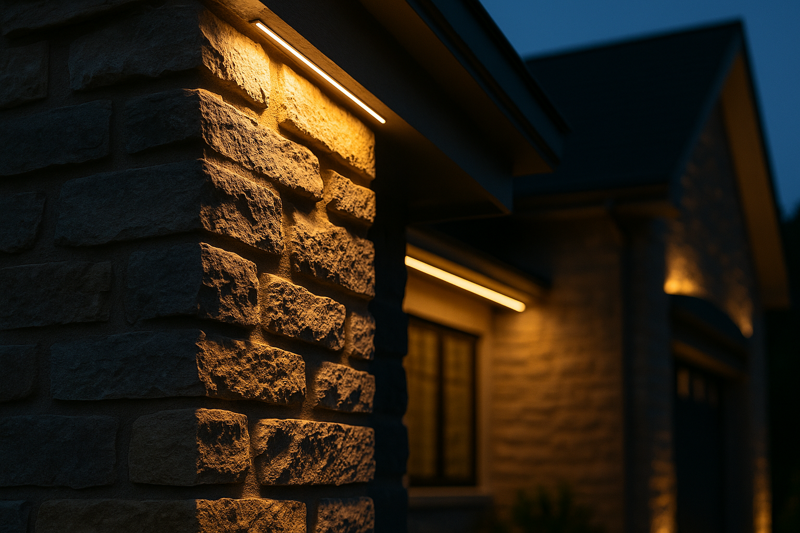
This is where LED strips truly outshine traditional fixtures. Their low profile allows them to be completely integrated into the architecture, creating light that seems to come from the building itself. As a manufacturer, we produce specific types of lenses and channels precisely for this. For a contractor, this is the highest level of outdoor lighting design. It moves beyond simply lighting a space and starts creating architectural statements, significantly increasing both the home’s curb appeal and its value.
A Deeper Dive into Architectural Integration Ideas
Let’s look at how to make the house itself the star of the show.
-
Soffit and Eave Lighting (Cove Lighting)
This creates a beautiful "halo" effect around the home.
- Technique: Mount a continuous LED strip inside the soffit (the underside of the roof’s overhang), aiming it either outward or back towards the wall.
- Effect: This provides a broad, soft wash of light down the home’s exterior walls. It’s a very elegant and modern alternative to using multiple, harsh spotlights. It also adds a significant layer of ambient security lighting.
-
Column and Post Grazing
Give vertical elements a dramatic presence.
- Technique: Mount a vertical channel right at the base of a column or post, aiming the light straight up.
- Effect: This "grazing" technique shoots a narrow beam of light up the column, creating dramatic highlights and shadows that emphasize its three-dimensional form.
-
Window and Door Framing
Outline architectural features to create a picture-frame effect.
- Technique: Integrate waterproof strips within the exterior trim or frame of a large window or entryway.
- Effect: At night, this transforms the window or door into a glowing element, drawing attention to the home’s key features. This is a very custom, high-end look.
Here are the final ideas for integrating light directly onto your home:
| Idea Number | Application | Best For | Professional Tip | |
|---|---|---|---|---|
| 23 | Soffit / Eave Downlighting | Creating a "halo" effect around the house. | Use a channel with a diffuser for a smooth, dot-free line of light. | |
| 24 | Architectural Grazing | Highlighting stone, brick, or wood siding. | Mount the strip very close to the surface to maximize the textural shadows. | |
| 25 | Vertical Column Lighting | Making pillars and posts look heroic. | A narrow-beam lens on the channel will create a more dramatic effect. | |
| 26 | Garage Door Framing | Adding curb appeal and aiding nighttime parking. | Install a strip inside the door jamb for a clean, built-in look. | |
| 27 | Front Door "Welcome" Light | Creating an inviting entryway. | A strip hidden in a small overhang above the door is more elegant than a sconce. | |
| 28 | House Number Illumination | Ensuring your address is visible and stylish. | Backlight modern, floating house numbers for a crisp, legible glow. | |
| p | 29 | Under-Gutter Lighting | A subtle alternative to soffit lighting. | Snap a special gutter-mount channel to the front lip of the gutter, aiming down. |
| 30 | Floating Roof Effect | Very modern, flat-roofed architecture. | Place strips in a hidden cove where the wall meets the roof overhang. |
Conclusion
Outdoor LED strips are an incredibly versatile tool for safety, ambiance, and high-end design. The key is to hide the source, use light to create shadow and texture, and always invest in a complete system of quality, weatherproof components for a professional result that lasts.
-
Explore how Under-Railing Illumination enhances safety and ambiance on decks. ↩
-
Learn the technique to create a stunning floating effect with lighting. ↩
-
Discover how Perimeter and Edge Lighting can define and enhance outdoor spaces. ↩
-
Find out how to seamlessly incorporate lighting into your pergola for a modern look. ↩
-
Get tips on illuminating your outdoor kitchen for better functionality and style. ↩
-
See how Bar Top Glow can create a stunning focal point for your outdoor entertaining. ↩
-
Explore this link to understand how Architectural Uplighting can enhance your garden’s aesthetics. ↩
-
Discover the beauty of silhouettes in your garden with this effective lighting technique. ↩
-
Learn how to create enchanting water features that come alive at night with the right lighting. ↩
-
Find out how to safely illuminate water features for stunning nighttime effects. ↩
-
Explore techniques to create mesmerizing reflections in your pond for a magical ambiance. ↩
-
Transform your garden structure into a stunning focal point with these lighting ideas. ↩
Interested in Our LED Solutions?
Get professional consultation and customized LED lighting solutions for your projects. Contact our expert team today.
Related Articles

How Do You Build Profitable Custom Vehicle and RV Interior LED Rope Lights?
You lose RV installation contracts because your interior lights fail on rough roads. Standard strips show bright dots on glossy…

How to Perfect Bookshelf and Display Cabinet LED Rope Lighting?
You lose retail clients when bookshelves look incredibly dark. Ugly shadows hide expensive products inside display cabinets daily. You need…

How to Master Mirror and Vanity LED Rope Light Installation?
Your clients complain about ugly shadows in their bathroom mirrors. Bad lighting ruins expensive vanity designs. You lose future contracts…
