

Are Your Indoor Lights Making Your Home Look Like a High-End Hotel or a College Dorm Room?
You spend thousands on furniture and renovation, yet the room feels flat and lifeless at night. A single ceiling fixture casts harsh shadows, killing the atmosphere immediately.
Creative indoor LED rope light ideas transform static spaces into dynamic environments by layering light. Key applications include concealed cove lighting for height perception, under-furniture "floating" effects for modernity, and motion-activated safety lighting along staircases and hallways. The secret lies in hiding the light source while revealing the glow.
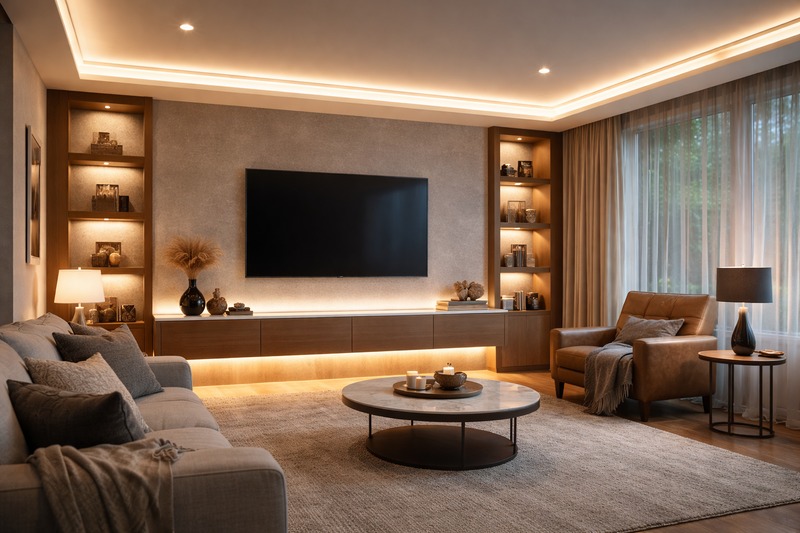
In my years of manufacturing lighting at Rhstriplighting, I have seen brilliant designs ruined by the wrong product choice. People often confuse old-school "Rope Lights" (those thick, clear plastic tubes) with modern "COB Strip Lights" (the seamless, dot-free ribbons). While the title says "Rope Light," as a factory owner, I must be honest: for 90% of indoor applications, you actually want High-Density Strips or Neon Flex. Traditional round rope lights are heavy, bulky, and often look cheap if visible. Today, I will walk you through 30 concepts, but I will also act as your engineer, telling you exactly how to achieve them without making your home look like a Christmas tree in July.
Can You Raise Your Ceiling Without Hiring a Contractor?
Most low ceilings feel oppressive because they are dark. By washing the ceiling with light, you trick the eye into seeing more vertical space. It is an optical illusion that adds value instantly.
Crown molding and cove lighting are the most effective ways to make a room feel larger. By placing LED rope lights or strips on a ledge directed upward, you bounce light off the white ceiling, creating a soft, shadow-free ambient glow that mimics natural skylight.
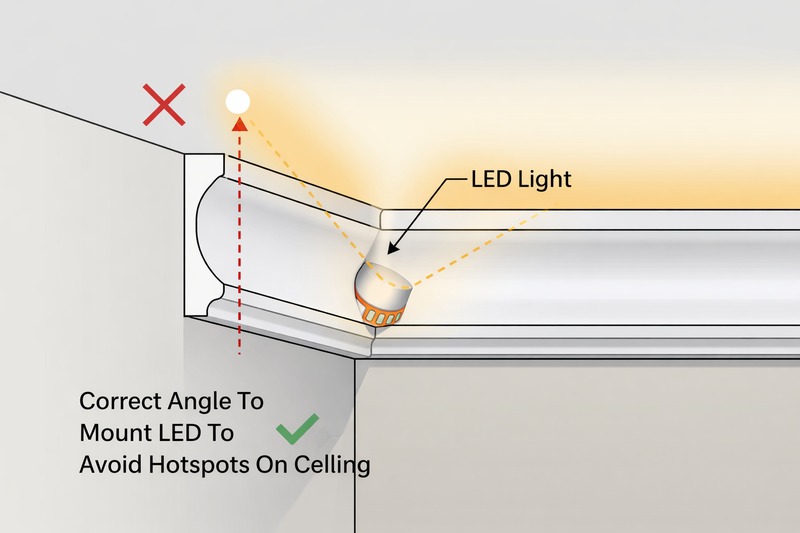
This is where I see the most mistakes in orders from my US distributors. They sell standard RGB kits for cove lighting, and the end-user ends up with a room that looks like a cheap nightclub. For architectural ceiling lighting, the "idea" is simple, but the execution requires understanding Voltage Drop and Spotting.
The "Dot" Problem vs. The Seamless Glow
If you use old-fashioned round rope lights (the kind with vertical bulbs inside a tube), you will see distinct "dots" of light reflected on your ceiling. It looks messy. We call this the "Spotting Effect1."
Idea 1-5: Architectural Applications
- Classic Crown Molding: Run a warm white (3000K) line around the perimeter.
- Tray Ceilings: If you have a recessed ceiling, highlight the inner edge.
- Exposed Beams: a run of light on top of a rustic wooden beam creates a dramatic silhouette.
- Suspended Panels: For modern offices or dining rooms, floating panels with backlighting.
- Curtain Pockets: Hide a line of light right in front of the curtain rail to wash the fabric down.
The Voltage Trap
To achieve these ideas, you need long runs of light. A standard 12V strip loses brightness after 5 meters (16 feet). If your living room perimeter is 40 feet, the light will be bright at the start and dim at the end.
For these ceiling ideas, I recommend 110V Driverless Rope Light2 or 24V Constant Current Strips3.
Why? High voltage travels further.
In my factory, we produce 110V AC strips that can run 50 meters (165 feet) on a single plug. This is perfect for crown molding because you don’t want to hide four different power supplies in your ceiling. However, you must respect the cutting unit. High-voltage lights can often only be cut every 0.5 meters (20 inches). If your wall ends at 19 inches, you have a problem. Measure twice, or use 24V DC systems where you can cut every 2 inches.
| Feature | 110V AC Rope Light | 24V DC LED Strip | Factory Recommendation |
|---|---|---|---|
| Max Run Length4 | 50 Meters + | 10-15 Meters | Use 110V for huge rooms. |
| Cutting Interval | 0.5m – 1m (High Waste) | 5cm – 10cm (Precision) | Use 24V for precise corners. |
| Safety | High Voltage (Riskier) | Low Voltage (Safe) | 24V is safer for DIY installation. |
| Quality of Light | Often has 60Hz flicker | Smooth, High CRI | 24V simply looks better to the eye. |
Can Your Furniture Float on Light?
Heavy furniture makes a room feel crowded. By adding light underneath, you visually lift the weight of the object, adding a futuristic, airy feel to kitchens, bedrooms, and living areas.
Installing LED lights under cabinets, beds, and sofas functions as perfect task or night lighting. The key is to mount the channel recessed from the edge so the light source is invisible, casting only a downward glow on the floor.
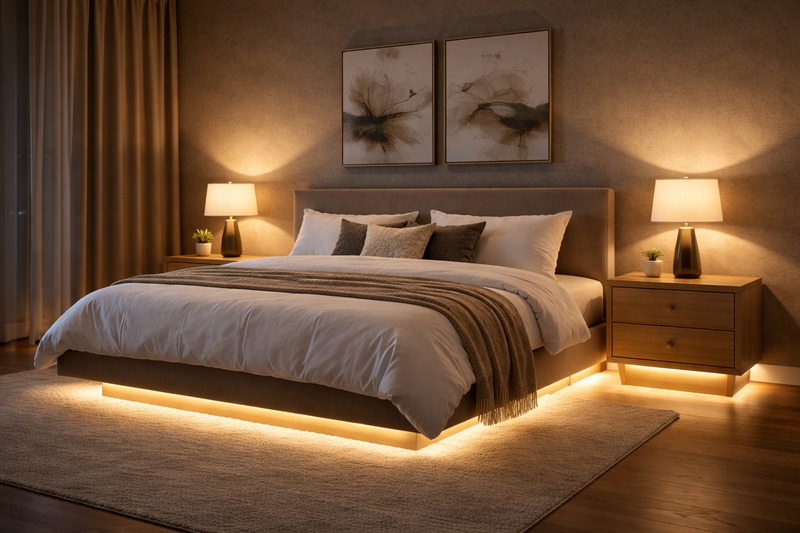
This category covers the "Floating Effect." It is incredibly popular in modern interior design. However, putting a hot light source onto a wooden frame or a fabric sofa requires careful thought about Heat Dissipation.
The Heat Management Issue
I often reject warranty claims because a client stuck a high-power IP68 (waterproof) rope light5 directly onto a wooden cabinet with no airflow. The thick plastic casing of traditional rope lights traps heat. The wood insulates it. The LED overheats and dies blue.
For furniture applications, you do not need bright light. You need accent light.
Idea 6-15: Furniture & Joinery
- Floating Bed: Sensor-activated light under the bed frame.
- Kitchen Toe-Kicks: Lighting the gap between the cabinet and floor.
- Kitchen Overhead: Under-cabinet task lighting (Use High CRI here!)
- Floating Vanity: Backup lighting in the bathroom mirror.
- Behind the TV: Bias lighting to reduce eye strain.
- Bookshelf Backlighting: Illuminating the back panel of a shelf.
- Glass Display Cabinets: Edge lighting glass shelves.
- Closet Rods: Light directly above your hanging clothes.
- Gaming Desk: RGB lighting behind the monitor.
- Sofa Undercarriage: A subtle glow for movie nights.
Profile Selection and Diffusion
When you glue a strip under a glossy kitchen counter, you might see the reflection of the ugly circuit board on the floor tiles. This looks terrible.
You must use an Aluminum Profile with a Milky Diffuser6.
The aluminum sucks the heat out of the LED (extending its life), and the milky cover blends the individual LED dots into a neon-like bar of light.
If you are using the cheaper "Rope Light" (the round tube), you cannot use a profile. You are stuck with using "P-clips" or mounting tracks. This is why for furniture, flat LED strips7 are superior to round rope lights. They are lower profile (thinner) and hide better. If your gap is only 1 inch, a round rope light takes up too much space.
| Application | Recommended Lumen/ft | Color Temp (CCT) | Why? |
|---|---|---|---|
| Under Bed | Low (100-150lm) | 2700K (Very Warm) | Needs to be sleepy, not waking. |
| Kitchen Work | High (350lm+) | 4000K (Natural) | You must see the color of food clearly. |
| TV Backlight | Medium (200lm) | 6500K or RGB | Increases contrast on the screen. |
| Toe-Kick | Low (150lm) | Match overheads | Purely decorative/navigation. |
Is Your Hallway a Safety Hazard or a Design Feature?
We have all stubbed our toes walking to the bathroom at 3 AM. Functional safety lighting does not have to be an ugly nightlight plugged into the wall; it can be integrated into the architecture.
Using motion-sensor activated rope lights along stair treads, handrails, or hallway baseboards creates a hands-free navigation system. This is crucial for elderly relatives or children, combining safety with a high-tech aesthetic.
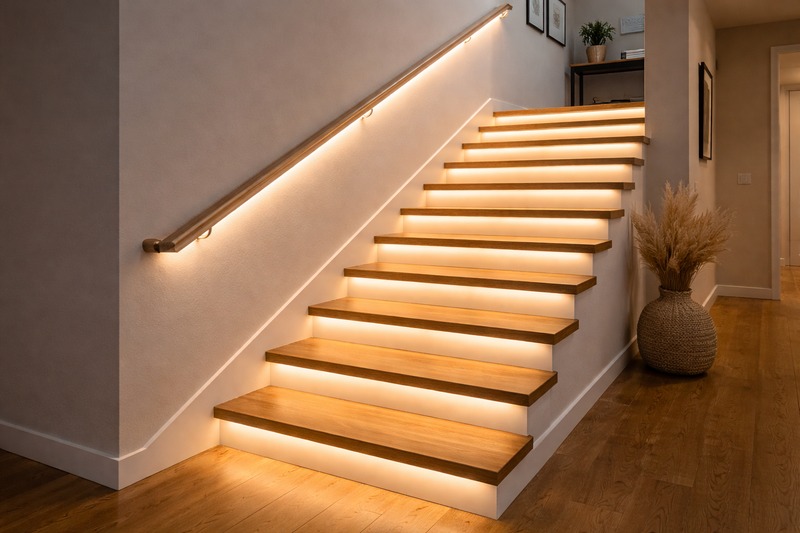
This is where durability meets function. Hallways and stairs are high-traffic areas. They get kicked, vacuum cleaners bump into them, and kids play on them. Here, the physical structure of the light matters immensely.
Durability: Rope vs. Strip
In this specific scenario, the old-school Round Rope Light8 actually has an advantage.
Why? Because it is encased in thick, solid PVC. It is crush-resistant. If you install a delicate naked PCB strip along a baseboard, one hit from a vacuum cleaner will snap the copper traces.
For baseboards and exposed stair treads, I recommend either Neon Flex (which is essentially a modern, flat rope light) or a PVC-encased rope light. They can take a beating.
Idea 16-30: Functional & Creative Safety
- Stair Treads: Under the lip of each step.
- Handrail Underside: Hidden light guiding your hand.
- Hallway Baseboards: A runway effect.
- Pantry Door Frame: Switch-activated light when the door opens.
- Garage Workbench: High-brightness task light.
- Laundry Room Shelves: Finding that lost sock.
- Basement Rec Room: RGB Party modes.
- Headboard Reading Light: Focused light.
- Mirror Border: Hollywood style makeup light.
- Art Frames: Backlighting a canvas.
- Wine Rack: Low heat light for bottles.
- Plant Uplighting: Behind a large indoor pot.
- Window Frame: Holiday-style outline.
- Attic Crawlspace: Permanent utility light.
- Baby Changing Station: Soft indirect light.
The Sensor Integration Logic
Adding a motion sensor changes the game. But you must wire it correctly.
If you use a PIR (Passive Infrared) sensor9, place it at the ends of the hallway, not the middle. You want the light to trigger before you step into the dark zone.
In the factory, we now make "All-in-One" kits where the sensor is inline with the power cord. But for a pro result, use a hardwired low-voltage sensor.
Also, think about the Glare. On stairs, you never want the light pointing up at your eyes. It is dangerous. It blinds you as you walk down. Always mount the light aiming down or sideways. If you are drilling into your stunning oak staircase, do not use cheap adhesive tape. It will fall off in summer when the humidity rises. Screw-mount clips or aluminum channels are mandatory for safety installations.
| Component | Standard Setup | Pro Setup (My Advice) | Benefit |
|---|---|---|---|
| Control | On/Off Switch | PIR / Microwave Sensor | Hands-free safety at night. |
| Mounting | 3M Tape backing | Aluminum Channel + Diffuser10 | Tape fails; Channels protect the light. |
| Wiring | Plug-in wall wart | Hardwired Driver in closet | No ugly cords visible. |
| Material | IP20 (Naked Strip) | IP65 (Silicone Coated)11 | Protection against mopping/kicks. |
Conclusion
Whether you choose Cove Lighting for elegance, Under-Cabinet for function, or Stairway Lights for safety, the rule is the same: Hide the source, show the glow. Don’t let the "creative idea" overlook the voltage and heat requirements.
-
Understanding the Spotting Effect can help you choose better lighting solutions for your space. ↩
-
Explore the advantages of 110V Driverless Rope Light for long runs and seamless lighting. ↩
-
Learn how 24V Constant Current Strips provide precision and safety for your lighting projects. ↩
-
Discover the importance of Max Run Length in choosing the right LED strip for your needs. ↩
-
Explore the advantages of IP68 waterproof rope lights for durability and versatility in various applications. ↩
-
Learn how this combination enhances LED performance and aesthetics in furniture applications. ↩
-
Find out why flat LED strips are preferred for furniture applications and their benefits in design. ↩
-
Explore the benefits of Round Rope Light, including durability and safety for various installations. ↩
-
Learn how PIR sensors enhance safety and convenience in home lighting systems. ↩
-
Discover why Aluminum Channels and Diffusers are essential for protecting and enhancing LED lighting. ↩
-
Understand the significance of IP65 ratings for ensuring durability and safety in lighting installations. ↩
Interested in Our LED Solutions?
Get professional consultation and customized LED lighting solutions for your projects. Contact our expert team today.
Related Articles

How Do You Build Profitable Custom Vehicle and RV Interior LED Rope Lights?
You lose RV installation contracts because your interior lights fail on rough roads. Standard strips show bright dots on glossy…

How to Perfect Bookshelf and Display Cabinet LED Rope Lighting?
You lose retail clients when bookshelves look incredibly dark. Ugly shadows hide expensive products inside display cabinets daily. You need…

How to Master Mirror and Vanity LED Rope Light Installation?
Your clients complain about ugly shadows in their bathroom mirrors. Bad lighting ruins expensive vanity designs. You lose future contracts…
