

How Can LED Strips Boost Commercial Retail and Office Environments?
Your retail client’s store looks dated, and their products aren’t selling. Your office client complains about a sterile, unproductive atmosphere. Both are suffering from the same problem: poor, outdated lighting that actively harms their business.
LED strips are a strategic tool to increase commercial profitability. In retail, they directly boost sales by making products look more desirable. In offices, they enhance productivity and employee well-being by creating a more comfortable, human-centric lighting environment.
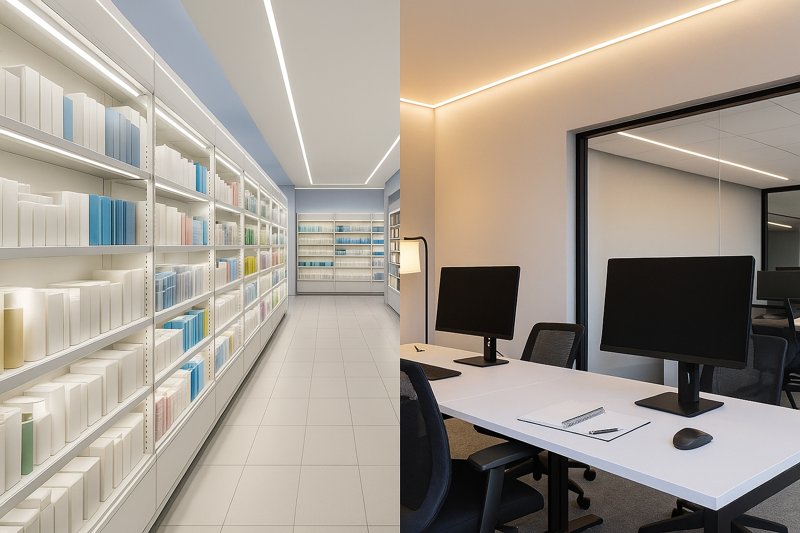
As a manufacturer providing solutions for professionals like Tom, I see this every day. Lighting is no longer just a utility; it’s a core part of the business strategy. For a retailer, it’s a silent salesperson. For an office manager, it’s a tool for human resources. The mistake many make is thinking all light is the same. It isn’t. The quality, color, and application of that light have a direct, measurable impact on customer behavior and employee performance. Moving beyond generic overhead panels to integrated LED strip lighting is the single most cost-effective way to transform a commercial space from a liability into an asset. Let’s break down the specific strategies for each environment.
How Do You Use Light to Make Products More Appealing?
You walk into a store. The products on the shelves just sit there, looking flat and uninspired under the dull glare of ceiling panels. Nothing catches your eye. How can you, the lighting professional, fix this and help your client sell more?
You make products "pop" by using targeted, high Color Rendering Index (CRI) light. By integrating LED strips directly into shelving and displays, you bring the light source close to the merchandise, revealing its true color and texture and drawing the customer’s eye.

This is the fundamental principle of modern retail lighting. General ambient light from the ceiling is for walking around; it does nothing to sell products. The magic happens when you layer in accent lighting. Think of it like a theater: the stage lights are on the actors, not the audience. In a store, the products are the actors. LED strips are perfect for this because their small form factor allows you to hide them anywhere—under shelves, inside display cases, along vertical standards, or framing mirrors. This targeted light creates contrast and visual interest, guiding the customer’s journey through the store and making merchandise impossible to ignore. A product that is well-lit is a product that is already halfway sold.
A Deeper Dive into Retail Lighting Strategy
For a savvy business owner like Tom, understanding these techniques provides a new service to offer clients. You’re not just installing lights; you’re installing a sales-generating system.
- High CRI is Non-Negotiable1
We’ve discussed CRI before, but in retail, it is everything. It’s the difference between a red dress looking vibrant and exciting or dull and brownish. For retail applications, a CRI of 90 is the absolute minimum, and a CRI of 95+ is the professional standard for high-end goods.- The R9 Factor2: Pay special attention to the R9 value, which measures the rendering of deep reds. This is critical for fresh food, clothing, cosmetics, and wood finishes. A high R9 value (>80) makes these items look rich, fresh, and luxurious. A cheap strip with a low R9 will make the same items look flat and cheap, directly impacting their perceived value.
| Product Category | Effect of Low CRI (<80) | Effect of High CRI (>90) with High R9 (>80) |
|---|---|---|
| Apparel | Colors look dull and inaccurate. | Fabric colors are vibrant, rich, and true to life. |
| Fresh Produce/Meat | Looks pale, old, unappetizing. | Reds are rich, greens are fresh; looks delicious. |
| Cosmetics | Skin tones are unnatural. | Foundation and lipstick shades are accurate. |
| Jewelry | Lacks sparkle and brilliance. | Facets sparkle, gems show deep, true color. |
- Key Application Techniques3
- Shelf Lighting4: This is the most powerful tool. Mount a low-profile LED strip in a 45-degree channel at the front inner edge of each shelf. This focuses the light directly onto the products, separating them from the aisle and making them the hero.
- Cove Lighting: Use higher-output strips in coves around the ceiling perimeter. This adds a sense of height and luxury to the space, creating a high-end ambient feel that complements the direct accent lighting.
- Vertical Lighting: Integrate LED strips into the vertical posts of gondola shelving. This technique is excellent for illuminating products stacked high, like in a wine store or a shoe display, ensuring every item is lit, not just the ones on top.
- Backlighting: Place LED strips behind translucent materials like acrylic panels or signage to create a modern, high-tech glow that draws attention to logos or feature displays.
By combining these layers, you create a dynamic visual environment that is far more engaging and effective than a flatly-lit, uniform space.
Can Lighting Really Improve Office Productivity?
Your client manages a large office. The space is filled with the constant, monotonous hum and harsh glare of old fluorescent troffers. Employees complain of headaches, eye strain, and a general lack of energy by the afternoon.
Yes, absolutely. By replacing harsh, direct overhead lights with soft, indirect LED strip lighting and implementing tunable white technology, you can create a human-centric environment that measurably reduces eye strain, improves mood, and supports employee focus and productivity.
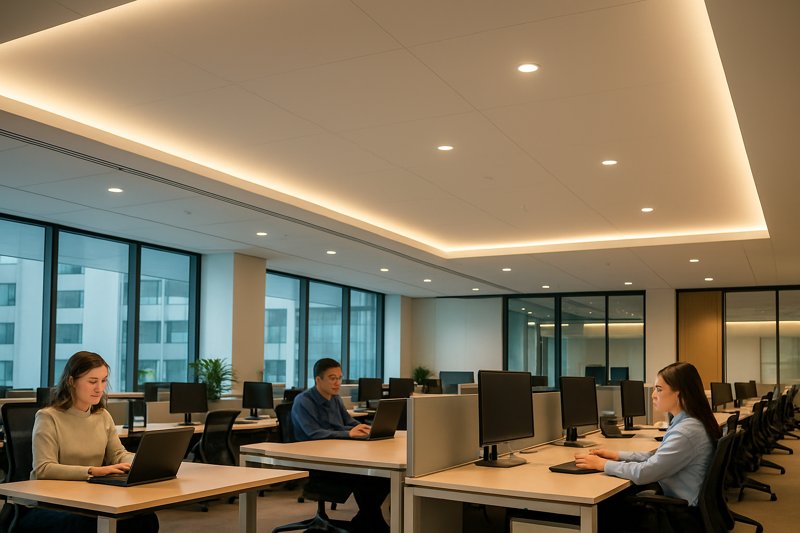
The old way of lighting an office was to blast as much light as possible from the ceiling. We now know this is a terrible approach. This high-glare environment causes our pupils to constantly contract, leading to physical eye fatigue and headaches. It also creates a sterile, shadowless space that feels monotonous and uninspiring. The modern approach, easily achieved with LED strips, is to treat the office like a high-end architectural space. You use light to define areas, reduce contrast, and create a comfortable visual field. The most advanced method is to use tunable white systems that mimic the natural rhythm of daylight, which has a proven positive effect on employee alertness and well-being.
A Deeper Dive into Human-Centric Office Lighting
Tom, being able to explain the productivity benefits of high-quality lighting to a corporate client is a huge advantage. You are selling a solution for their business, not just a fixture.
-
Indirect Lighting5: The Key to Visual Comfort
The goal is to eliminate "light bombs" — those bright, glaring fixtures directly in people’s line of sight.- How it Works: Instead of pointing lights down, you point high-output LED strips up into a ceiling cove or a suspended architectural feature. The light bounces off the white ceiling, creating a soft, diffuse, and completely glare-free ambient light source. It feels like the light from an overcast sky, which is the most comfortable light for our eyes to work under.
- Benefits: This drastically reduces eye strain from computer screens, as the contrast between the screen and the surrounding room is minimized. It also creates a more spacious and premium feel in the office.
-
Tunable White6: Lighting for the Body Clock
This technology allows you to adjust the Correlated Color Temperature7 (CCT) of the light throughout the day. This supports our natural circadian rhythm, which is our internal body clock that regulates energy and sleep.- The Science: Our bodies are programmed to respond to the cool, blue-rich light of the morning sun (which promotes alertness) and the warm, yellow light of the evening sun (which promotes relaxation).
- The Application: A tunable white system, controlled automatically, will emit a cool 4000K-5000K light in the morning and through the main working hours to maximize focus and energy. As the afternoon progresses, it will automatically shift to a calmer, warmer 3000K to help employees wind down, reducing stress and improving their sleep quality after they leave work.
| Time of Day | Recommended CCT | Desired Biological Effect |
|---|---|---|
| 9:00 AM – 12:00 PM | 4000K – 5000K | Peak Focus: Suppresses melatonin, boosts alertness. |
| 12:00 PM – 3:00 PM | 4000K | Sustained Performance: Maintains concentration. |
| 3:00 PM – 5:00 PM | 3000K – 3500K | Calm Transition: Reduces intensity, prepares body for evening. |
This isn’t a gimmick; it’s a wellness tool8 that shows a company is invested in its employees’ health, which can be a key factor in attracting and retaining talent.
What Makes an LED Strip System ‘Commercial-Grade’?
Your client is skeptical. They’ve seen cheap LED strips for sale online or in big-box stores. How do you explain that what you are providing is a completely different class of product, built for a demanding commercial environment?
A commercial-grade system is defined by its components’ durability, consistency, and certification. It uses strips with heavy copper PCBs, LEDs with tight color consistency, and certified power supplies designed for long hours of reliable, safe operation.
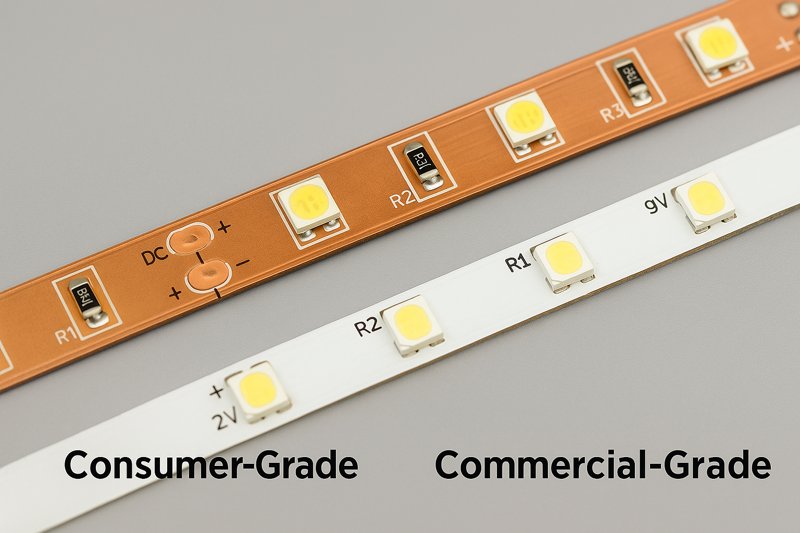
This is the conversation that directly addresses Tom’s pain points about quality and reliability. The cheap strip a homeowner might put behind their TV is designed to be used for a few hours a day. A commercial system in a retail store or office runs for 10, 12, or even 16 hours a day, every day. It’s the difference between a bicycle and a delivery truck. They both have wheels, but only one is built for constant, heavy use. As a factory, we build the "delivery truck" version. Investing in these commercial-grade components is the only way to avoid costly failures, constant maintenance calls, and a damaged professional reputation.
A Deeper Dive into Commercial-Grade Specifications
This is the technical knowledge that proves your value. When you can explain these points, you build unshakable trust with your client.
-
The Strip: Copper and Binning
- Heavy Copper PCB: Standard strips use thin 1oz or 2oz copper. For commercial projects, especially long runs, we specify 3oz or 4oz copper PCBs9. The thicker copper provides better heat dissipation (pulling heat away from the LEDs) and drastically reduces voltage drop, ensuring consistent brightness from the beginning of a run to the end.
- Tight LED Binning (3-Step MacAdam Ellipse10): LEDs are produced in batches, and there are slight color variations between them. "Binning" is the process of sorting LEDs for color consistency. Cheap strips use LEDs from many different bins, resulting in a noticeable color difference from one section to another. For commercial projects, we guarantee a 3-Step MacAdam Ellipse binning. This is an industry standard that ensures any two strips look identical to the human eye, which is critical for large, seamless installations.
-
The Power Supply: The Engine of the System
This is the most common point of failure in a cheap system.- UL/ETL Certification11 is Mandatory: For any commercial installation in North America, the power supply must be UL or ETL listed (or the equivalent certification for other regions). This is a legal requirement for safety and fire code compliance. A client who cuts corners here is taking on a massive liability.
- Class 2 Rating12: This is another safety standard that limits the power output, reducing shock and fire risk. It’s required for most interior lighting applications.
- 5-Year Warranty13: A power supply with a 5-year or 7-year warranty (like those from Mean Well) is built with higher quality, more durable internal components. It’s a clear indicator of a product designed for a long life under commercial stress.
| Component | Consumer-Grade Spec | Commercial-Grade Specification | Reason It’s Crucial for Commercial Use |
|---|---|---|---|
| PCB | 1-2oz Copper | 3-4oz Copper | Better heat dissipation, less voltage drop, longer life. |
| LEDs | Loose Binning (No guarantee) | 3-Step MacAdam Ellipse Binning | Perfect color consistency across the entire project. |
| PSU | Non-Certified, 1-Year Warranty | UL/ETL Listed, Class 2, 5-7 Year Warranty | Safety compliance, reliability, and long-term protection. |
By specifying a complete system with these commercial-grade components14, you are delivering a professional, reliable, and safe solution that will perform flawlessly for years.
Conclusion
In retail and offices, LED strips are not just lights; they are business tools. They drive sales by enhancing products and boost productivity by improving well-being. Specify commercial-grade systems to deliver these results reliably and profitably.
-
Understanding high CRI can enhance your retail lighting strategy, ensuring products look their best and attract customers. ↩
-
Exploring the R9 factor will help you appreciate its impact on product presentation, especially for deep reds. ↩
-
Discovering key application techniques can transform your retail space, making it more appealing and engaging for customers. ↩
-
Learning about shelf lighting can significantly improve product visibility, leading to increased sales and customer satisfaction. ↩
-
Explore how Indirect Lighting can enhance visual comfort and reduce eye strain in work environments. ↩
-
Learn about the impact of Tunable White lighting on employee well-being and productivity throughout the day. ↩
-
Understand the significance of CCT in creating optimal lighting conditions for various tasks. ↩
-
Discover how effective lighting solutions can promote employee health and improve workplace satisfaction. ↩
-
Explore the advantages of thicker copper PCBs for better heat dissipation and reduced voltage drop. ↩
-
Learn how this standard ensures color consistency in LED installations, crucial for professional projects. ↩
-
Understand the legal and safety implications of using certified power supplies in installations. ↩
-
Discover how Class 2 Ratings enhance safety and reduce risks in interior lighting applications. ↩
-
Find out how longer warranties reflect durability and reliability in commercial-grade power supplies. ↩
-
Explore how commercial-grade components ensure safety, reliability, and long-term performance. ↩
Interested in Our LED Solutions?
Get professional consultation and customized LED lighting solutions for your projects. Contact our expert team today.
Related Articles

How Do You Build Profitable Custom Vehicle and RV Interior LED Rope Lights?
You lose RV installation contracts because your interior lights fail on rough roads. Standard strips show bright dots on glossy…

How to Perfect Bookshelf and Display Cabinet LED Rope Lighting?
You lose retail clients when bookshelves look incredibly dark. Ugly shadows hide expensive products inside display cabinets daily. You need…

How to Master Mirror and Vanity LED Rope Light Installation?
Your clients complain about ugly shadows in their bathroom mirrors. Bad lighting ruins expensive vanity designs. You lose future contracts…
