

How Can LED Strips Elevate the Guest Experience in Hotels and Restaurants?
Your hotel client wants their lobby to feel luxurious. Your restaurant client wants an intimate, memorable dining mood. Traditional lighting is bulky and expensive. How do you deliver a five-star atmosphere on a budget that makes sense?
LED strips transform hospitality spaces by providing unparalleled flexibility in creating mood and ambiance. Their low profile allows for seamless integration into architecture, while superior color quality and dimming capabilities directly enhance the guest’s perception of luxury, comfort, and value.
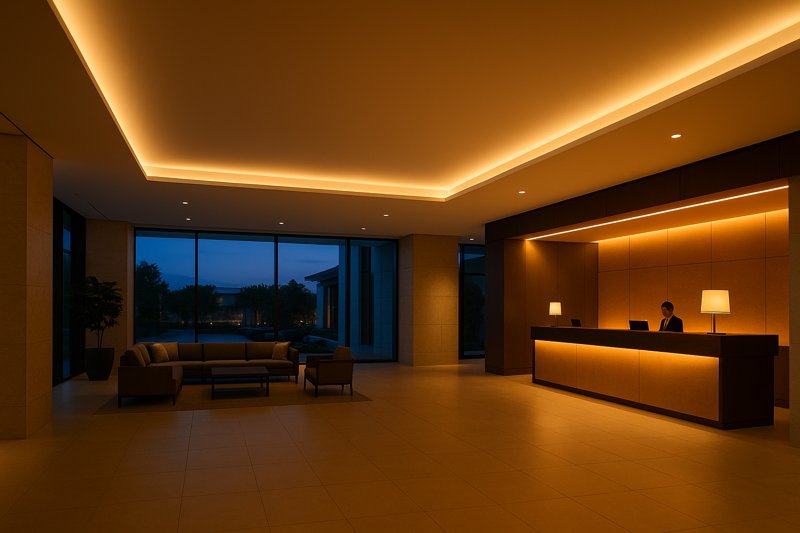
In my years of manufacturing, I’ve seen the hospitality industry completely transformed by LED strips. Clients like Tom, who design for hotels and restaurants, aren’t just selling lights anymore. They are selling an experience. The quality of light directly impacts how a guest feels about a space. Does the bar feel vibrant and exciting? Does the hotel room feel calm and relaxing? Does the food on the plate look fresh and appetizing? LED strips give you, the designer or contractor, the precise tools to control these feelings. This isn’t just about illumination; it’s about crafting an emotional response that keeps guests coming back. Let’s explore how to specify the right LED systems to achieve these world-class results.
How Do You Create Ambiance with LED Strip Color and Quality?
The client says they want "warm and inviting" light. But one person’s "warm" is another’s "yellow." How do you translate a subjective feeling into a precise technical specification that guarantees the perfect mood every time?
You create ambiance by mastering two key metrics: Correlated Color Temperature (CCT) for warmth and Color Rendering Index (CRI) for accuracy. For hospitality, a high CRI (>90) is essential, combined with the correct CCT for each specific zone.
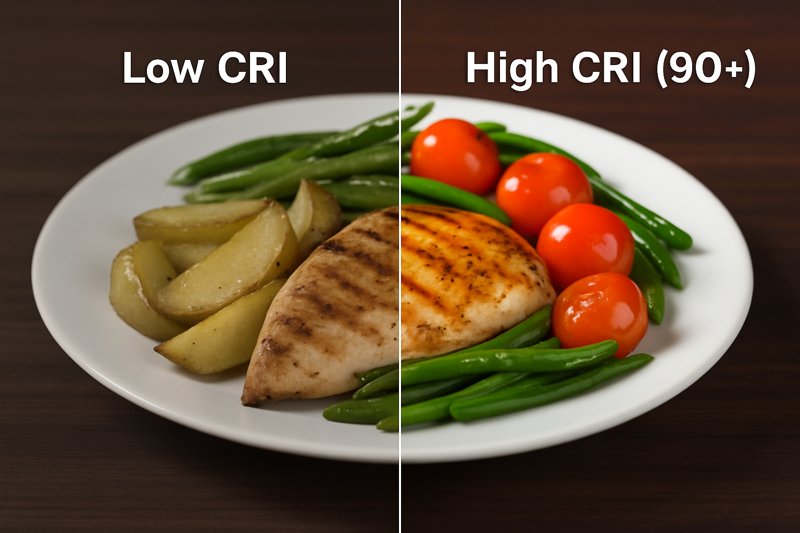
This is where professionals separate themselves from amateurs. Selling a "warm white" strip is easy. Designing an experience requires a deeper understanding of the science of light. The human eye is incredibly sensitive to the quality and color of light. In a restaurant, high-quality light makes food and drinks look more appealing. In a hotel room, it makes skin tones look healthier and furnishings look richer. Using a cheap strip with a low CRI might save a few dollars upfront, but it results in a space that feels flat, cheap, and uninviting. This directly undermines the client’s goal and devalues their brand. Your job is to be the expert who guides them to the right choice.
A Deeper Dive into Light Quality for Hospitality
For a project manager like Tom, being able to explain why a specific CCT and CRI are needed is a powerful sales tool. It shows you’re not just a supplier; you’re a consultant invested in their success.
-
CCT: Defining the Mood of Each Zone
Correlated Color Temperature1 is measured in Kelvin (K). Lower numbers are warmer (more yellow/orange), and higher numbers are cooler (bluer). You must choose a different CCT for different areas to evoke the desired feeling.- 2700K2: This is the color of traditional incandescent lighting. It’s very warm, cozy, and intimate. Perfect for fine dining restaurants, intimate lounges, and hotel bedrooms to promote relaxation.
- 3000K: A slightly crisper warm white. It feels welcoming and high-end without being too yellow. This is the an excellent all-around choice for hotel lobbies, reception areas, hallways, and casual dining spaces.
- 4000K3: A neutral, clean white. This is best for "back of house" areas like kitchens and laundry rooms where task visibility is critical. It can also be used in modern hotel gyms and bathrooms for a clean, sleek look.
-
CRI: Why 90+ is the Professional Standard
Color Rendering Index4 (CRI) measures how accurately a light source reveals the true colors of objects, on a scale of 0-100. The sun has a CRI of 100.- The Problem with Low CRI (<80): Cheap LED strips often have a CRI around 80. Under this light, reds appear dull, blues look greyish, and skin tones can look sickly. It makes an expensive plate of food look unappetizing and high-end decor look cheap.
- The Power of High CRI5 (>90): As a manufacturer, we produce strips with a CRI of 90, 95, or even 98. This is a non-negotiable feature for hospitality. High CRI light makes wood grains look richer, fabrics more vibrant, artwork pop, and food look fresh and delicious. It is a critical component of a luxury experience.
-
R9 Value6: The Secret to Perfect Reds
The standard CRI calculation averages 8 colors, but it doesn’t include a strong red. R9 is a separate score that specifically measures how well a light renders deep red. This is vital in restaurants (for meats and vegetables) and hotels (for wood tones and decor). Always ask your supplier for the R9 value; for a professional hospitality job, it should be above 50, and ideally above 80.
| Light Metric | What it Measures | Why it Matters in Hospitality | Pro Specification |
|---|---|---|---|
| CCT | The warmth/coolness of the light | Creates the core mood: cozy, welcoming, or clean. | 2700K-3000K |
| CRI | Accuracy of all colors | Makes food, decor, and people look their natural, vibrant best. | >90 |
| R9 | Accuracy of deep red | Crucial for the appearance of food, wood tones, and skin. | >50 (ideally >80) |
How Do You Ensure LED Installations Last in a High-Use Environment?
A hotel bar or restaurant runs its lights for 12-18 hours every single day. A failure isn’t an inconvenience; it’s lost revenue and a damaged guest experience. How do you build a system that can handle this commercial-grade demand?
Longevity in hospitality is achieved by engineering a robust system, not just buying a good strip. This requires aggressive heat management with aluminum channels, using certified commercial-grade power supplies, and specifying strips with a heavy copper PCB for durability.
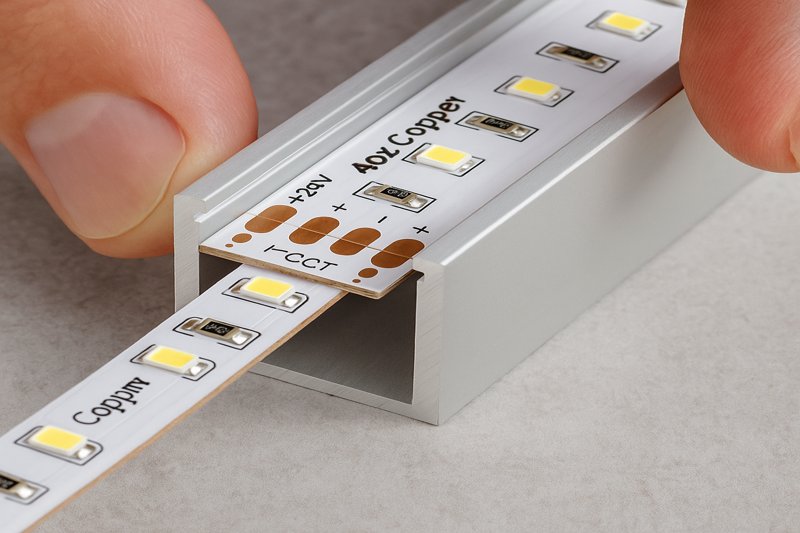
This is the conversation that builds trust with a facility manager or hotel owner. They have seen cheap lights fail. When you explain the engineering behind a long-lasting system, you justify the price and position yourself as a true professional. A hospitality environment is brutal on electronics. There are constant power cycles, long run hours generating heat, and physical traffic. You must over-engineer the system for reliability. The goal is zero maintenance for the first 5-7 years. This is achieved by focusing on thermal management and power delivery, the two main factors that determine an LED’s true operational lifespan.
A Deeper Dive into Commercial-Grade Durability
Tom, when you present your bid for a hotel project, including these details demonstrates your commitment to quality and protects your client’s investment.
-
Heat Management is Not Optional7
As we’ve discussed before, heat is the enemy of LEDs. In a commercial setting with long run times, it’s even more critical.- Specify Channels for ALL Strips: Even low-wattage accent strips in a hotel should be in an aluminum channel. It’s not just a heat sink; it provides physical protection from bumps, cleaning crews, and dust.
- Heavier Channels for Primary Lighting8: For high-output strips used in cove lighting or general illumination, you must use deep, heavy-mass extrusions to adequately dissipate the constant heat load.
-
The Power Supply: The Heart of Reliability
A cheap power supply is the single most likely component to fail in a commercial installation.- UL Listed, Class 2, 5-Year Warranty9: This is the minimum specification. Brands like Mean Well are the industry standard for a reason. The UL listing ensures safety, and the long warranty indicates the use of high-quality internal components designed for longevity.
- Centralize and Ventilate10: Whenever possible, install power supplies in a central, well-ventilated location like a utility closet. This makes them easy to access for any future service and keeps them running cool, extending their life. Never install a power supply in a sealed, unventilated ceiling cavity.
-
The Strip Itself: Copper Weight Matters11
Not all LED strips are made the same. For long, reliable runs, the amount of copper in the flexible printed circuit board (PCB) is a key quality indicator.- 2oz vs. 4oz Copper12: Standard consumer-grade strips use 1oz or 2oz copper. We manufacture commercial-grade strips with 3oz or 4oz copper PCBs.
- Why it Matters:
- Less Voltage Drop: The thicker copper traces have lower electrical resistance, meaning you can have longer runs of strip before the light starts to dim at the end.
- Better Heat Dissipation: The copper itself helps pull heat away from the LED chips and transfer it to the aluminum channel more efficiently. This is a crucial part of the thermal management system.
| Component | Standard (DIY) Specification | Professional Hospitality Specification | Reason for a Pro Spec |
|---|---|---|---|
| LED Strip | 2oz Copper PCB, CRI 80 | 3-4oz Copper PCB, CRI >90, R9 >50, 3-Step MacAdam Ellipse | Durability, color quality, visual consistency. |
| Heat Sink | Optional, or thin surface-mount channel | Appropriately sized Aluminum Channel for ALL strips | Critical for heat dissipation and physical protection in a commercial space. |
| Power Supply | Non-certified, 1-2 year warranty | UL Listed Class 2, >80% loading, 5-7 Year Warranty (e.g., Mean Well) | Ensures safety, reliability, and clean power for maximum LED life. |
How Can Smart Controls and Zoning Enhance a Restaurant or Hotel?
The client has a multi-use space: a hotel bar that serves brunch in the morning, cocktails in the afternoon, and becomes a high-energy lounge at night. How can you use lighting to make these transitions seamless and automatic?
Smart controls and zoning are the key. By using multi-channel controllers (like DMX or Zigbee/Z-Wave), you can create pre-programmed "scenes" that change the color, temperature, and intensity of different lighting zones with the press of a single button.
This is the final piece of the puzzle that elevates a lighting installation from static to dynamic. Modern hospitality is all about adaptability. A space needs to serve multiple functions, and the lighting must adapt accordingly. Smart controls allow staff to completely change the energy of a room without needing any technical knowledge. This level of control also offers significant energy savings by ensuring lights are only on when needed and at the appropriate level. For a hotel or restaurant owner, this combination of perfect ambiance, ease of use, and operational efficiency is an incredibly powerful selling point.
A Deeper Dive into Controls and Dynamic Lighting
Explaining these control strategies to Tom allows him to offer more sophisticated, higher-margin solutions to his clients.
-
Zoning13: The Building Blocks of Control
Zoning simply means wiring different groups of lights to be controlled independently.- Example: In a restaurant, you might have five zones:
Zone 1:Cove lighting around the ceiling.Zone 2:Under-bar lighting.Zone 3:Back-bar bottle display lighting.Zone 4:Booth accent lighting.Zone 5:Over-table pendant lights.
This allows you to control the brightness and color of each element separately to create a layered, textured lighting design.
- Example: In a restaurant, you might have five zones:
-
Scene Programming14: Painting with Light
A "scene" is a snapshot of the settings for all your zones. You can program multiple scenes and recall them instantly.- "Brunch Scene": All zones at 80% brightness, CCT set to a fresh 3000K.
- "Dinner Scene": Cove and booth lighting dim to 40% at a warm 2700K. Bar and bottle display lights shift to a vibrant color.
- "Cleaning Scene": All zones at 100% brightness at a clean 4000K for staff visibility after hours.
-
Choosing the Right Control Protocol
The protocol is the language your controller uses to talk to the lights.- DMX (Digital Multiplex)15: This is the gold standard for robust, commercial-grade control, especially for complex color-changing effects. It’s a wired system known for its reliability in demanding environments. It’s the choice for high-end clubs, bars, and event spaces.
- RF/Bluetooth: Simple remote systems are great for basic dimming and single-room color control. They are easy to install but lack the power of DMX for multi-zone scene programming.
- Zigbee/Z-Wave/Wi-Fi16: These are wireless smart home protocols. They are increasingly used in hotels for in-room guest control and integration with larger building management systems. As a factory, we supply controllers compatible with all these major ecosystems.
This ability to provide a complete, controllable system—from the strip and channel to the power and smart controls—is what makes you a one-stop solution provider, not just a parts seller.
Conclusion
Success in hospitality lighting goes beyond just brightness. It’s about crafting an experience with precise color quality, ensuring reliability with commercial-grade components, and offering dynamic control. Master these elements to create spaces that guests will never forget.
-
Understanding CCT helps create the right ambiance in hospitality settings, enhancing guest experiences. ↩
-
2700K lighting creates a warm, cozy atmosphere, ideal for fine dining and intimate settings. ↩
-
4000K lighting offers a clean, neutral look, perfect for functional areas like kitchens and gyms. ↩
-
Exploring CRI reveals how lighting can enhance the appearance of food and decor, crucial for hospitality. ↩
-
High CRI lighting makes colors appear vibrant and true, enhancing the luxury experience for guests. ↩
-
R9 Value is essential for rendering deep reds, impacting food presentation and decor in hospitality. ↩
-
Understanding heat management is crucial for ensuring the longevity and performance of LED lighting in commercial applications. ↩
-
Discovering the benefits of heavier channels can enhance your understanding of effective lighting solutions. ↩
-
Exploring UL listings can help you understand safety standards and the importance of quality in power supplies. ↩
-
Exploring installation best practices can ensure reliability and longevity of power supplies in your projects. ↩
-
Understanding the impact of copper weight can help you make informed decisions for long-lasting LED installations. ↩
-
Learning about copper weight in LED strips can guide you in choosing the right product for durability and performance. ↩
-
Understanding zoning can enhance your lighting design, allowing for tailored solutions that improve ambiance and functionality. ↩
-
Exploring scene programming can help you create dynamic environments that adapt to different moods and activities effortlessly. ↩
-
Learning about DMX can elevate your control strategies, ensuring reliable and sophisticated lighting solutions for complex setups. ↩
-
Discovering these protocols can help you integrate modern smart technologies into your lighting systems for enhanced user experience. ↩
Interested in Our LED Solutions?
Get professional consultation and customized LED lighting solutions for your projects. Contact our expert team today.
Related Articles

How Do You Build Profitable Custom Vehicle and RV Interior LED Rope Lights?
You lose RV installation contracts because your interior lights fail on rough roads. Standard strips show bright dots on glossy…

How to Perfect Bookshelf and Display Cabinet LED Rope Lighting?
You lose retail clients when bookshelves look incredibly dark. Ugly shadows hide expensive products inside display cabinets daily. You need…

How to Master Mirror and Vanity LED Rope Light Installation?
Your clients complain about ugly shadows in their bathroom mirrors. Bad lighting ruins expensive vanity designs. You lose future contracts…
