

How Can LED Strips Improve Safety and Efficiency in Industrial Spaces?
Your client’s warehouse is a cavern of dark spots and shadows cast by old, buzzing high-bay lights. Their factory floor suffers from high energy bills and frequent maintenance calls to replace burnt-out fluorescent tubes. This isn’t just an inconvenience; it’s a drain on their bottom line.
LED strips fundamentally improve industrial environments by providing superior, targeted illumination that boosts safety and worker productivity. Their durability and energy efficiency also create a significant, long-term reduction in operational costs, offering a rapid return on investment.
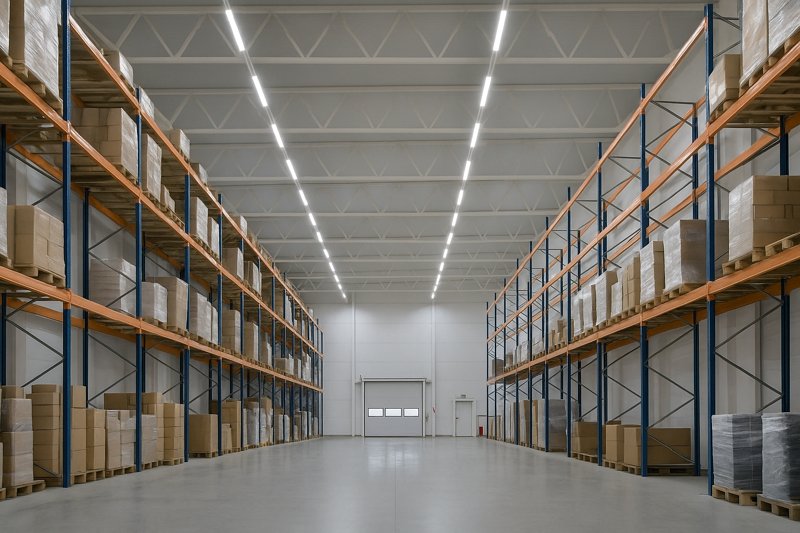
As a manufacturer, I work with professionals like Tom who are solving real-world business problems for their industrial clients. In this sector, lighting isn’t about aesthetics; it’s about performance. The questions are different. Will this light reduce accidents? Will it lower our massive electricity bill? Will it survive the dust, moisture, and vibration of a factory floor? Can it help our workers spot defects more easily? The answer to all of these is a definitive yes, but only if you specify the right kind of industrial-grade LED system. Let’s move beyond simple illumination and talk about how to use LED strips as a strategic tool for industrial improvement.
How Do You Properly Illuminate Large, High-Ceiling Spaces?
A massive warehouse or factory floor is notoriously difficult and expensive to light. Old metal-halide or fluorescent high-bays are inefficient, take time to warm up, and create pools of light with dark areas in between. How do you achieve bright, even light from 30 feet up?
You achieve superior illumination by using high-lumen, high-efficacy LED strips as primary light sources, often in rigid fixtures. This approach replaces inefficient old technology, delivering more light exactly where it’s needed while consuming up to 70% less energy.
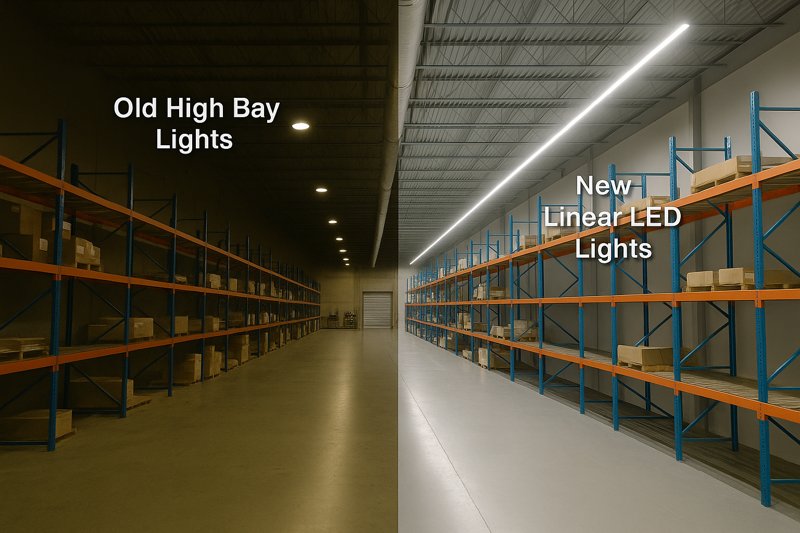
The business case here is simple and powerful. Industrial facilities run their lights for 12, 16, or even 24 hours a day. The energy consumption is enormous. High-output LED strips offer a massive leap in efficacy, measured in lumens per watt (lm/W). A typical old fixture might deliver 60 lm/W; a modern LED system can easily exceed 150 lm/W. For a facility manager, this means you get more and better light for less than half the energy cost. Furthermore, the 50,000+ hour lifespan of LEDs means you virtually eliminate the costly and disruptive process of hiring scissor lifts to replace burnt-out lamps in high ceilings.
A Deeper Dive into High-Bay and General Industrial Lighting
For a project manager like Tom, being able to present a clear ROI calculation is the key to winning industrial contracts.
-
Moving Beyond "Bulbs": Linear Illumination1
One of the key advantages of LED strips is their linear form factor. Instead of creating pools of light from a single point, they create long, continuous lines of light. When used in high-bay applications, this is ideal for illuminating warehouse aisles. The light is distributed evenly along the entire length of the aisle, from the floor to the top of the racks, eliminating the "cave effect" where the middle of the rack is dark. This significantly improves visibility for forklift operators and workers picking stock, directly leading to fewer errors and accidents. -
The Math of Efficiency: Lumens, Watts, and Efficacy2
These are the core metrics for an industrial client.- Lumens: The total amount of visible light produced. For high-ceiling spaces, you need high-lumen output strips, often in the range of 1500-3000 lumens per meter (or 500-1000 lumens per foot).
- Watts: The amount of energy consumed.
- Efficacy (lm/W): The "miles per gallon" of lighting. This is the most important number for calculating energy savings.
| Lighting Technology | Typical Efficacy (Lumens/Watt) | Lifespan (Hours) | Key Weaknesses |
|---|---|---|---|
| Metal Halide (Old High-Bay) | 65-85 lm/W | 10,000 – 15,000 | Long warm-up time, poor color, frequent failure. |
| T8 Fluorescent (Old Tubes) | 80-100 lm/W | 20,000 – 30,000 | Contains mercury, sensitive to cold, flickers. |
| High-Output LED Strip3 | 140-180+ lm/W | 50,000 – 100,000 | Instant-on, high quality light, extremely durable. |
- System Integration4
For these applications, the LED strip is part of a complete fixture. We, as the factory, supply the core LED strip "light engine" to fixture manufacturers or for direct integration into robust aluminum extrusions. These extrusions act as both the housing and the heat sink, which is critical for ensuring the longevity of high-power LEDs running for long hours.
What Makes an LED Strip Tough Enough for Industrial Use?
A factory is not a living room. There’s dust, splashing liquids, chemical vapors, and constant vibrations from heavy machinery. A standard, unprotected LED strip would fail in weeks. How do you guarantee your installation will survive?
Industrial-grade durability is achieved through robust physical protection, defined by an IP rating. Strips must be fully sealed in materials like silicone that can withstand moisture, dust, and impact without degrading over time.
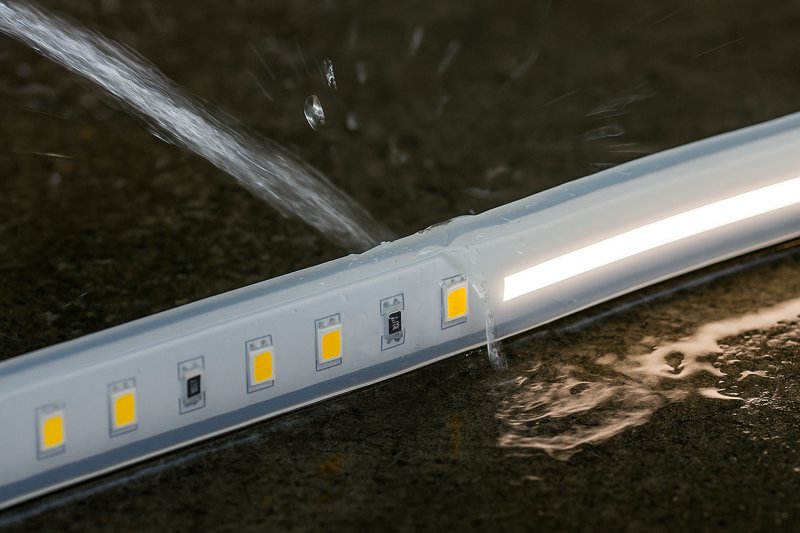
This is a critical conversation that directly addresses Tom’s pain point about faulty products and false claims. In an industrial setting, a lighting failure isn’t just an inconvenience; it can shut down a production line or create a serious safety hazard. The Ingress Protection (IP) rating is a two-digit number that tells you exactly how well a product is sealed. This is a certified standard, not a marketing term. As a manufacturer, providing genuine test reports and certifications for our IP-rated products is how we build trust. We ensure that when we say a strip is IP67, it has been rigorously tested to meet that standard and will perform reliably even when submerged in water.
A Deeper Dive into Industrial-Grade Durability
Understanding and explaining these features positions you as an expert in reliable systems, not just a seller of lights.
- Decoding IP Ratings5
The IP code is simple once you know what the numbers mean.- First Digit (Solids): Protection against solid objects, from fingers down to fine dust.
6is the highest rating, meaning "Dust Tight6." This is essential for environments like woodworking shops, metal fabrication facilities, or any dusty warehouse. - Second Digit (Liquids): Protection against water. This ranges from dripping water (
1) to powerful water jets (6) to full immersion (7and8).
- First Digit (Solids): Protection against solid objects, from fingers down to fine dust.
| IP Rating | Solids Protection | Liquids Protection | Common Application |
|---|---|---|---|
| IP20 | Basic (No Dust Seal) | None | Clean, dry areas only (e.g., climate-controlled office). Not for industrial use. |
| IP65 | Dust Tight | Water Jets from any direction | General factory floors, areas requiring hose-down cleaning. |
| IP67 | Dust Tight | Temporary Immersion (1m deep) | Food processing plants, outdoor areas, very wet locations. |
- The Right Way to Seal: Silicone Extrusion7 vs. Coatings
Not all waterproof strips are made equal.- Cheap Method (Epoxy Coating): Some companies pour a clear epoxy resin over a standard strip. This is a terrible solution. The epoxy yellows and cracks over time when exposed to heat and UV light, and it offers poor protection.
- Good Method (Silicone Sleeve): A standard strip is slid into a hollow silicone tube. This offers good protection but can have air gaps.
- Best Method (Full Silicone Extrusion): This is our industrial standard. The PCB with the LEDs is fed through a machine that extrudes a solid, sealed jacket of high-quality silicone around it. There are no air gaps. This provides the best protection against moisture, impact, and chemicals, and the silicone will not yellow or become brittle. It is the only truly reliable method for harsh environments.
When you specify a fully extruded, IP67-rated strip, you are providing your client with a product that is truly engineered for the long-term rigors of an industrial facility.
How Can Task Lighting Boost Productivity and Quality Control?
General overhead lighting is great for navigation, but it’s terrible for detailed work. It creates shadows from the worker’s own body and from machinery, making it difficult to assemble small parts or inspect finished goods. How do you solve this?
You boost productivity by putting the light source exactly where the work is happening. By integrating linear LED strips directly into workstations, machinery, and inspection tables, you deliver bright, shadow-free light that improves worker speed and accuracy.
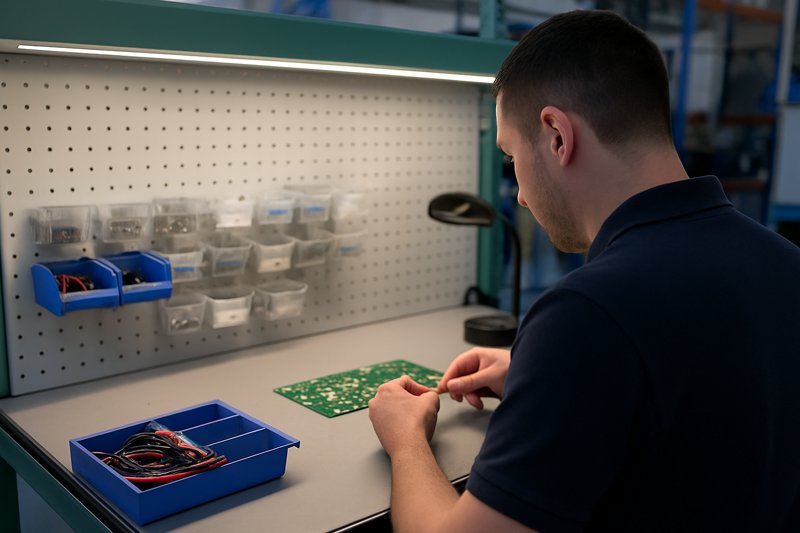
This is where the unique form factor of LED strips becomes an incredible asset. You can’t mount a giant high-bay fixture inside a CNC machine, but you can easily mount a rugged, low-profile IP65 strip. This is the concept of "localizing" the light. Instead of wasting energy trying to blast an entire room with enough light for the most detailed task, you provide good ambient light everywhere and then add high-quality, targeted light only at the workstations that need it. This layered approach is far more efficient and effective. For quality control, this is a game-changer.
A Deeper Dive into Industrial Task and Inspection Lighting
This is about selling a solution that improves your client’s final product.
- The Right Light for the Job
Different tasks require different qualities of light.- Assembly & General Machining: The main requirement is high brightness and shadow elimination8. A standard 4000K or 5000K strip with a good diffuser, mounted close to the work area, is perfect. This reduces eye strain and makes it easier to handle tools and parts.
- Quality Control & Inspection: This is where Color Rendering Index (CRI)9 becomes critical again. A high CRI (>90) light source reveals the true colors of materials. This is vital for tasks like:
- Inspecting paint finishes for color matching and defects.
- Checking the color-coding on electrical wires.
- Identifying subtle imperfections in textiles or printed materials.
Using a cheap, low-CRI light for inspection means defects will be missed, which can be far more costly than the investment in proper lighting.
| Industrial Application | Primary Lighting Need | Recommended LED Strip Specification | Why it Works |
|---|---|---|---|
| Warehouse Aisles | High Brightness, Longevity | High-Output (150+ lm/W), 5000K, 50,000hr life | Maximizes visibility and safety, minimizes energy and maintenance costs. |
| Assembly Workstation | Shadow-Free Task Light | Medium-Output, 4000K, in a channel with a diffuser | Reduces eye strain, improves speed and accuracy. |
| CNC Machine Interior | Durability, Brightness | IP67 Rated10, 5000K, vibration resistant | Survives splashing coolants and machine vibration. |
| Paint Inspection Booth | Accurate Color | High CRI (95+), D50 (5000K) standard, in a diffuse fixture | Reveals true colors and subtle defects that low-CRI light would hide. |
By providing this level of specific guidance, you show the client that you understand their operational needs, not just their lighting needs.
Conclusion
In warehouses and factories, LED strips are not a simple upgrade; they are a strategic investment in safety, efficiency, and quality. Choosing robust, certified, industrial-grade systems is the key to delivering these benefits and achieving a powerful return for your client.
-
Explore how Linear Illumination enhances visibility and safety in industrial settings, making it a smart choice for warehouses. ↩
-
Understanding these metrics is crucial for making informed decisions about energy-efficient lighting solutions. ↩
-
Discover the benefits of High-Output LED Strips, including energy savings and durability, for your industrial lighting needs. ↩
-
Learn how System Integration can optimize lighting solutions and improve efficiency in industrial applications. ↩
-
Understanding IP Ratings is crucial for selecting the right lighting solutions for industrial environments. ↩
-
Learn about Dust Tight ratings to ensure your equipment is protected in dusty environments. ↩
-
Exploring Silicone Extrusion reveals the best methods for ensuring durability and protection in harsh conditions. ↩
-
Eliminating shadows can significantly enhance visibility and precision, leading to better productivity and safety. ↩
-
Understanding CRI is crucial for ensuring accurate color representation in inspections, which can prevent costly mistakes. ↩
-
IP67 rating ensures durability and resistance to harsh conditions, making it ideal for demanding industrial environments. ↩
Interested in Our LED Solutions?
Get professional consultation and customized LED lighting solutions for your projects. Contact our expert team today.
Related Articles

How Do You Build Profitable Custom Vehicle and RV Interior LED Rope Lights?
You lose RV installation contracts because your interior lights fail on rough roads. Standard strips show bright dots on glossy…

How to Perfect Bookshelf and Display Cabinet LED Rope Lighting?
You lose retail clients when bookshelves look incredibly dark. Ugly shadows hide expensive products inside display cabinets daily. You need…

How to Master Mirror and Vanity LED Rope Light Installation?
Your clients complain about ugly shadows in their bathroom mirrors. Bad lighting ruins expensive vanity designs. You lose future contracts…
