

LED Strip Lighting: Quality vs Price – What’s Worth the Investment?
You have two quotes on your desk. One is 30% cheaper than the other. The specs look similar on paper, and the cheaper option could increase your profit margin significantly, but a past failure on a project still haunts you.
Investing in premium-quality LED strip lighting is always worth it for professionals. The higher initial cost buys superior reliability, color consistency, and safety certifications that protect your reputation, eliminate costly callbacks, and ensure the client’s long-term satisfaction.
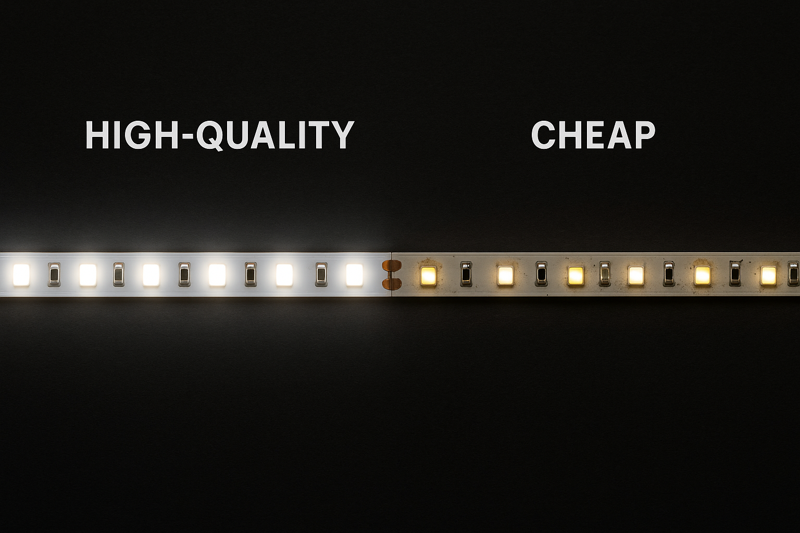
From my position as a factory owner, I see the entire spectrum of the market. I see the raw components that go into a $2-per-meter strip and the ones that go into a $10-per-meter strip. To an installer on-site, they might look identical when they first come out of the box. The real difference, the one that defines your reputation as a professional, only becomes apparent six months, a year, or three years after the installation is complete. My goal is to show you exactly what you’re paying for when you choose quality, so you can make an informed investment, not just a cheap purchase.
Why Does the PCB Material and Thickness Matter So Much?
You install a new strip light in a high-end retail display. Six months later, you get an angry call from the client. Patches of the strip have gone dark, making their premium product display look cheap and neglected.
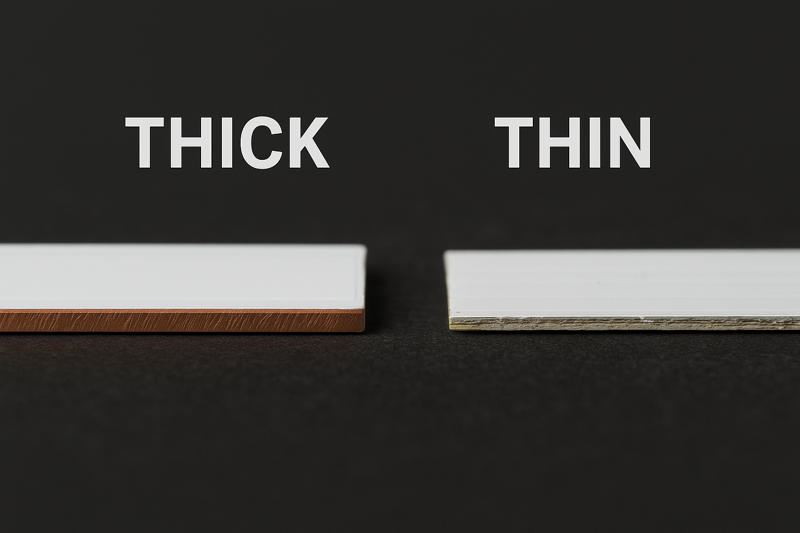
The Printed Circuit Board (PCB) is the foundation. A high-quality, thick PCB with heavy copper traces acts as a heatsink, pulling damaging heat away from the LEDs. A cheap, thin PCB traps heat, causing the LEDs to fail prematurely.
The single greatest enemy of an LED is heat. It’s the silent killer that degrades the phosphor, reduces the light output, and leads to complete failure. When a strip fails, the client doesn’t blame the PCB’s copper weight; they blame you, the installer. Choosing a strip with a robust foundation is the first and most critical step in ensuring the longevity of your work and the integrity of your professional reputation. Think of it as building a house: you would never accept a cheap, weak foundation, no matter how nice the paint looks.
Heat Dissipation: The Key to LED Lifespan
An LED chip is a semiconductor. When electricity passes through it, it produces light, but it also produces heat as a byproduct. While it’s much less heat than an incandescent bulb, this heat must be managed. If it’s not effectively drawn away from the chip, the chip’s internal temperature will rise, and this is where the damage begins. This degradation process is called lumen depreciation1. A quality strip might maintain 90% of its initial brightness after 50,000 hours (L90 at 50,000 hours). A cheap strip, with its poor heat management, might fall to 70% brightness (L70) in less than 10,000 hours, with sections failing completely long before that.
The Technical Difference: Copper Weight2 and PCB Thickness3
When we talk about a "good" PCB, we are primarily referring to two things:
- Copper Weight: This refers to the thickness of the copper layer laminated onto the PCB. It’s measured in ounces per square foot. Cheap strips often use 1oz copper, or sometimes even less. For our professional-grade strips, we insist on a minimum of 2oz, and often 3oz or 4oz for high-power strips. A thicker copper layer is like a wider highway for electricity, reducing electrical resistance and, more importantly, providing a much larger thermal path to dissipate heat away from the LEDs.
- PCB Thickness: A flimsy, flexible PCB is a sign of a cheap product. A thicker, more rigid board provides better structural integrity and contributes to the overall thermal management4 of the system. It also makes the strip more durable during handling and installation, reducing the chance of accidentally damaging a circuit trace.
Here’s how this choice directly impacts a business like Tom’s:
| Feature | Cheap Strip (Price-Focused) | Premium Strip (Rhstriplighting) | Impact on Your Business |
|---|---|---|---|
| Copper Weight | 1oz Copper | 2oz – 4oz Copper | Better heat dissipation means the lights last years longer, preventing angry client calls. |
| PCB Thickness | Thin and flimsy | Thick and robust | Easier and safer to handle during installation, less risk of damage or delamination. |
| Solder Mask | Thin, uneven application | High-quality, uniform layer | Protects copper traces from oxidation and accidental shorts, increasing system reliability. |
| Resulting Lifespan | < 10,000 hours to L70 | 50,000+ hours to L80/L90 | Install once and be confident in its longevity. Your reputation is built on reliability. |
Are All LED Chips Created Equal?
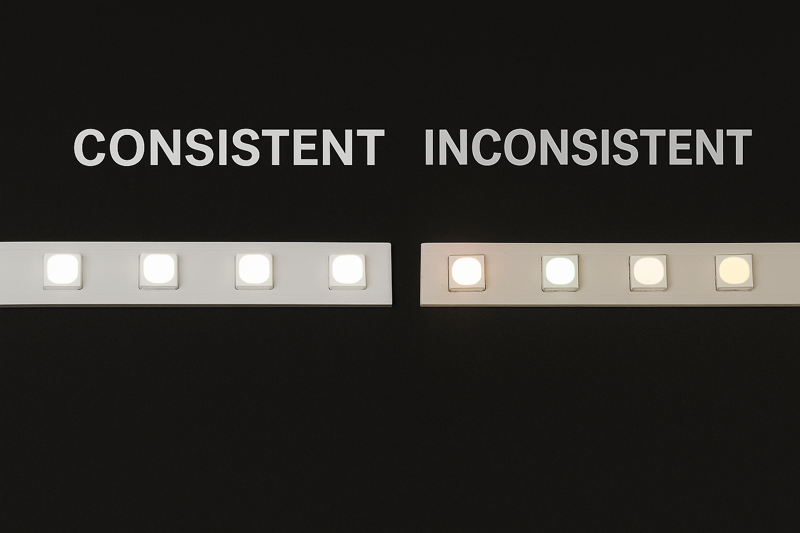
You install a long run of white LED strips for a cove lighting project. When you turn it on, you see a noticeable and ugly shift in color. The beginning of the run looks yellowish, and another reel you added looks slightly pinkish.
Absolutely not. Premium strips use high-quality, tightly-binned LED chips. This ensures perfect color consistency from batch to batch and a high Color Rendering Index (CRI), making illuminated objects look natural and vibrant. Cheap strips use low-grade, unsorted chips.
For a lighting designer or an architect, light quality is everything. It’s the entire point of the installation. When the color isn’t right, the project is a failure. As a manufacturer, we pay a premium for LEDs from top-tier producers who can guarantee the quality and consistency of their chips. This cost is passed on, but it’s what allows our clients to confidently install 100 meters of a strip and know that meter 1 will look identical to meter 100.
The Color Consistency Problem: LED Binning
LED manufacturing is a complex process, and no two LED chips come out of the factory exactly the same. They have slight variations in color and brightness. The process of testing and sorting these LEDs into groups ("bins") with very similar characteristics is called binning.
- Top-Tier Manufacturers: They perform very tight binning. When we order a 3000K chip, we can specify a bin that is within a 3-step MacAdam ellipse. In simple terms, this means the human eye cannot perceive any color difference between any of the chips from that bin.
- Low-Cost Manufacturers: They buy the leftover, unsorted chips that the top-tier factories rejected. This is why one reel of their 3000K strip might look warm and yellow, while the next looks neutral or even has a green tint. They are cheap because they are inconsistent. For a professional, this inconsistency is unacceptable.
Why High CRI is a Non-Negotiable Feature
Color Rendering Index (CRI)5 is a measure of how accurately a light source illuminates the true colors of an object, on a scale of 0 to 100. The sun has a CRI of 100.
- Low CRI (<80): This is common in cheap strips. It makes colors look "off." Reds will look dull and brownish, and skin tones will look pale and unhealthy. It is completely unsuitable for retail, gallery, or high-end residential applications.
- High CRI (90-98): This is the standard for professional lighting. A 95+ CRI light source will render colors almost identically to natural daylight. It makes food look appetizing, artwork look vibrant, and retail products look appealing. Our clients who work with designers and architects understand that specifying a high-CRI strip6 is not a luxury; it’s a fundamental requirement for a successful project outcome. You are not just selling light; you are selling quality of light.
What Hidden Components Separate Premium from Cheap Strips?
The lights look great, the color is perfect. But a year later the strip is peeling off the ceiling. Or you notice the resistor components on the strip are discolored from heat, a clear sign of impending failure.
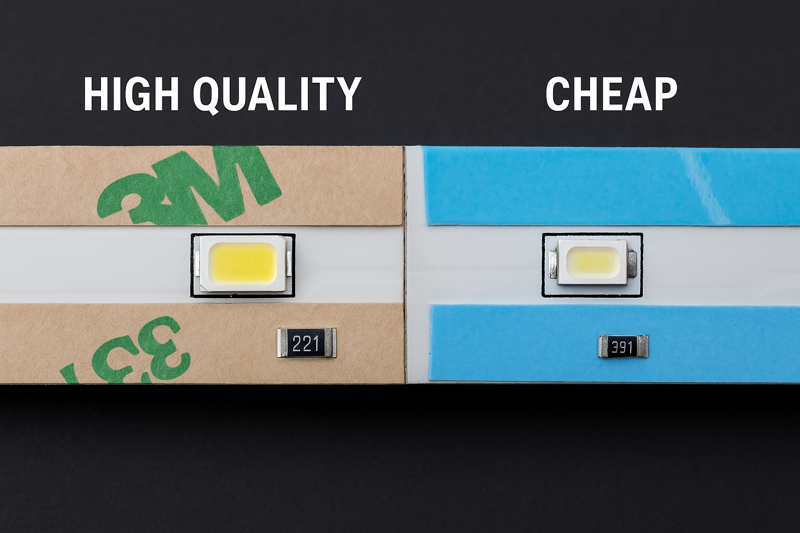
Premium strips use authentic 3M VHB adhesive for a permanent bond, properly rated resistors that don’t overheat, and high-quality waterproof coatings that don’t yellow or crack. Cheap strips cut corners on these "hidden" components, which become the primary points of failure.
An LED strip is a system of components, not just a line of LEDs. I’ve seen installations ruined not by LED failure, but by something as simple as bad double-sided tape. The manufacturer saved a few cents per meter, and it cost the installer a full day of labor to go back and fix it. When we source components for our strips, we focus on the entire bill of materials (BOM), because we know that a system is only as strong as its weakest link.
The Adhesive Tape: A Critical Point of Failure
There are many companies that make red-liner tape that looks like 3M tape. Most of it is cheap acrylic adhesive that will lose its bond when exposed to the heat cycles of the LED strip’s operation.
- Cheap Approach: Use a generic, low-cost adhesive. It holds for a few weeks or months, but then it fails, especially on wooden or slightly textured surfaces.
- Professional Approach: We use authentic 3M VHB (Very High Bond) series tape7. It is specifically engineered to create a permanent bond that can withstand heat, humidity, and vibration. It costs significantly more, but it guarantees the strip will stay where you put it. The cost of a callback to re-adhere a fallen strip will always be more than the initial cost difference for proper tape.
Resistors and Other On-Board Components
The small rectangular components on the strip are surface-mount resistors8. Their job is to control the amount of current flowing to the LEDs.
- Cheap Approach: Use the smallest, cheapest resistor that is "just enough" to get the job done. When the strip is run for long periods, this undersized resistor gets extremely hot, exceeding its thermal limits. This heat can damage the PCB and cause the resistor to fail, which creates an open circuit and kills the entire segment of LEDs.
- Professional Approach: We use properly sized resistors from reputable electronics brands. They are specified to comfortably handle the required load without overheating. We design for thermal stability, which means every component on the board is chosen to last, not just to work when it’s first plugged in. This same philosophy applies to the silicone used for waterproofing (high-quality silicone doesn’t yellow or crack) and the phosphor coatings on the LEDs themselves. It’s a commitment to quality throughout the entire product.
Does a Higher Price Guarantee Authentic Certifications and Better Service?
You proudly show your client the UL certificate provided by your cheap supplier. The client’s inspector scans it and informs you it’s fake or belongs to another company. Your project is red-flagged, and your credibility is destroyed.
A reputable, quality-focused manufacturer’s price includes the significant cost of legitimate, traceable safety certifications like UL or ETL. It also includes professional support, reliable logistics, and a partnership you can trust. A suspiciously low price is often a red flag for falsified documents.
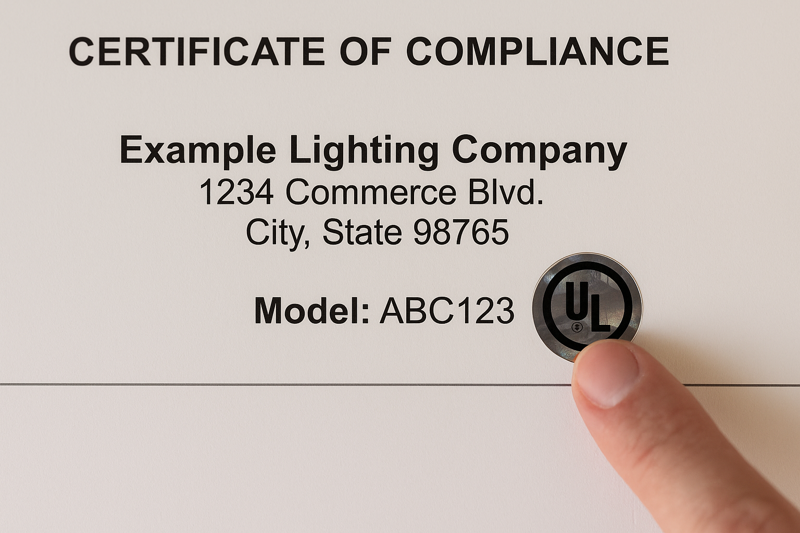
For my professional clients in North America, this is a make-or-break issue. A legitimate UL or ETL listing is not just a piece of paper; it’s a legal requirement for many commercial installations. It’s an assurance that the product has been rigorously tested by a third party for fire and electrical safety. The process of obtaining and maintaining these certifications is expensive and time-consuming. This cost is necessarily built into the price of a compliant product. I have heard horror stories from buyers like Tom who were burned by suppliers providing fake certificates. The consequence is not just lost money on the product; it’s a failed inspection, project delays, and catastrophic damage to their business reputation.
The True Cost of Certification
A UL or ETL listing file can cost tens of thousands of dollars to establish for a product family, with thousands more each year in mandatory factory inspections to maintain it.
- The Cheating Supplier: They avoid this cost. They might steal another company’s UL file number or use Photoshop to create a fake certificate. They are betting you won’t check the public UL/ETL online database. This is a massive risk for any professional installer in a regulated market.
- The Professional Partner (Rhstriplighting): We view these certifications as a core part of our product offering. Our prices reflect the investment in safety and compliance. We provide our clients with our legitimate file numbers and encourage them to verify them independently. This transparency builds the trust that is essential for a long-term business relationship.
You’re Paying for a Partner, Not Just a Product
Beyond the physical product, the price difference often reflects the quality of the supplier themselves.
- Communication: Are you dealing with a sales rep who understands your technical questions, or someone just processing an order? Our team is trained to help clients with project calculations, product selection, and troubleshooting.
- Quality Control (QC): Does your supplier have a multi-stage QC process, including testing before the product leaves the factory? We do. This prevents you from receiving a dead-on-arrival reel, which can derail a project schedule.
- Logistics and Reliability: Can your supplier meet deadlines and provide accurate shipping information? As Tom knows, a delayed shipment can mean missing an entire selling season or project deadline. Reliability has immense value.
When you invest in a quality strip from a reputable manufacturer, you are investing in a smoother, safer, and more predictable business process.
Conclusion
The choice between price and quality is a choice between a short-term saving and a long-term investment. A premium LED strip is not just a product; it’s a guarantee of performance, reliability, and peace of mind.
-
Understanding lumen depreciation is crucial for ensuring the longevity and performance of LED lights. ↩
-
Explore how copper weight impacts electrical resistance and heat dissipation in PCBs for better LED performance. ↩
-
Learn why thicker PCBs enhance durability and thermal management, ensuring reliable LED lighting solutions. ↩
-
Discover effective thermal management strategies to prolong LED lifespan and improve efficiency. ↩
-
Understanding CRI is crucial for selecting lighting that accurately represents colors, enhancing aesthetics in any space. ↩
-
High-CRI strips ensure vibrant color representation, making them essential for professional applications like retail and galleries. ↩
-
Explore this link to understand the benefits of using 3M VHB tape for durable and reliable bonding solutions. ↩
-
Learn about surface-mount resistors to ensure your LED strips function efficiently and avoid overheating issues. ↩
Interested in Our LED Solutions?
Get professional consultation and customized LED lighting solutions for your projects. Contact our expert team today.
Related Articles

How Do You Build Profitable Custom Vehicle and RV Interior LED Rope Lights?
You lose RV installation contracts because your interior lights fail on rough roads. Standard strips show bright dots on glossy…

How to Perfect Bookshelf and Display Cabinet LED Rope Lighting?
You lose retail clients when bookshelves look incredibly dark. Ugly shadows hide expensive products inside display cabinets daily. You need…

How to Master Mirror and Vanity LED Rope Light Installation?
Your clients complain about ugly shadows in their bathroom mirrors. Bad lighting ruins expensive vanity designs. You lose future contracts…
