

Protecting LED Rope Light Connections: Why Do Your Outdoor Projects Keep Failing?
You spend thousands on outdoor lighting. Then a heavy storm hits. Water destroys the wire connections. The entire system goes dark. Your clients demand their money back.
To protect LED strip connections from weather, you must abandon electrical tape. Cut exactly on the factory marks, use IP67 silicone end caps, inject neutral silicone glue, and allow 24 hours to cure. Never bend the connections horizontally.
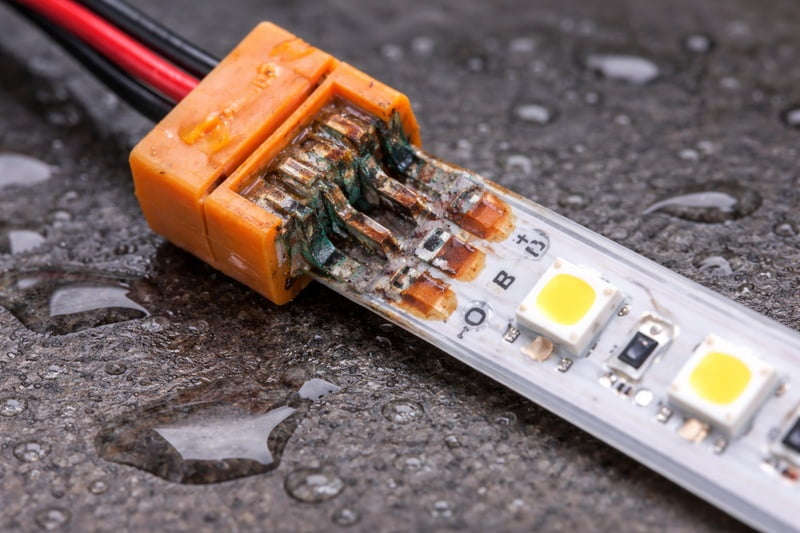
I am Jeremy Hou. I am the owner of Rhstriplighting in China. I talk to buyers like Tom from the United States every single day. Tom buys LED strips to resell to local contractors. His contractors always complained about water damage. The strips were fine, but the connections burned out. They used cheap tape and IP65 potting compound outdoors. Water always finds a way in. I taught Tom how to do it right. Here is exactly how to seal your connections and protect your profits.
Why Does Electrical Tape Fail on LED Strip Connections?
You wrap the wire connection tightly with black tape. It looks safe and strong today. Summer sun melts the adhesive. Winter cold shrinks the plastic. Water rushes in tomorrow.
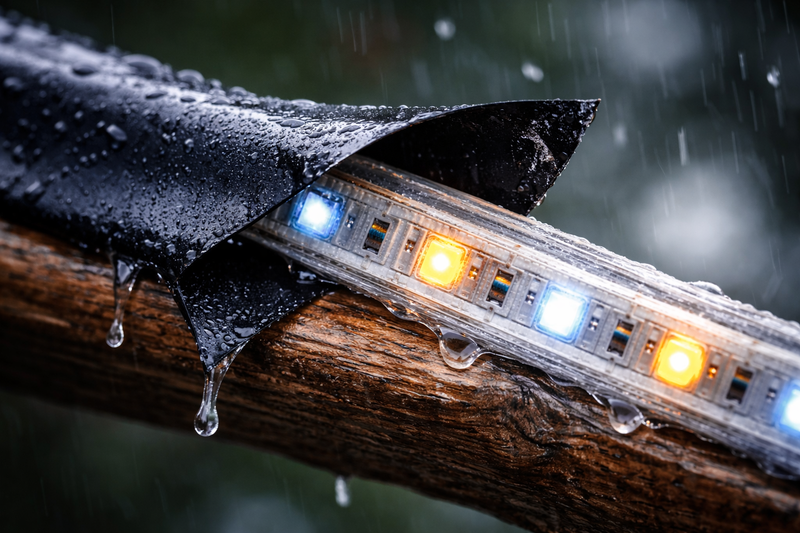
Electrical tape cannot handle weather changes. You must use IP67 hollow extrusion or IP68 solid extrusion silicone covers. Silicone maintains a perfect seal in hot and cold weather. It stops water from reaching the bare copper wires.
The Chemical Weakness of Tape Adhesive
Tape uses basic chemical glue. It is cheap. The hot summer sun heats this glue quickly. The glue turns into liquid. The tape slides off the connection point. Water enters the gap. When you use cheap IP65 potting compound waterproofing, it does not bond well with tape. The system fails quickly. The sun breaks the plastic tape down into hard pieces. Your connection loses all protection in just one month. You must stop using tape outdoors.
The Shrinking Problem in Winter
Cold weather is worse for basic tape. Plastic tape shrinks when freezing temperatures hit. It pulls away from the wire. The gap lets freezing rain and snow melt inside. We solve this problem by using pure liquid silicone covers1. You must inject high quality glue into a silicone end cap. The silicone cures and bonds strongly with the IP67 waterproofing by hollow extrusion. Silicone does not shrink in the cold. It remains flexible and tight.
The Right Way to Protect the Joint
Tape is only for temporary indoor use. Real outdoor jobs need real permanent seals. You slide a tight silicone cap over the end of the strip. You fill it completely with non-acidic glue2. You wait a full 24 hours for it to dry. The new seal becomes exactly as strong as the factory seal. Your COB high-density flexible strip light stays safe. The soft light continues to shine without dark spots caused by rust.
| Method | Material Strength | Weather Resistance | Long Term Result |
|---|---|---|---|
| Tape | Very weak adhesive | Poor | Melts and falls off |
| Shrink Tube | Medium strength | Okay | Cracks under UV light |
| Silicone Cap and Glue | High strength | Excellent | Lasts for years |
How Do Cutting Mistakes Ruin Your Waterproof Seals?
Your worker cuts the strip with dull scissors in a hurry. The edge is crushed and uneven. The end cap does not fit tight. The connection fails in the first rain.
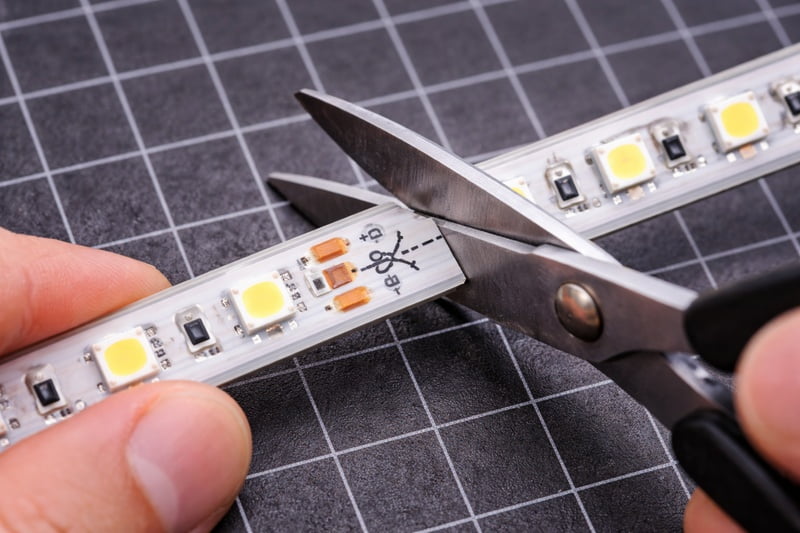
You must cut the strip perfectly straight exactly on the factory marks. Use sharp scissors. For a 24VDC strip, cut at the 50mm mark. A clean cut ensures the silicone end cap sits flat.
The Danger of Uneven Cuts
Many workers guess where to cut. They cut between the lines. This destroys the circuit board completely. It also bends the outer casing out of shape. If the IP67 waterproofing by hollow extrusion silicone tube3 is bent at the edge, the cap will leave a tiny hole. Water gets in through this tiny hole. The water travels down the empty air tube. It kills the whole length of the light. You must respect the physical shape of the casing.
Following the Correct Measurements
We print exact lines on the back of the strips. For our 12VDC models, the cutting length is 25mm. For our 24VDC models, the cutting length is 50mm. You must follow these exact lines. You must use very sharp tools to make the cut. A sharp blade makes a perfectly clean flat edge. A clean edge matches the shape of the end cap perfectly. This allows the glue to spread evenly around the cut point.
Preparing for the Connection
After cutting the light, you need to connect the power wires. Do not peel the back side too hard. Our COB lights feature high luminous efficiency4 and no dark areas. If you pull the copper too hard, the first LED chip breaks near the connection. You will see an ugly dark spot. Treat the cut point gently. Clean the area before applying the glue. Dirt prevents the glue from making a waterproof lock.
| Cut Type | Tool Used | Silicone Fit | Water Danger |
|---|---|---|---|
| Fast angled cut | Dull wire cutters | Poor fit | High risk |
| Cut off the line | Knife | Tube is crushed | High risk |
| Straight clean cut | Sharp scissors | Perfect fit | Zero risk |
Are You Bending the Connections and Breaking the Wires?
You pull the fresh connection wire around a tight corner. The light turns on. Tomorrow, it goes totally dark. You broke the solder joint inside the seal.
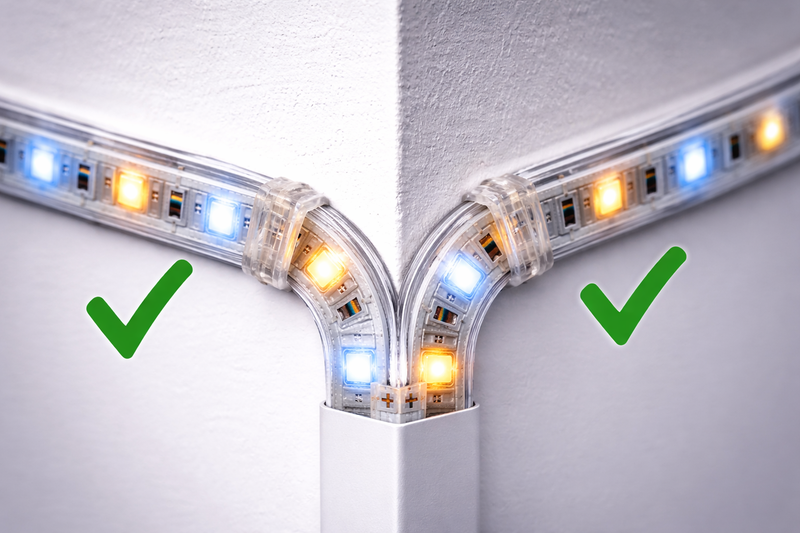
You must never bend the strip horizontally. You must keep the bending diameter to R > 15mm. Pushing a sealed connection around a sharp corner breaks the FPC copper board immediately.
The Horizontal Bending Ban
Contractors often try to bend the strip left or right on a flat surface to follow a wall. We warn you strongly: Please do not bend it horizontally. The circuit board inside is totally flat. The solder joints at the power connection point are very weak at the sides. A horizontal bend5 cracks the metal instantly. It also rips the soft silicone glue open. This destroys the physical and electrical protection at the same time.
The 15mm Safe Rule
You can curve the strip up or curve it down. But you must be very gentle. The standard factory rule is R > 15mm6. If you bend the connection section tighter than 15mm, you pull the wires right out of the silicone cap. The seal breaks open. The IP68 waterproofing by solid extrusion is strong, but it needs correct physical handling. A gentle curve keeps the stress away from the critical glue joint.
The Danger of Folding
Sometimes extra wire sits near a wall corner. A worker folds it to make it look neat. We say: Please do not fold it in half. Folding destroys the electrical copper path immediately. When a folded connection sits outside, rain water pools inside the deep crease. It rusts the copper in just one week. Keep the installation path smooth and wide. Do not force the material.
| Action | Allowed | Result on Connection Seal |
|---|---|---|
| Curve up and down lightly | Yes (R > 15mm) | Seal remains intact |
| Bend left and right flat | No | Tears the glue open |
| Fold flat in half | No | Breaks wire and cracks seal |
Does Internal Heat Destroy the Glue at the Connection?
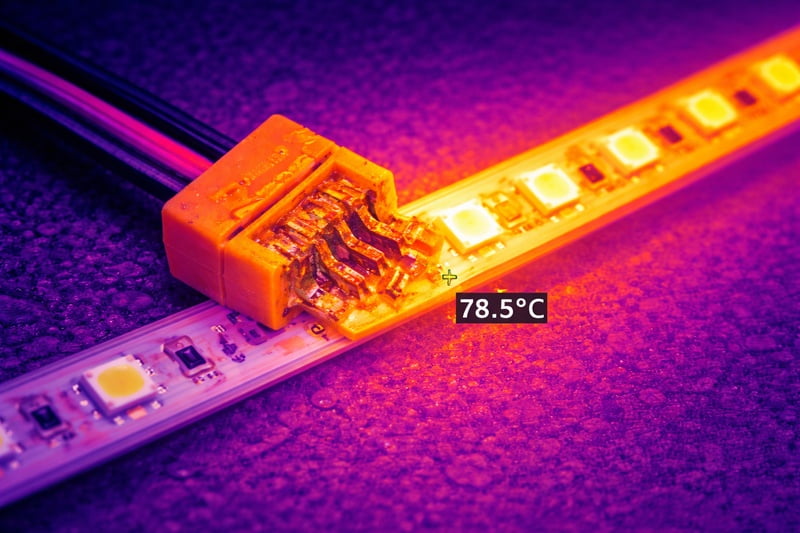
You buy good silicone. You seal it nicely. But you run too much voltage through a small wire. The wire heats up. The glue turns brown and cracks.
Heat destroys waterproof seals from the inside. Use 24VDC instead of lower voltages for long runs to reduce current. Use high efficiency chips so power becomes light, not heat at the joint.
Voltage Choice Matters
Voltage choice changes heat levels at the joint. Many buyers just use 12VDC. 12VDC is bad for long outdoor runs. 12VDC pulls a very high current at the very first connection point. High current creates massive friction. Friction creates high heat. We offer 24VDC7 for outdoor use. 24VDC uses less current to push the same power. Less current means the connection stays cool. The connection glue does not bake and crack.
High Output Efficiency
A cheap chip uses a lot of energy to make a little light and a lot of heat. The heat travels back to the connection. Our COB high-density flexible strip light features high luminous efficiency8. Almost all the power turns into bright light. Very little power turns into heat. The connection area stays entirely cool to the touch. This protects the delicate silicone glue.
Double Sided Copper Protection
We use thick FPC double sides copper. The thick copper works like a fast road. It takes the heat away from the initial connection point. It spreads the heat across the whole board evenly. Single side copper traps the heat exactly where the wires are soldered. That intense heat melts the waterproof cap from the inside out. Better copper saves your joints.
| Feature | Best Option | Reason for Choice | Heat Impact |
|---|---|---|---|
| Voltage | 24VDC | Lower running current | Joint stays cool |
| Light chip | High efficiency | More light | Less wasted heat |
| Copper Base | Double sided | Spreads heat fast | Prevents melting |
Why Do Cheap Coatings Fail at the Cut Points?
You seal the end properly. But the main body coating starts peeling backward from the cut. Water follows the peeled skin right into your new joint.
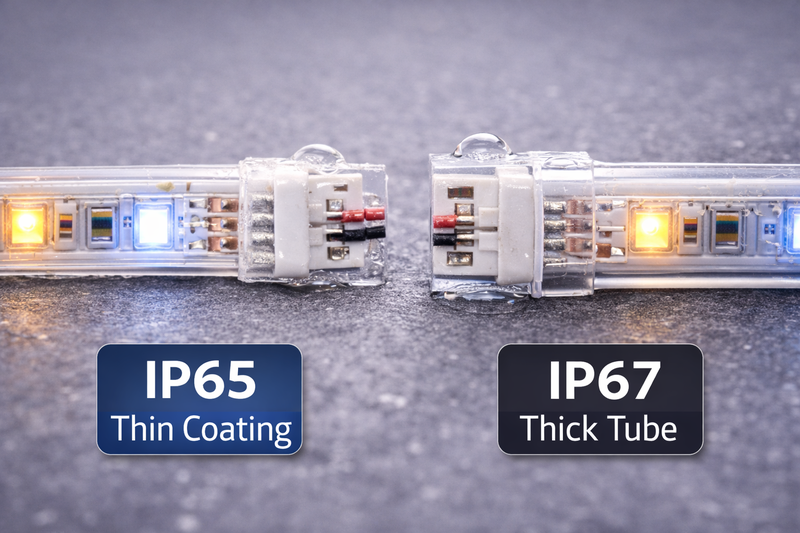
IP65 potting compound is too thin. You must use IP67 or IP68. Pure solid silicone bonds perfectly with the end cap glue. Cheap thin compound rejects the new glue and falls apart.
The Weakness of IP65
IP65 potting compound waterproofing is very popular because it is cheap. But it is only a tiny drop of glue on top of the board. When you cut it, the edge is terribly thin. When you try to put a cap on it, the glue has nothing to grab. The joint is weak from the start. Rain hits the edge and peels the thin layer back easily. Choose better grades.
The Strength of IP67 Hollow Extrusion
We recommend IP67 waterproofing by hollow extrusion. The LED strip sits fully inside a thick silicone tube. When you cut it, you have a thick silicone wall to work with. The new liquid silicone glue mixes perfectly with the thick wall. They bond chemically. They become one solid piece of plastic. Water cannot find a way through a permanent chemical bond.
The Ultimate IP68 Solid Extrusion
For the most extreme weather, Tom buys IP68 waterproofing by solid extrusion from us. We fill the entire tube with liquid silicone at the factory. When you make a cut, you just seal the solid block again. There is no air inside to trap humid fog. This blocks continuous rain pressure. It provides a massive shield.
| Rating | Method | Cut Point Bonding | Weather Defiance |
|---|---|---|---|
| IP65 | Drop compound | Poor, too thin | Fails quickly outside |
| IP67 | Hollow tube | Excellent, fuses nicely | Survives heavy rain |
| IP68 | Solid silicone | Perfect, totally sealed | Survives full flooding |
Conclusion
Protecting connections requires strict rules. Stop using tape. Cut exactly on the given marks. Use perfect silicone seals. Choose 24VDC to reduce heat. Never bend the connection too tightly. Save your project profit today.
-
Explore the advantages of silicone covers for outdoor use, ensuring durability and protection against harsh weather. ↩
-
Learn why non-acidic glue is crucial for creating strong, lasting seals in various applications. ↩
-
Understanding IP67 waterproofing can help you ensure your products are protected against water damage. ↩
-
Exploring high luminous efficiency can enhance your knowledge of energy-saving lighting solutions. ↩
-
Understanding the impact of horizontal bends can help prevent damage to circuit boards and ensure longevity. ↩
-
Learning about the R > 15mm rule can help maintain the integrity of electrical connections and waterproofing. ↩
-
Explore why 24VDC is ideal for outdoor use, ensuring cooler connections and longer-lasting performance. ↩
-
Learn about high luminous efficiency and how it maximizes light output while minimizing heat generation. ↩
Interested in Our LED Solutions?
Get professional consultation and customized LED lighting solutions for your projects. Contact our expert team today.
Related Articles

How Do You Build Profitable Custom Vehicle and RV Interior LED Rope Lights?
You lose RV installation contracts because your interior lights fail on rough roads. Standard strips show bright dots on glossy…

How to Perfect Bookshelf and Display Cabinet LED Rope Lighting?
You lose retail clients when bookshelves look incredibly dark. Ugly shadows hide expensive products inside display cabinets daily. You need…

How to Master Mirror and Vanity LED Rope Light Installation?
Your clients complain about ugly shadows in their bathroom mirrors. Bad lighting ruins expensive vanity designs. You lose future contracts…
