

RGB, Single Color, or RGBW: Which is the Smartest Choice for Outdoor Lighting Projects?
Your client wants it all: elegant lighting for quiet evenings, but also vibrant colors for parties and holidays. You install a standard RGB strip, and they immediately complain the "white" light looks strange and bluish, making their beautiful patio look cheap. Now you have a dissatisfied customer.
The smartest choice depends on the primary goal. Use Single Color for timeless architectural looks, RGB for pure party and holiday effects, and RGBW when your client needs both high-quality white light and vibrant colors from a single, versatile system.
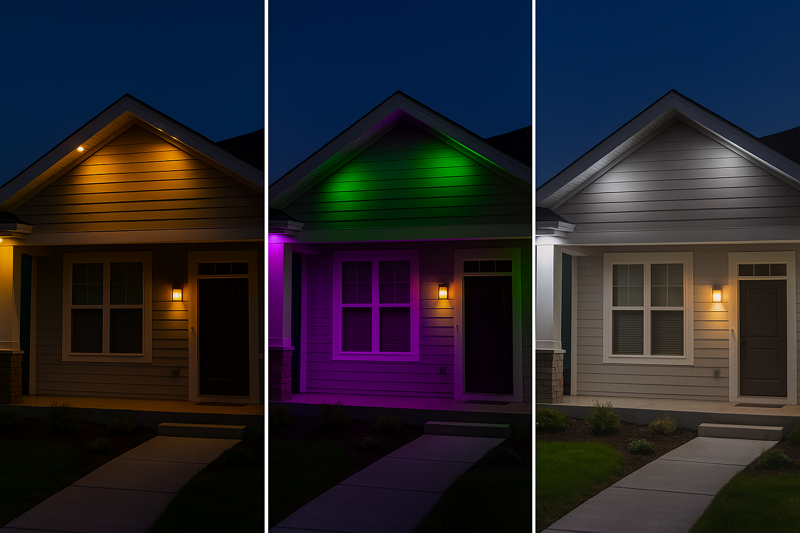
As a factory that manufactures all these options, I guide my professional clients through this decision every day. The choice isn’t just about features; it’s about managing client expectations and ensuring the final result matches their vision. For a business owner like Tom, recommending the right system builds trust and prevents costly callbacks. Let’s break down which system to use for which specific scenario.
How Do You Achieve a Timeless, Elegant Architectural Look?
Your client has invested in beautiful stonework, wood features, and professional landscaping. They want lighting that enhances these materials with a sophisticated glow, not a light show that distracts from them.
For a high-end, classic look, a Single Color LED strip is the superior choice. A warm white (like 2700K or 3000K) provides consistent, high-quality light that feels intentional and luxurious. It’s also the most reliable and cost-effective solution.
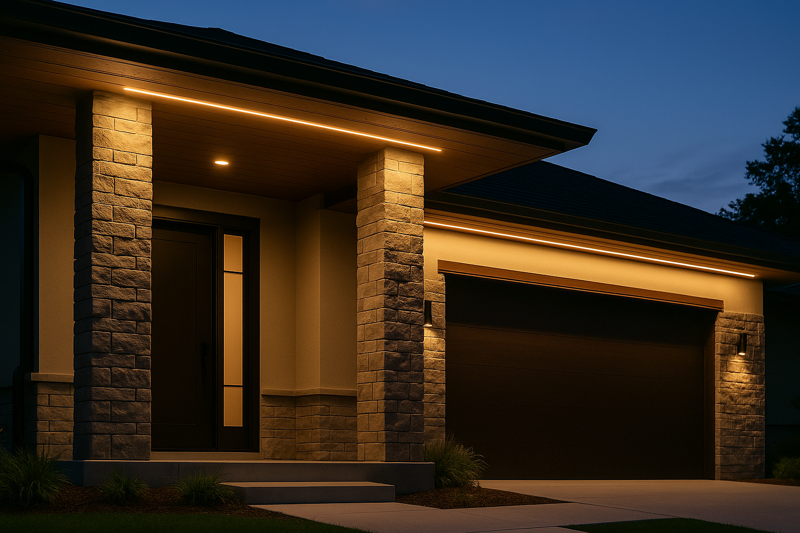
This is the foundation of professional landscape lighting. While colors are fun, the goal of architectural lighting is to showcase the architecture itself. Single Color strips are designed to do one thing perfectly: produce a beautiful and consistent shade of white. From my perspective as a manufacturer, their simplicity is their strength. With fewer components on the circuit board, there are fewer points of failure, leading to a longer lifespan and greater reliability. For contractors, this is critical—it means fewer service calls. It’s the "set it and forget it" option that will look just as good in ten years as it does on day one. When the goal is pure elegance, this is always the right answer.
Choosing the Right White for Architecture
| Color Temperature | "Feel" | Best For | My Insight |
|---|---|---|---|
| 2700K | Very Warm, Cozy, Candle-like | Traditional homes, wood tones, creating an intimate space. | Resembles incandescent light. Very inviting. |
| 3000K | Warm White, Inviting1 | The "all-around" choice. Great on stone, plants, and modern homes. | This is our most popular seller for a reason. It’s warm but still crisp. |
| 4000K | Neutral White, Crisp, Modern2 | Highlighting modern architecture, white surfaces, creating a clean look. | Can feel a bit stark or commercial if not used carefully in residential settings. |
What’s the Best System for Dynamic Holiday and Party Lighting?
Your client wants their house to be the star of the neighborhood on Halloween, Christmas, and the 4th of July. They want bright, saturated colors and dynamic effects to create a fun, festive atmosphere.
An RGB (Red, Green, Blue) system is built specifically for this purpose. It excels at creating millions of vibrant, saturated colors and is perfect for decorative lighting and special events. Its major weakness is its inability to produce a high-quality white light.
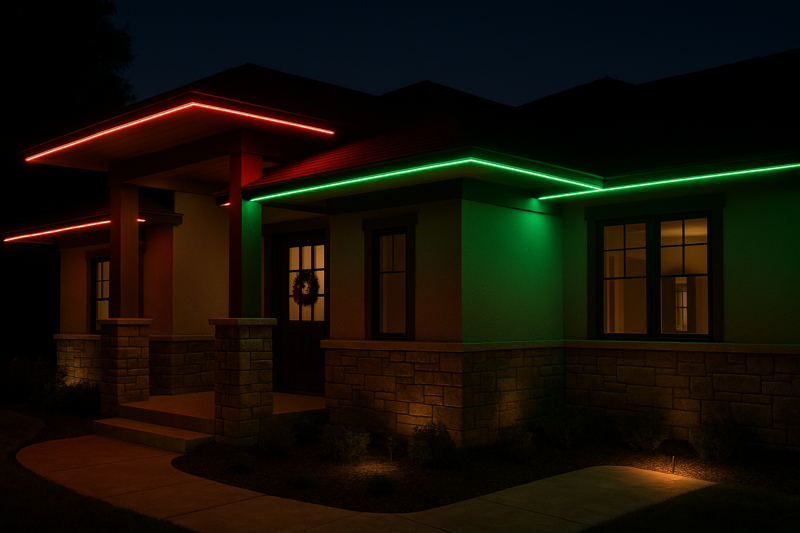
RGB strips work by combining red, green, and blue LEDs to mix different colors. When all three are on at full power, they create a composite "white." The problem is, this white light is a mix, not a pure source. It often has a noticeable blue or pink tint and poor Color Rendering Index (CRI), making everything look unnatural. I always advise my clients to sell RGB as a color-only system. It’s a fantastic product for what it’s designed for: fun. But if you promise a good "white light" from a standard RGB strip, you are setting yourself up for a disappointed customer. Think of it as a specialized tool for celebration, not for everyday, high-quality illumination.
Setting Client Expectations for RGB
| Feature | What to Tell Your Client | Why It Matters |
|---|---|---|
| Color Performance3 | "It produces brilliant colors perfect for any holiday or party." | This highlights its primary strength and matches their goal. |
| White Light | "The ‘white’ setting is a mix of colors; it’s not a pure white." | This prevents disappointment when they see the cool, tinted white. |
| Best Use Case4 | "This is the perfect system for dynamic, decorative, and festive lighting." | This frames the product correctly as an "effects" system. |
Can You Get Great Colors and High-Quality White Light?
Your client loves the idea of holiday colors, but they don’t want to sacrifice the beautiful, warm white architectural lighting they use 95% of the time. They want one system that does both jobs perfectly.
Yes, this is exactly what an RGBW strip is designed for. By adding a separate, dedicated White (‘W’) LED chip, it offers both vibrant RGB colors and a pure, high-quality white light. It is the no-compromise, all-in-one solution.
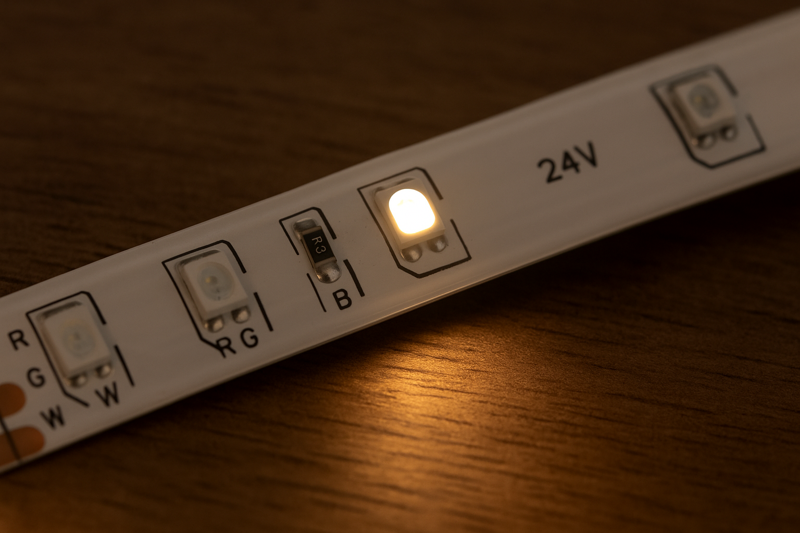
This is the technology I recommend most often to my wholesale clients in North America and Europe. It solves the biggest problem of RGB. The ‘W’ chip is a separate, dedicated light source. When the client selects "white," only that chip turns on, delivering a high-CRI light that is indistinguishable from a high-quality single-color strip. When they want blue for a party, the RGB chips activate. From a manufacturing standpoint, it’s a more complex and expensive product, requiring a 5-conductor wire and a more advanced controller. However, for the end-user, the value is enormous. They get a professional architectural lighting system and a high-end holiday lighting system in one clean installation. It’s the ultimate future-proof solution.
RGBW: The Professional’s Choice
| Feature | Why It’s Superior | The Benefit for Your Business |
|---|---|---|
| True White Light5 | The dedicated white chip provides high CRI and consistent color. | Exceeds client expectations, leading to more referrals. |
| Full Color Spectrum6 | Includes the full capabilities of an RGB strip for vibrant colors. | You can sell a premium, versatile solution. |
| Versatility | One product handles all client needs, from subtle to celebratory. | Simplifies your product offering and prevents installation mistakes. |
How Does the Color System Impact Installation and Control?
As an installer, you need to know what you’re getting into. Does an RGBW system require completely different wiring and controllers than a simple single-color system?
Yes, the complexity increases with functionality. Single Color needs a simple 2-wire setup. RGB needs a 4-wire setup and a 3-channel controller. RGBW requires a 5-wire setup and a 4-channel controller to manage the white channel independently.
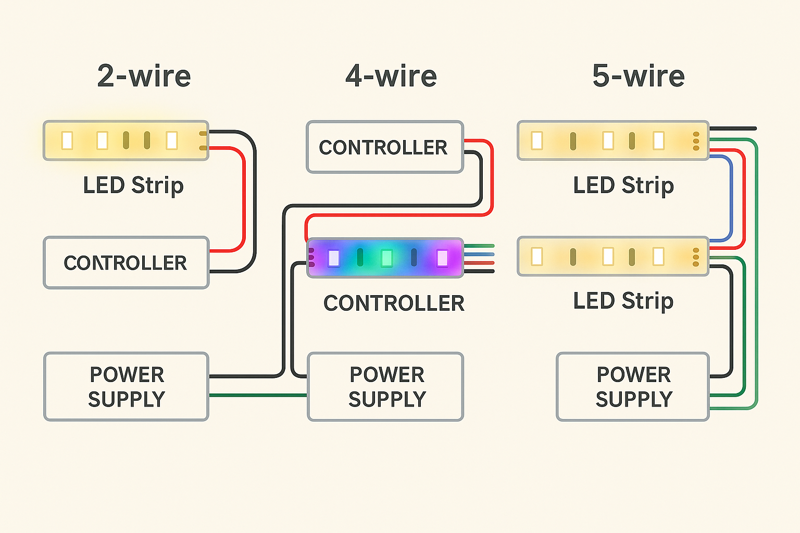
This is a critical point for my B2B clients because labor time is money. A single-color installation is the most straightforward: power and ground. It can be run with standard low-voltage landscape wire. When you move to RGB, you introduce more complexity. You need to manage three channels (R, G, B) and a common positive, which requires 4-conductor wire and a controller that can manage color mixing. With RGBW, you add a fifth wire for the white channel. This requires careful planning, especially on long runs, and a controller specifically designed for RGBW. Ensuring your team understands these wiring differences is key to a smooth installation. As a factory, we provide clear wiring diagrams and support to make sure our clients, like Tom, can execute their projects flawlessly.
Installation Complexity at a Glance
| System | Wires Required | Controller Type | Key Consideration |
|---|---|---|---|
| Single Color | 2 | Simple Dimmer / Switch | Most straightforward and cost-effective wiring. |
| RGB | 4 | 3-Channel RGB7 Controller | Ensure wire and controller can handle the total wattage. |
| RGBW | 5 | 4-Channel RGBW8 Controller | You need the correct controller to access the white channel separately. |
Conclusion
Match the system to the client’s primary need. Choose Single Color for timeless elegance, RGB for pure fun, and RGBW for the ultimate, no-compromise solution. Understanding this ensures happy clients and successful projects.
-
Explore how warm white lighting enhances the ambiance and aesthetic of various architectural styles. ↩
-
Discover the impact of neutral white lighting on modern designs and its role in creating clean, contemporary spaces. ↩
-
Understanding Color Performance helps clients appreciate the vibrant effects their lighting can achieve. ↩
-
Exploring best use cases ensures clients utilize RGB lighting effectively for their specific needs. ↩
-
Discover how True White Light can enhance your lighting projects and exceed client expectations. ↩
-
Learn how a Full Color Spectrum can elevate your lighting designs and attract more clients. ↩
-
Explore this link to find the best RGB lighting controllers that ensure optimal performance and compatibility. ↩
-
Learn about RGBW lighting technology and its benefits for achieving vibrant colors and true white light. ↩
Interested in Our LED Solutions?
Get professional consultation and customized LED lighting solutions for your projects. Contact our expert team today.
Related Articles

How Do You Build Profitable Custom Vehicle and RV Interior LED Rope Lights?
You lose RV installation contracts because your interior lights fail on rough roads. Standard strips show bright dots on glossy…

How to Perfect Bookshelf and Display Cabinet LED Rope Lighting?
You lose retail clients when bookshelves look incredibly dark. Ugly shadows hide expensive products inside display cabinets daily. You need…

How to Master Mirror and Vanity LED Rope Light Installation?
Your clients complain about ugly shadows in their bathroom mirrors. Bad lighting ruins expensive vanity designs. You lose future contracts…
