
How to Choose the Right LED Strip Color Temperature for Commercial Spaces
Choosing the right LED strip color temperature is one of the most important decisions in commercial lighting design. Buyers often compare brightness, wattage, IP rating, and price first, but color temperature has a direct effect on how a space feels, how products appear, and how successful the finished project looks after installation.
In commercial projects, the question is not simply whether to choose warm white or cool white. The real question is whether the selected light works with the purpose of the space, the interior materials, the brand atmosphere, and the expectations of the end user. In our experience, many lighting problems that seem like product issues are actually specification issues, and color temperature is one of the most common examples.
A color temperature that looks acceptable on a quotation sheet can still feel wrong after installation. This usually happens when buyers choose CCT as a standalone number instead of reviewing it together with CRI, diffuser effect, mounting position, surrounding finishes, and the actual function of the space. That is why commercial buyers should treat color temperature as part of the full specification process, not just a basic product option.
Besides color temperature, buyers should also evaluate LED strip density, because chip density affects dot visibility, uniformity, and the overall visual quality of a commercial installation.
What Does LED Strip Color Temperature Mean?
Image placeholder
Alt text: Comparison of 3000K, 4000K, and 6000K LED strip lighting in a modern commercial interior
Color temperature describes the visual warmth or coolness of white light. It is measured in Kelvin (K). Lower Kelvin values create warmer light, while higher Kelvin values create cooler light.
Typical LED strip color temperature ranges include:
- 2700K to 3000K: warm white
- 3500K to 4000K: neutral white
- 5000K to 6500K: cool white
Warm white usually feels softer and more welcoming. Neutral white looks cleaner and more balanced. Cool white often appears sharper and more clinical, which can be useful in task-focused or utility-driven environments.
However, commercial buyers should not treat Kelvin ratings as the full answer. In practice, the same nominal color temperature can look different depending on the LED package, diffuser, profile depth, surrounding materials, and viewing distance. We often see buyers assume that choosing 3000K or 4000K is enough, but the final visual result depends on the full lighting system, not just the CCT label.
Why Color Temperature Matters in Commercial Lighting Projects
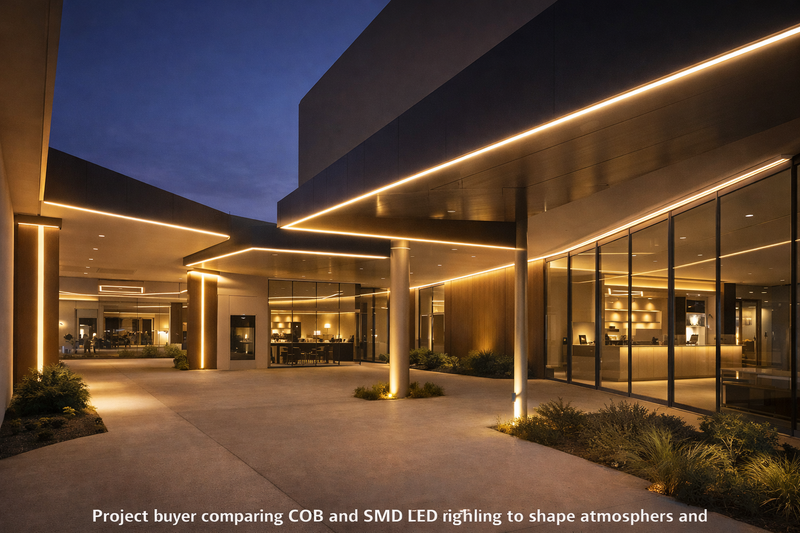
Color temperature affects more than appearance. It influences comfort, brand perception, product presentation, and the overall atmosphere of a commercial space. A retail display with the wrong white tone can make merchandise look flat. A hotel corridor with overly cool light can feel harsh instead of welcoming. A workspace with lighting that is too warm can lose some of the clarity needed for daily tasks.
We often see commercial buyers spend more time comparing wattage and price than evaluating how the chosen white tone will affect the final environment. In practice, the visual success of a project often depends just as much on color temperature as on brightness or power.
For commercial projects, the right color temperature helps:
- support the intended mood of the space
- improve visual comfort
- present products and finishes more accurately
- reinforce brand positioning
- match the function of each area
- reduce complaints after installation and client review
This matters especially in LED strip projects because strip lighting is often used in visible architectural positions, such as ceiling coves, wall details, shelving, under-cabinet lines, and display features. These placements strongly shape how people perceive the entire space.
In retail and hospitality projects, the wrong white tone rarely looks like a technical failure, but it often makes the space feel less intentional. That is one reason why color temperature deserves more attention during specification and sample approval.
Recommended Color Temperatures for Different Commercial Spaces
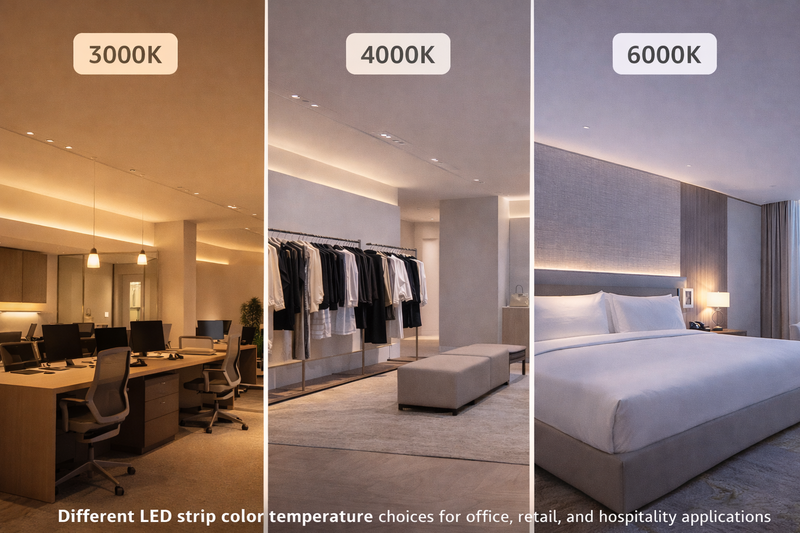
There is no single best color temperature for every commercial project. The right choice depends on what the space needs to achieve, how people use it, and how the interior should feel after installation.
Offices and Workspaces
For offices, 4000K is often the safest and most widely accepted option. It gives a clean and professional appearance without feeling too cold in most standard environments.
We usually recommend 4000K for open offices, corridors, and general work areas because it supports visual clarity and keeps the space looking neutral. In softer office interiors with warmer finishes, 3500K may create a more comfortable balance. In highly task-focused technical areas, 5000K can sometimes work, but it often feels too stark for premium office environments.
Retail Stores and Showrooms
Retail lighting should be chosen based on the product category and the brand atmosphere, not only on brightness targets.
- 3000K often works well for boutiques, furniture displays, and lifestyle-oriented retail environments where warmth supports the shopping experience.
- 4000K is often better for electronics, supermarkets, and general merchandise where a cleaner, brighter effect is preferred.
- some premium retail projects use different color temperatures in separate zones to create contrast and improve product presentation
We often see buyers focus on whether a strip is 3000K or 4000K, but the bigger question is whether the lighting supports how the products should be perceived. In commercial retail, the wrong color temperature may not look obviously defective, but it can still weaken the visual impact of the display.
Hotels and Hospitality Spaces
Hospitality spaces usually benefit from warmer lighting. 2700K to 3000K is common for guestrooms, lounges, decorative coves, and restaurant areas because it creates a more welcoming and relaxed atmosphere.
That said, hotels are rarely one-zone projects. A guestroom, reception counter, corridor, vanity area, and back-of-house workspace may all require different lighting priorities. 3000K is often a strong middle ground for public-facing hospitality spaces because it feels warm without becoming overly yellow.
Restaurants and Cafés
Restaurants and cafés often perform best with 2700K to 3000K LED strip lighting, especially when the goal is to create comfort, warmth, and a more intimate mood. Fast-casual environments may sometimes prefer 3500K in selected areas where a cleaner and more energetic feeling is needed.
Beauty, Wellness, and Spa Spaces
These spaces usually need a balance between atmosphere and accurate appearance. 3000K to 4000K is often appropriate depending on the concept.
- 3000K supports a softer, more relaxing mood
- 3500K often gives a balanced premium look
- 4000K may be useful in treatment or task-oriented areas where clarity matters more
For these applications, color rendering should be checked carefully because skin tone and finish appearance are often important to the client experience.
How to Match Color Temperature with Interior Materials and Brand Style
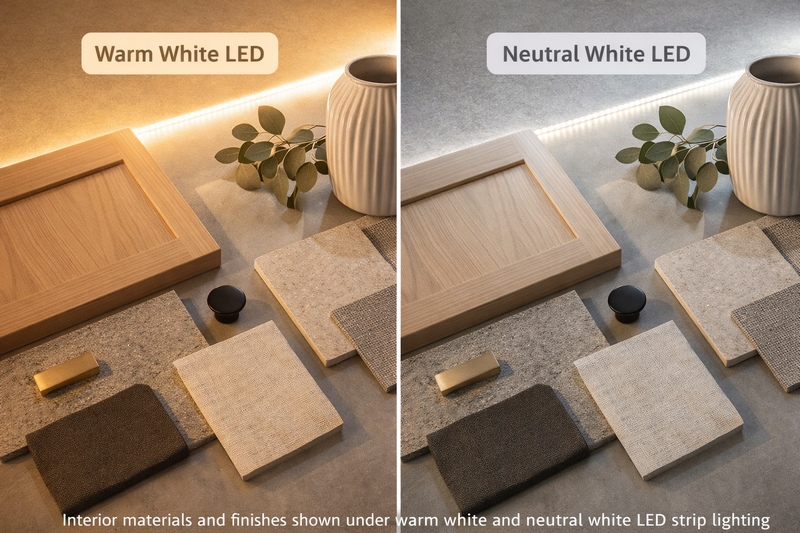
Color temperature should always be reviewed together with the materials used in the project. The same LED strip can look comfortable in one space and completely wrong in another simply because the finishes are different.
Warm lighting often works well with:
- wood finishes
- warm stone tones
- brass details
- textured fabrics
- hospitality-oriented interiors
Neutral or cooler lighting often works better with:
- white and grey surfaces
- metal finishes
- minimalist commercial interiors
- technical environments
- modern branded spaces that need a cleaner visual identity
From our project perspective, color temperature decisions work best when they are made together with material selection rather than after the interior palette is already fixed. This is especially true in retail and hospitality spaces where finishes and lighting need to support the same brand message.
Many specification problems happen because buyers choose a Kelvin value first and only later realize that the installed light makes wood look too yellow, stone look dull, or white surfaces look colder than expected. Matching CCT to the material palette reduces that risk early.
Do Not Choose Color Temperature Without Checking CRI
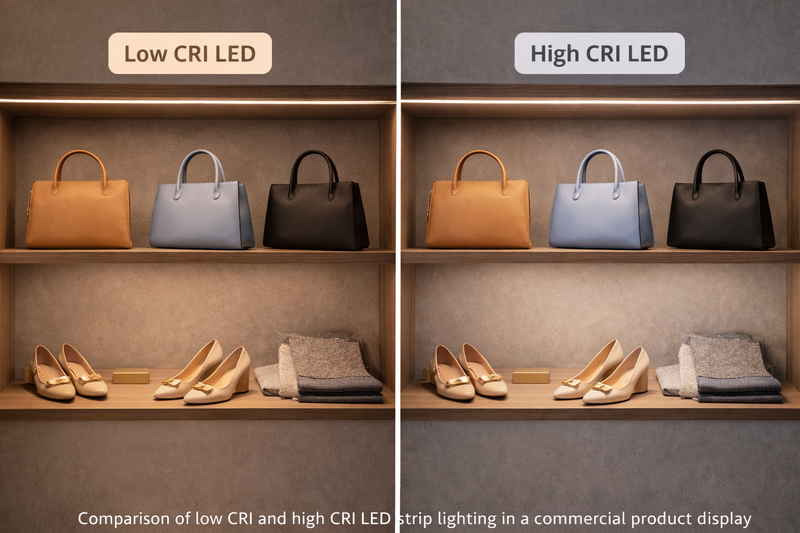
Color temperature and CRI are not the same thing. A buyer can choose the correct CCT and still get poor visual results if the LED strip has weak color rendering.
CRI measures how accurately colors appear under the light source. In commercial applications where product appearance, material quality, food presentation, or skin tone matter, this specification is critical.
As a general guide:
- CRI 90+ is recommended for retail, hospitality, beauty, and premium commercial interiors
- CRI 80+ may be acceptable for more functional or budget-sensitive spaces
- Kelvin alone should never be used as the only quality indicator
We often see buyers approve the right Kelvin range but still feel disappointed with the final effect because they did not check CRI carefully enough. From a project perspective, CCT mistakes are easier to notice, but CRI mistakes are just as costly. A space may look bright enough and still fail to present merchandise, finishes, or food properly if color rendering is too weak.
For display, hospitality, and premium interiors, high-CRI LED strip lighting is usually the better choice because it gives products and surfaces a more believable and more marketable appearance.
Common Mistakes Buyers Make When Specifying LED Strip Color Temperature
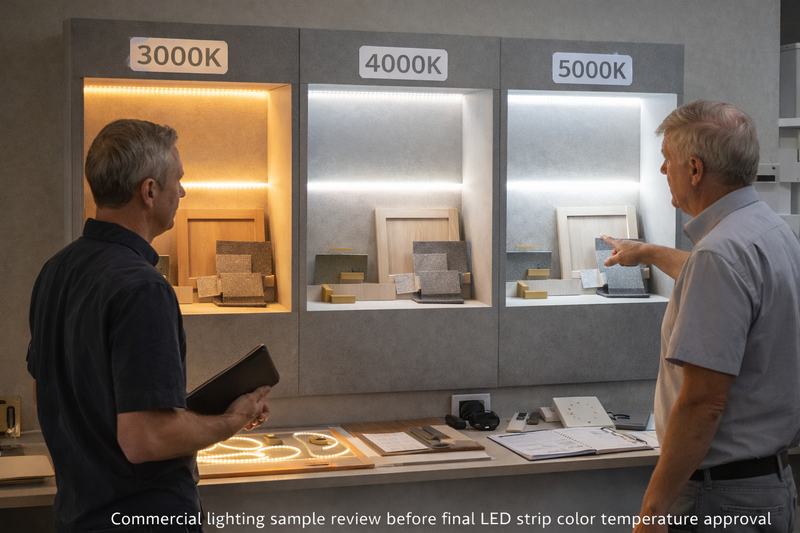
Commercial buyers often run into avoidable problems because color temperature is selected too early, too quickly, or without real sample review.
Choosing by habit instead of application
Some buyers default to 3000K or 4000K based on previous projects. That can be risky because the right choice depends on the current environment, not the last order.
Ignoring sample testing
In our experience, on-site sample review is one of the most reliable ways to avoid CCT mistakes before mass purchasing. Lighting that looks acceptable in isolation may feel too warm, too grey, or too sharp once it is installed in the actual project environment.
Mixing incompatible white tones
Using very different white tones in connected zones can make a project feel inconsistent unless that contrast is intentional and carefully planned.
Overlooking diffuser and profile effects
The same nominal color temperature can appear different once it is installed in an aluminum profile, placed behind a diffuser, or reflected by surrounding surfaces. Buyers who skip this check often discover the problem only after installation.
Forgetting end-user expectations
A color temperature that fits the designer’s preference may still be wrong for the actual business model, customer flow, or brand atmosphere of the finished space.
For B2B buyers, the goal is not simply to choose a warm or cool tone. The goal is to choose a specification that still makes sense after procurement, installation, client review, and day-to-day use.
Should You Use Tunable White LED Strips for Commercial Spaces?
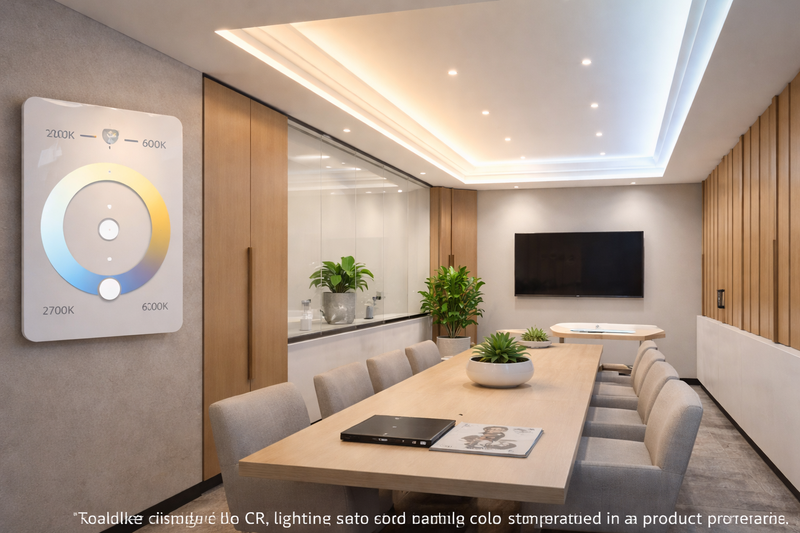
In some commercial projects, tunable white LED strips are worth considering. These systems allow users to adjust color temperature across a range, such as from 2700K to 6500K.
Tunable white can be useful for:
- multi-function spaces
- premium hospitality projects
- showrooms with changing display needs
- wellness-oriented lighting concepts
- projects where the final preferred CCT may vary by time or use case
However, tunable white also increases system complexity. It usually requires more planning for drivers, controls, dimming compatibility, and installation. For many standard commercial projects, a fixed color temperature remains the more practical and more cost-effective solution.
We usually recommend tunable white only when flexibility is a real part of the project value, not simply because it sounds more advanced on paper.
A Simple Way to Choose the Right Color Temperature
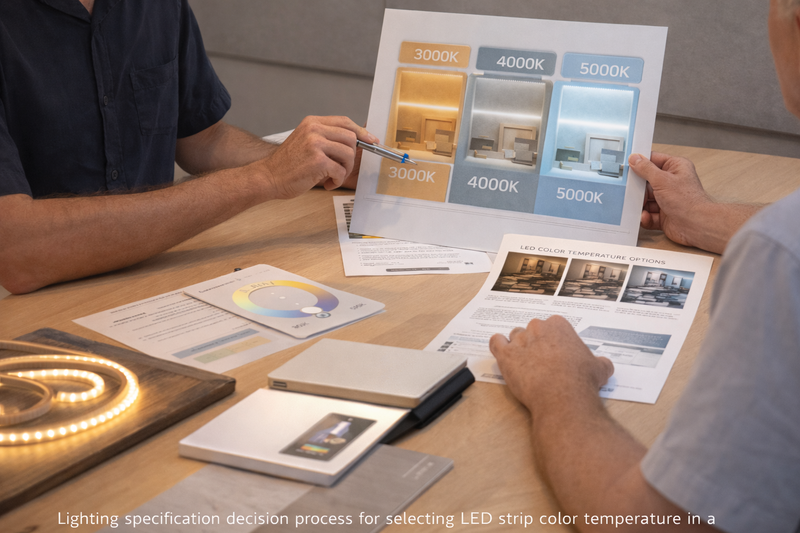
If you need a practical decision method, start with these five questions:
- What is the main function of the space?
Is it designed for focus, shopping, relaxation, presentation, or mixed use?
- How should the space feel?
Warm and inviting, neutral and professional, or bright and energetic?
- What materials dominate the interior?
Wood, stone, metal, fabric, glass, or painted white surfaces?
- How important is color accuracy?
Will customers evaluate products, finishes, or skin tones under the lighting?
- Will the client approve samples on-site before final ordering?
If yes, use that stage to confirm both CCT and visual comfort in the real environment.
From our experience, buyers make better decisions when they review color temperature as part of the full lighting application instead of as a simple product checkbox.
Final Thoughts
Choosing the right LED strip color temperature for commercial spaces is not only about selecting warm white or cool white. It is about aligning the lighting with the purpose of the space, the materials in the interior, the visual expectations of the client, and the business goals of the project.
For many applications, 3000K works well in hospitality-oriented and atmosphere-driven spaces, while 4000K is often a strong option for offices, general retail, and professional environments. But the best choice always depends on the full project context.
We usually recommend treating color temperature as part of the complete specification, together with CRI, density, profile design, control requirements, and on-site sample review. That approach reduces specification risk, improves consistency after installation, and gives commercial buyers a better chance of achieving the intended result the first time.
Recommended External References
- U.S. Department of Energy
- Illuminating Engineering Society (IES)
- Lighting Design Lab
- Hospitality Lighting Design Guide
- Commercial Lighting CCT Guide
Recommended Products
Request a Project or Trade Quote
Sourcing for an installation project, resale or OEM production? Share your requirements below. You can discuss project samples before committing to a bulk order.
Related Articles

LED Strip Lighting for Indoor Plant Walls: Accent Light or Grow Light?
Specify LED lighting for indoor plant walls without confusing visual brightness with plant needs. Review PPFD, DLI, controls, moisture, and…

LED Strip Lighting After a Power Outage: Designing a Reliable Restart
Plan LED strip power restoration beyond total watts. Review driver inrush, switching limits, restart scenes, and commissioning before project handover.

Why LED Strip Lights Buzz When Dimmed: A Guide for Quiet Spaces
Diagnose LED strip buzzing without guessing. Review drivers, PWM controls, mounting resonance, and low-level acoustic acceptance for quiet interiors.