
How to Evaluate an LED Strip Manufacturer Before You Place Your First Order
How to Evaluate an LED Strip Manufacturer Before You Place Your First Order
Many importers still begin factory selection with marketplace badges, response speed, and quote price. Those signals are easy to collect, but they are weak indicators of manufacturing control. A supplier can look polished online and still perform poorly once your order depends on stable materials, documented QC, and consistent execution.
If you are placing your first order with a Chinese LED strip manufacturer, the goal is not to find the supplier with the best presentation. The goal is to determine whether the factory can repeatedly produce, test, document, and support the product at the standard your market requires.
For commercial buyers, supplier evaluation should be practical and evidence-based. You are not buying a badge. You are buying process capability.
Start with the manufacturing structure, not the sales profile
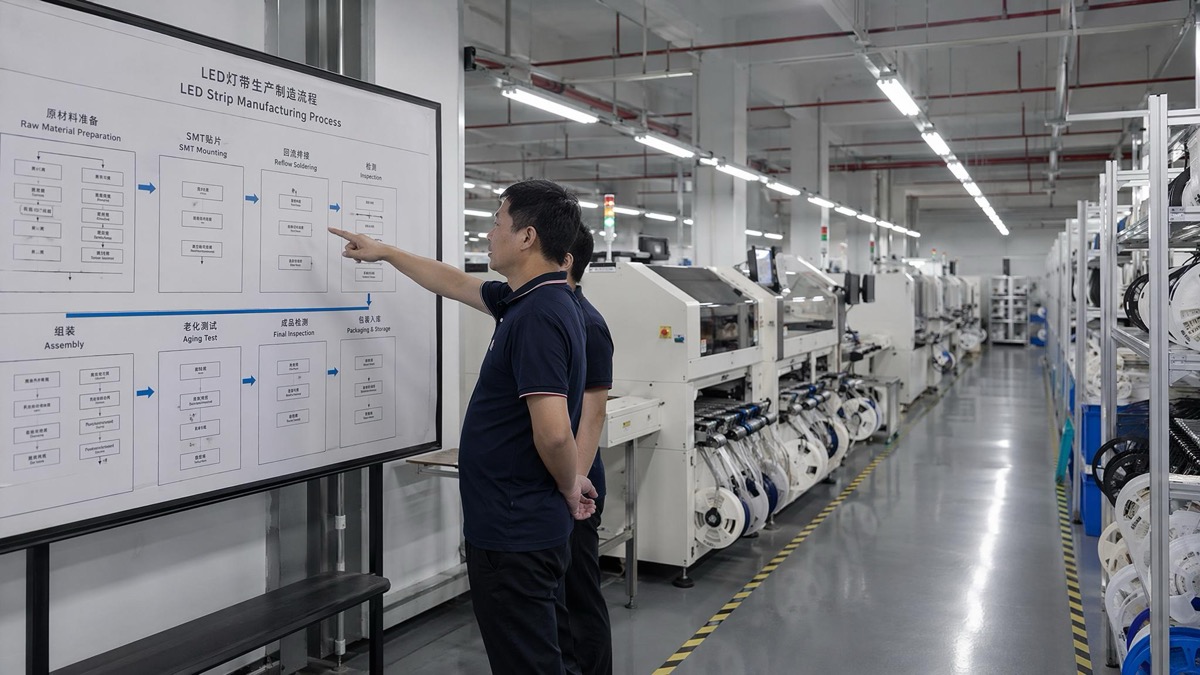
Does the factory operate its own SMT line?
This is one of the first questions worth asking. If the factory has its own SMT line, it usually has more direct control over placement quality, reflow conditions, scheduling, and traceability. That does not guarantee quality, but it improves the chance that process control actually lives inside the organization you are buying from.
If PCB assembly is outsourced, control becomes weaker. The sales company or final assembly factory may still claim responsibility, but it has less immediate visibility into how the boards were built. When quality problems appear, responsibility can become fragmented between parties.
Outsourcing is not automatically disqualifying. Some suppliers manage it well. But buyers should understand that more outsourcing usually means less direct control and slower root-cause response.
Verify certifications properly
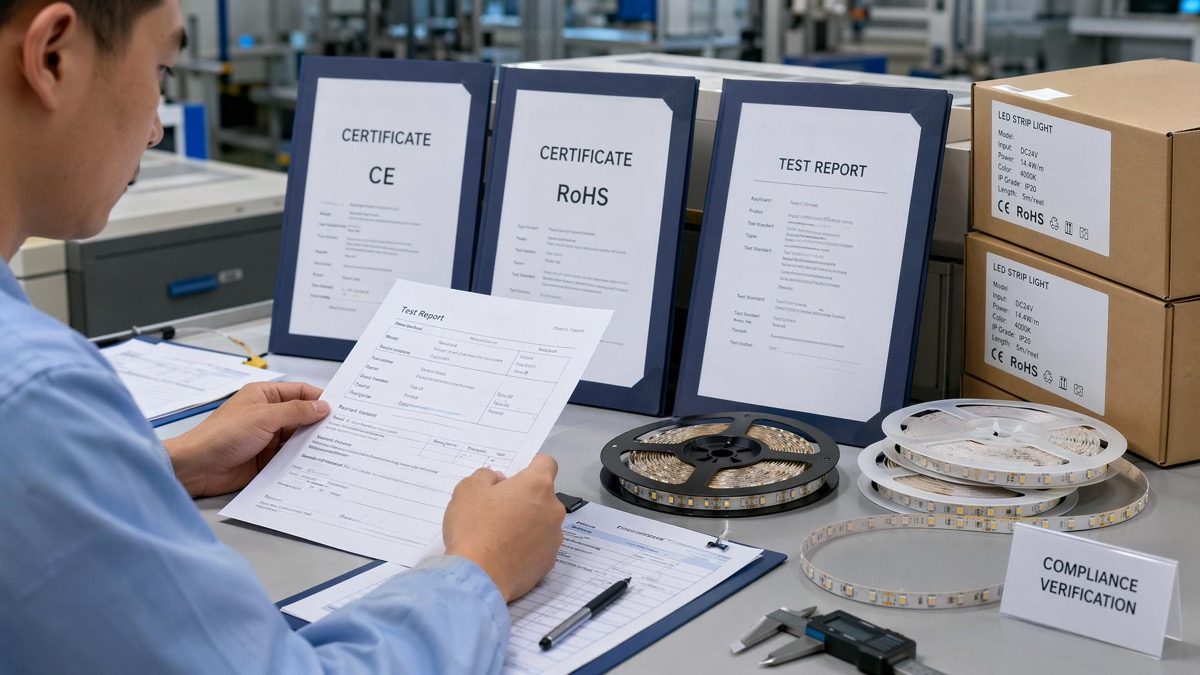
Factories often list ISO 9001, ISO 14001, UL, CE, and other credentials in a quotation or brochure. The correct response is not to accept the list. The correct response is to verify scope, validity, and relevance.
Check whether the certificates are current
A certificate that expired last quarter should not be treated as active. Ask for the current certificate file and review the date, certification body, and named entity.
Check whether the certificate applies to the actual factory entity
Some suppliers trade under one name while the certificate belongs to another affiliated entity. That may be legitimate, but it needs to be understood clearly. The company taking your order should have a defensible link to the entity that holds the certification.
Check whether the certification is relevant to your product
For product-related claims such as UL or CE, confirm that the report or certificate matches the actual configuration you plan to buy. A document for one voltage, one PCB design, or one waterproof structure does not automatically validate a different configuration.
Ask for third-party test reports, not only internal data
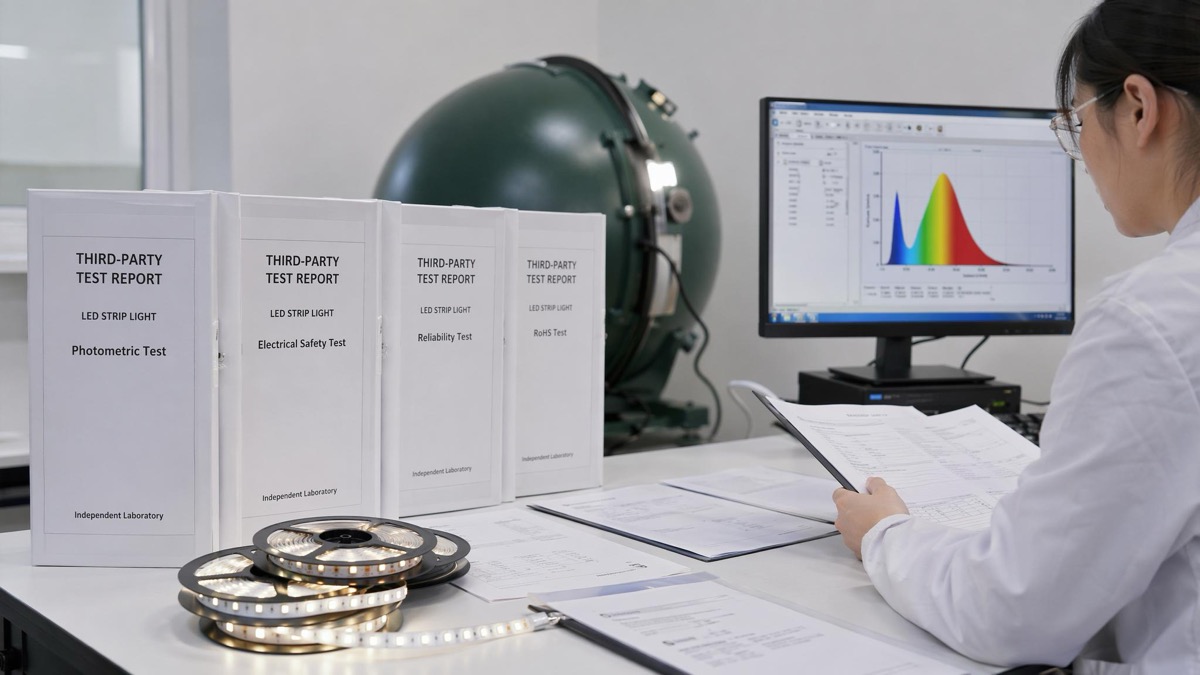
Internal factory test data is useful, but it is not enough on its own. A serious manufacturer should be able to provide third-party reports for key claims, especially where safety, EMC, or regulatory acceptance matters.
Ask for the report, not just the statement that the report exists. Review whether the lab is recognizable, whether the sample description matches the product, and whether the report date is still commercially relevant.
If the factory can only provide internal data and avoids external reports entirely, buyers should treat that as a risk signal. It may mean the supplier has not properly validated the product, or it may mean the documentation will not survive scrutiny from your customer or regulator.
Understand the factory’s binning process
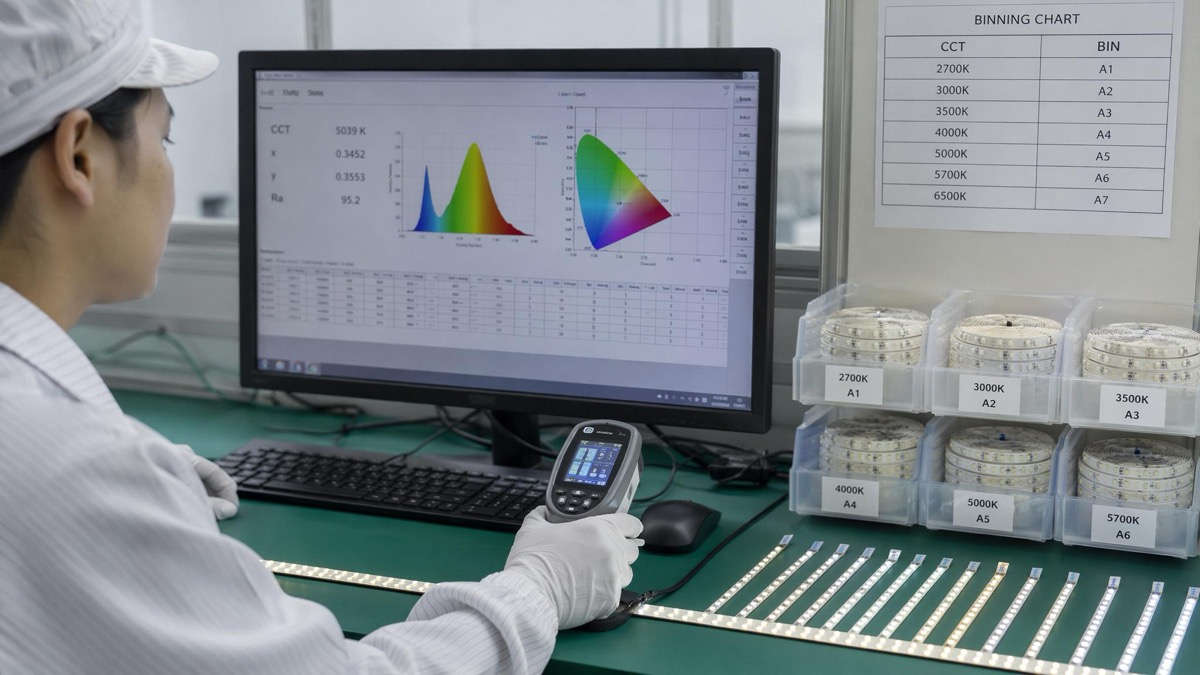
For LED strip quality, binning control is not a minor detail. It directly affects color consistency, reorder stability, and customer complaints.
Do they use a spectrometer in-house?
A factory with in-house spectrometer capability can verify color characteristics instead of relying only on supplier claims. That matters if your market is sensitive to color consistency.
Or do they rely entirely on chip supplier sorting?
If the answer is yes, then the factory is depending on upstream classification without strong internal verification. That may be acceptable for lower-sensitivity products, but buyers should know the limitation.
The goal is not to hear a technically impressive answer. The goal is to understand whether the factory can measure and control what it is selling.
Examine how they handle quality disputes
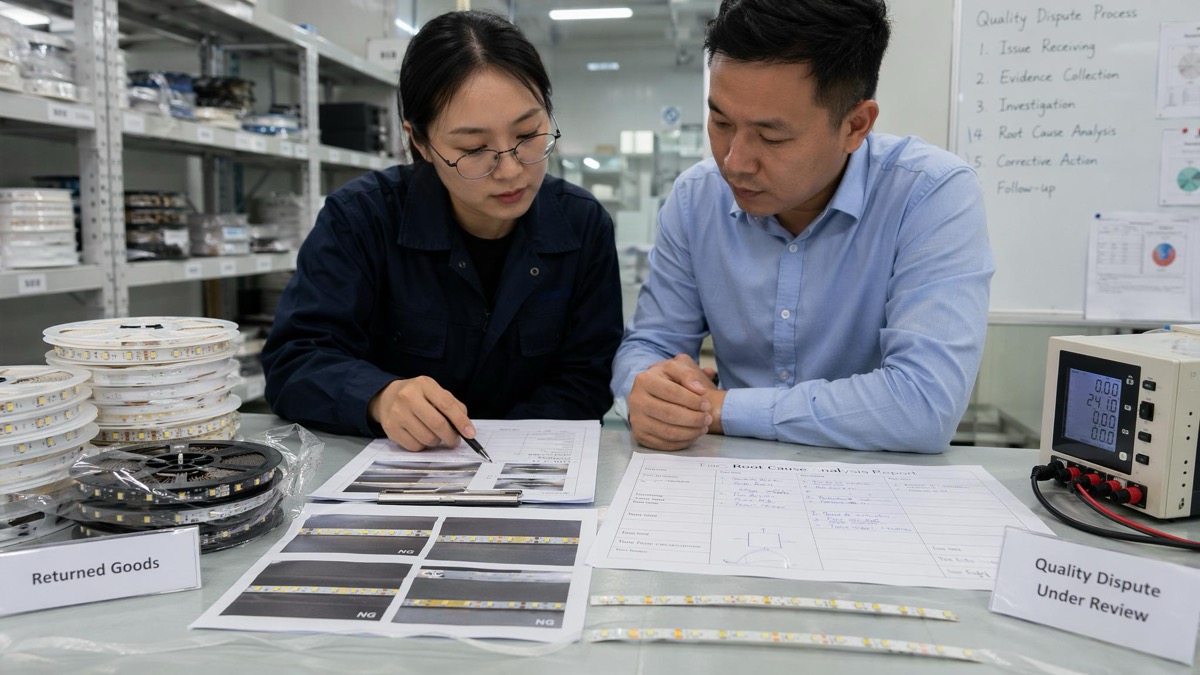
Most suppliers sound confident when discussing normal production. A better test is how they handle failure.
Ask what happens when a shipment has a quality dispute. Is there a documented process? Do they require sample evidence, batch traceability review, containment action, root-cause analysis, and corrective action? Or is the response ad hoc, driven mainly by sales negotiation?
A documented dispute process is a strong sign because it shows that the factory expects accountability and knows how to investigate issues systematically. If the answer is vague, buyers should assume dispute handling will depend on pressure rather than procedure.
Questions worth asking during vetting
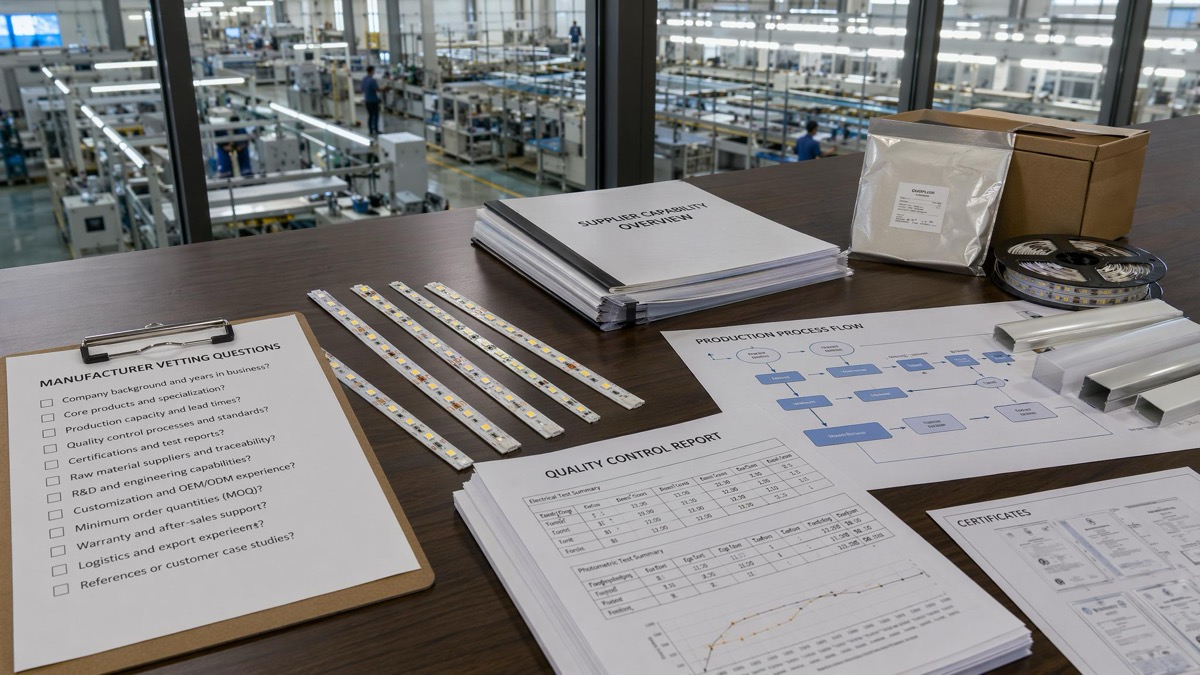
Buyers do not need to sound technical for the sake of it. They need clear answers to operational questions that reveal capability.
- What is your chip supplier?
- Can I visit your production line?
- What is your internal rejection rate?
- Do you have QC records I can review?
- Do you run your own SMT line or outsource PCB assembly?
- What instruments do you use to verify color and electrical performance?
- How do you control material changes between orders?
- What is your process when a customer files a quality claim?
These questions matter because weak factories often fail on the basics. They may offer a low price and quick sample, but they cannot explain how the product is controlled once volume starts.
What to look for during a factory visit or remote audit
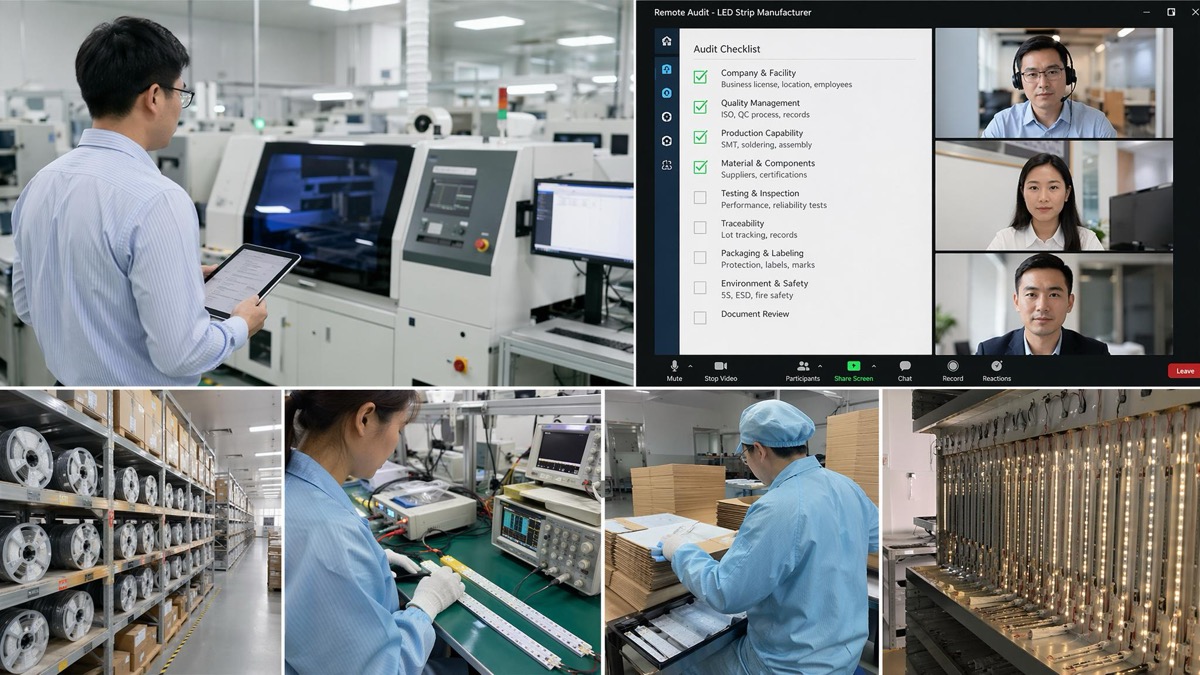
If you can visit, use the visit to validate process rather than to admire the showroom. If you cannot visit in person, ask for a structured remote walkthrough that covers the same points.
Production flow
Look for a logical movement from material receipt to SMT, soldering, testing, packing, and storage. Disorder is not always fatal, but a chaotic flow often signals weak process discipline.
QC records
Ask to see actual records, not blank templates. Records should show date, batch reference, measurement results, and signoff. Templates alone prove nothing.
Traceability
See whether incoming materials, work-in-progress, and finished goods can be tied back to a batch. Without traceability, quality discussion becomes guesswork.
Equipment condition
Well-maintained production and test equipment is not a guarantee of quality, but poorly maintained equipment is a warning sign. The same applies to calibration discipline for measurement instruments.
Red flags buyers should take seriously
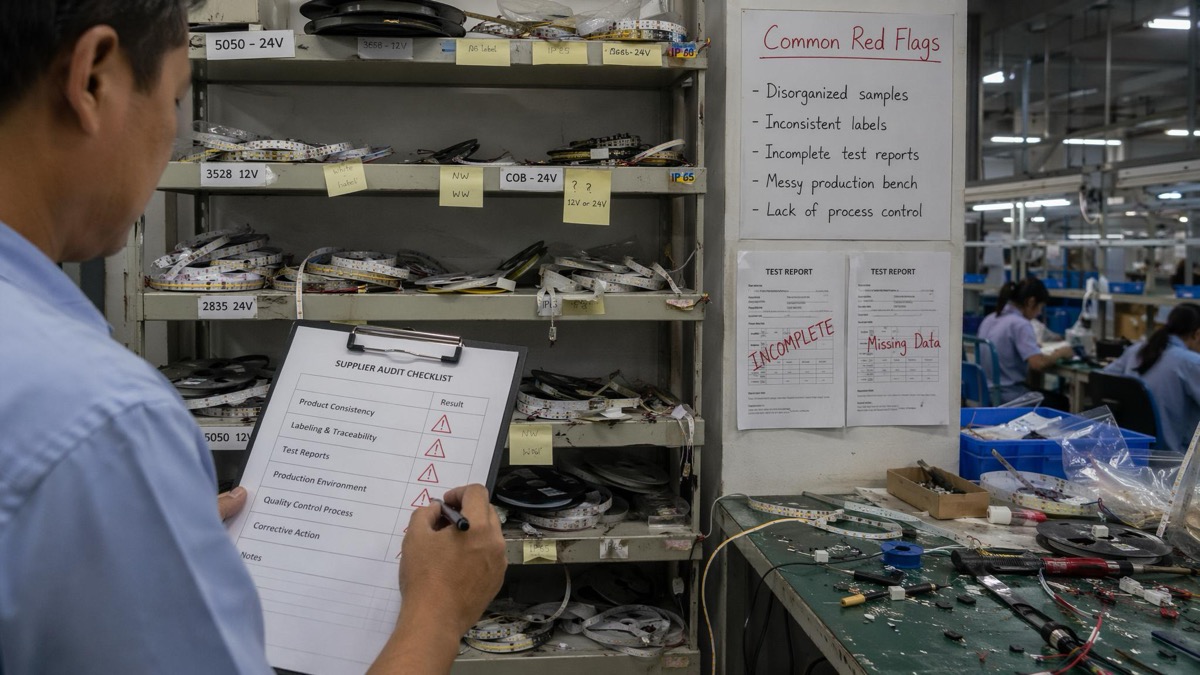
- The factory cannot name its chip supplier clearly.
- No third-party test reports are available.
- The factory refuses a production line visit or a credible remote walkthrough.
- Answers about MOQ and lead time change from one conversation to the next.
- The supplier talks mainly about price and very little about process control.
- QC records are promised but never shown.
- Certification documents look outdated, incomplete, or unrelated to the selling entity.
Any one issue may be explainable. Several together usually indicate a supplier that is stronger in sales than in manufacturing control.
How experienced buyers make the decision

Experienced importers rarely choose a new factory based on one good sample alone. They weigh the full picture: production ownership, documentation quality, testing capability, traceability, dispute process, and the factory’s ability to answer direct questions consistently.
A supplier that is transparent about limitations is often safer than a supplier that claims it can do everything. The goal is not to hear perfect answers. The goal is to identify whether the factory understands its own process well enough to deliver repeatable results.
FAQ
How important is a factory visit compared to documentation review?
Both matter and they reveal different things. Documentation tells you what the factory claims to control. A visit or credible remote walkthrough tells you whether that control actually exists on the production floor. Factories that actively resist any form of line access or audit are harder to trust on quality claims.
What should I do if the factory has no third-party test reports?
You can request that your order be accompanied by third-party testing, either by arranging it yourself through a lab or by requiring the factory to use an independent lab before shipment. For markets where compliance is regulated, the absence of valid reports is not a paperwork issue. It is a commercial and legal risk that falls on the importer.
Is ISO 9001 certification meaningful for LED strip quality?
It shows that the factory has a documented quality management system, which is a positive signal. But it does not guarantee product quality. Certification scope, last audit date, and day-to-day adherence matter more than the badge. A factory can hold ISO 9001 and still have weak binning control or poor traceability in practice.
A good sample shows what the factory can do once. Evaluation shows whether they can do it every time
Before placing your first order, evaluate the manufacturer as a process, not a profile. Confirm whether they run their own SMT line. Verify certifications for currency and relevance. Ask for third-party test reports. Understand their binning method and whether they use a spectrometer in-house. Find out how they handle quality disputes and whether that process is documented.
Then ask practical questions, review actual records, and pay attention to red flags such as unclear chip sourcing, missing reports, refusal of line access, and inconsistent commercial answers. Those checks will tell you far more than a marketplace badge ever will.
Recommended Products
Request a Project or Trade Quote
Sourcing for an installation project, resale or OEM production? Share your requirements below. You can discuss project samples before committing to a bulk order.
Related Articles

LED Strip Lighting in Historic Buildings: Design for Removal, Not Just Installation
Plan LED strip lighting in historic interiors around protected finishes, removable supports, cable routes, heat, and maintenance without avoidable damage.

LED Strip Lighting for Retail Fitting Rooms: Face, Fabric, and Mirror Glare
Specify fitting-room LED strip lighting for faces, fabrics, and mirrors. Compare color reports, test reflected glare, and approve a repeatable…

LED Strip Lighting for Indoor Plant Walls: Accent Light or Grow Light?
Specify LED lighting for indoor plant walls without confusing visual brightness with plant needs. Review PPFD, DLI, controls, moisture, and…