
Why Aluminum Profiles and Extrusions Matter for LED Strip Installations
Bare LED strips may look cost-effective during procurement, but in commercial projects they often become the weak point of the installation. What seems like a simple way to save on accessories can create thermal issues, poor light quality, adhesive failure, mechanical damage, and an overall finish that looks incomplete.
For contractors, specifiers, and project buyers, aluminum profiles are not just decorative housings. In many applications, they are a functional part of the LED strip system. They improve heat dissipation, protect the strip, help control glare and dot visibility, and make the installation look more professional.
This article explains why bare LED strips underperform in many commercial applications, and why profiles and extrusions should usually be treated as part of the specification, not an optional add-on.
Why Bare LED Strips Create Problems After Installation
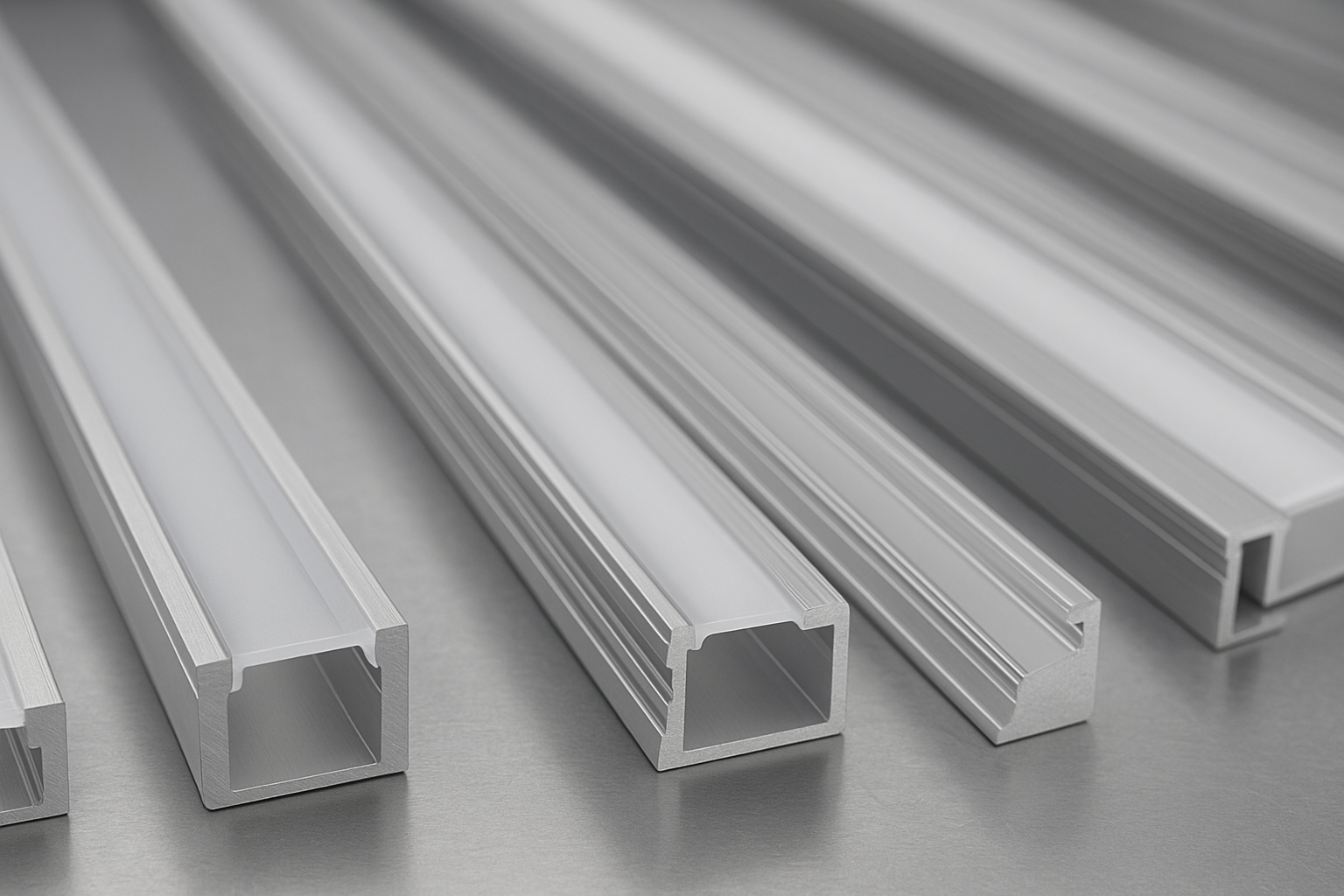
A bare strip stuck directly onto painted board, MDF, gypsum, or steel may work at first power-up, but commercial performance is about what happens after weeks and months of operation.
Common failure points include:
- poor heat transfer from the PCB
- adhesive lifting from uneven or dusty surfaces
- visible LED dots in exposed viewing angles
- damage during cleaning or maintenance
- reduced lifespan from elevated operating temperature
In short, bare strips are often fine for temporary or low-visibility use, but they are a risky choice for projects where consistency, durability, and finish quality matter.
Thermal Management Is the Main Reason Profiles Matter
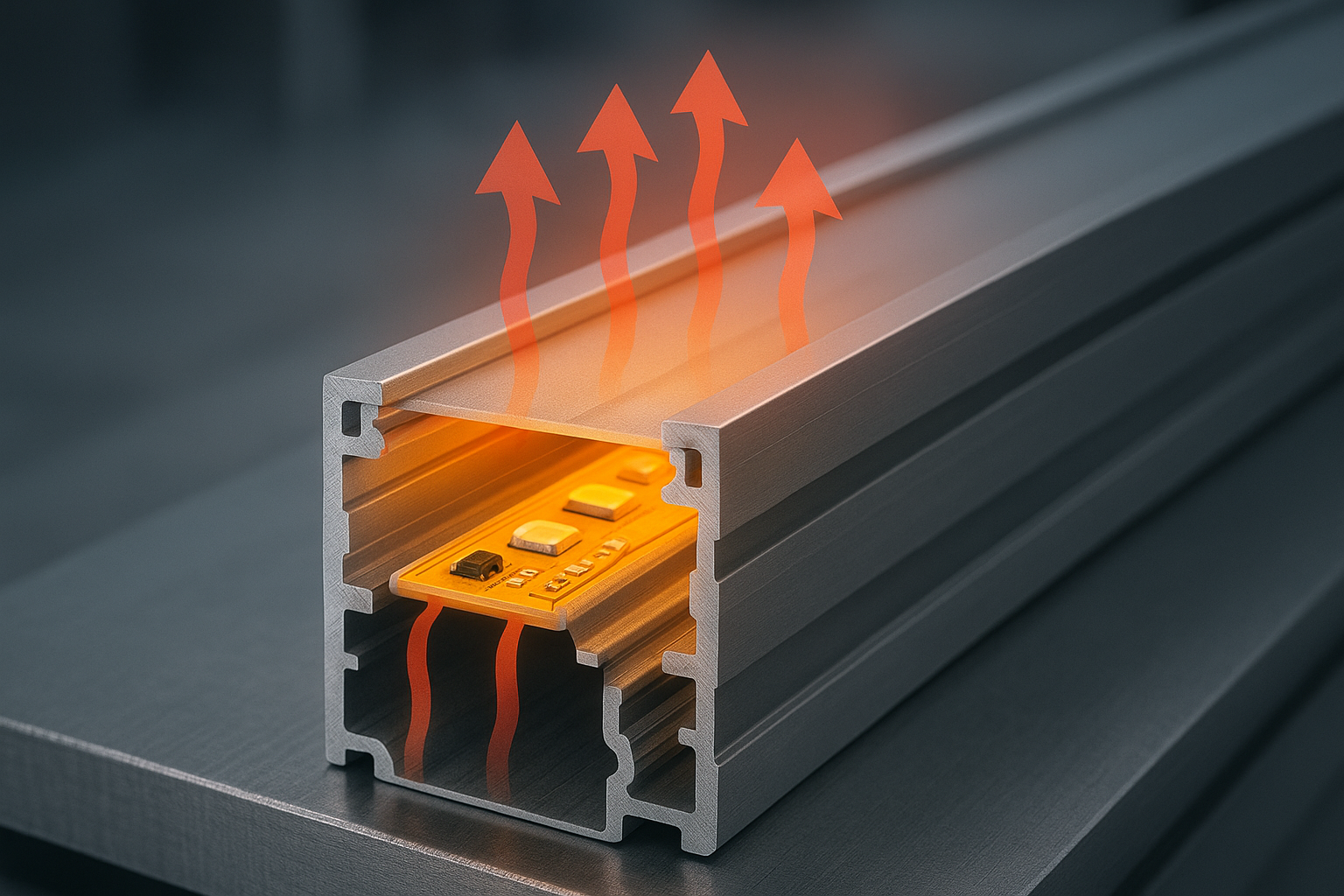
LED strips generate heat, and heat is one of the main drivers of lumen depreciation, color shift, and premature failure. The strip PCB can only dissipate so much heat on its own. If it is mounted to a poor thermal surface, the operating temperature rises quickly, especially with higher wattage products.
An aluminum profile acts as a heat sink. It pulls heat away from the strip and spreads it along the extrusion, lowering junction stress and helping the LEDs operate within a more stable temperature range.
This matters most when the project uses:
- high-output strips
- dense COB or high-LED-count strips
- enclosed joinery details
- long operating hours
- warm ambient environments
For many commercial installations, thermal management is the real reason profiles should be mandatory.
Profiles Improve the Visual Finish of the Lighting Line
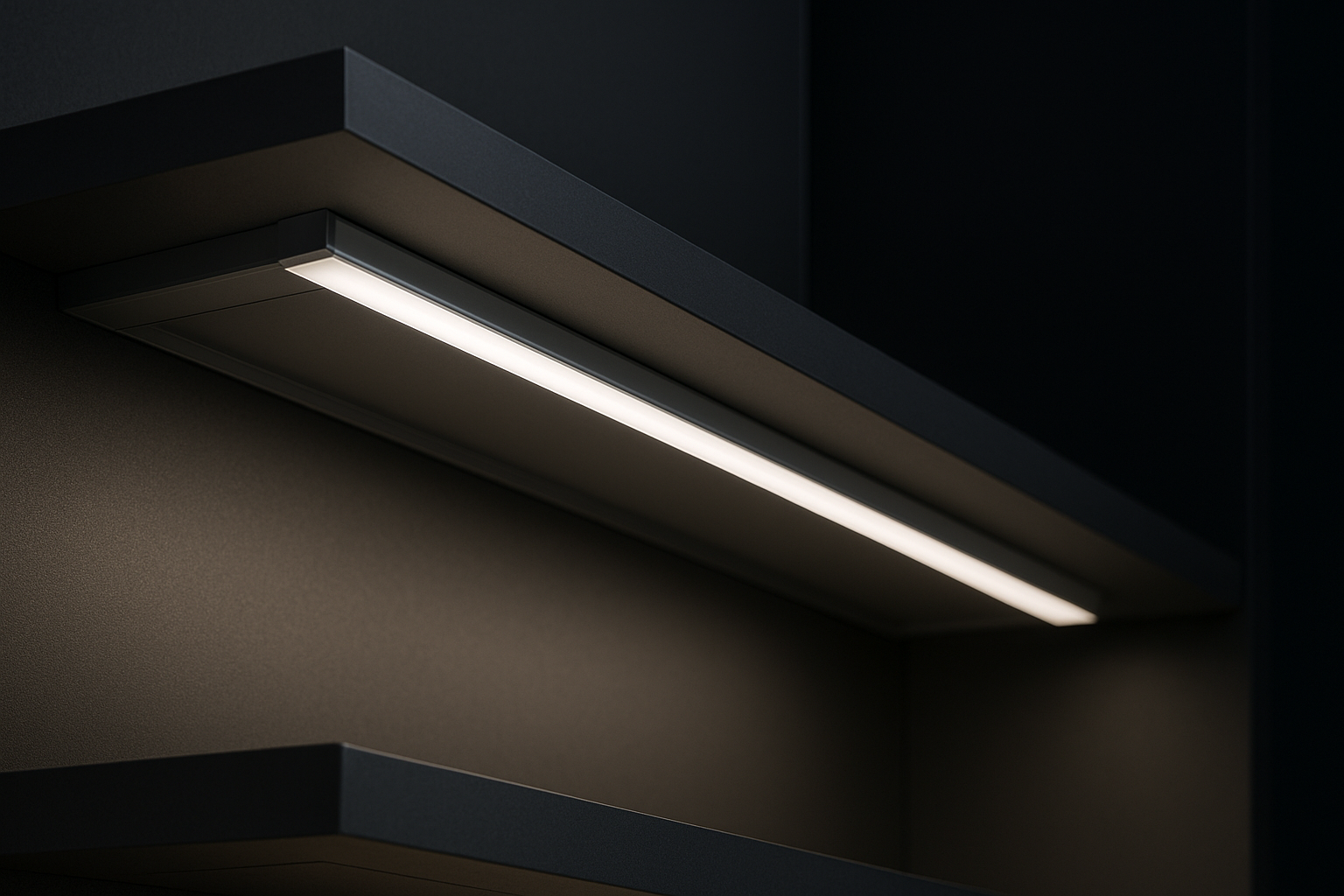
A commercial LED strip installation is judged visually, not only electrically. Bare strips often expose LED dotting, uneven reflection, and messy mounting details. That may be acceptable inside hidden cabinetry, but it is rarely acceptable in premium office, retail, hospitality, or façade work.
Profiles improve appearance by:
- straightening the light line
- supporting diffuser covers
- reducing dot visibility
- protecting cut edges and cable exits
- creating a more architectural finish
In projects where the strip itself is visible, the profile often determines whether the lighting looks integrated or improvised.
Mechanical Protection Matters More Than Buyers Expect
Commercial environments are harder on lighting systems than many buyers assume. Strips installed in millwork, counters, corridors, retail displays, and public-facing architectural features are exposed to touching, vibration, dusting, cleaning, and accidental impact.
A profile helps protect the strip from:
- cleaning cloth abrasion
- knocks from maintenance tools
- adhesive peel caused by movement or dust
- twisting or sagging over time
- moisture or debris entering exposed edges
Without that protection, even a good strip can fail earlier than expected simply because the installation method left it too exposed.
How to Choose the Right Profile for the Application
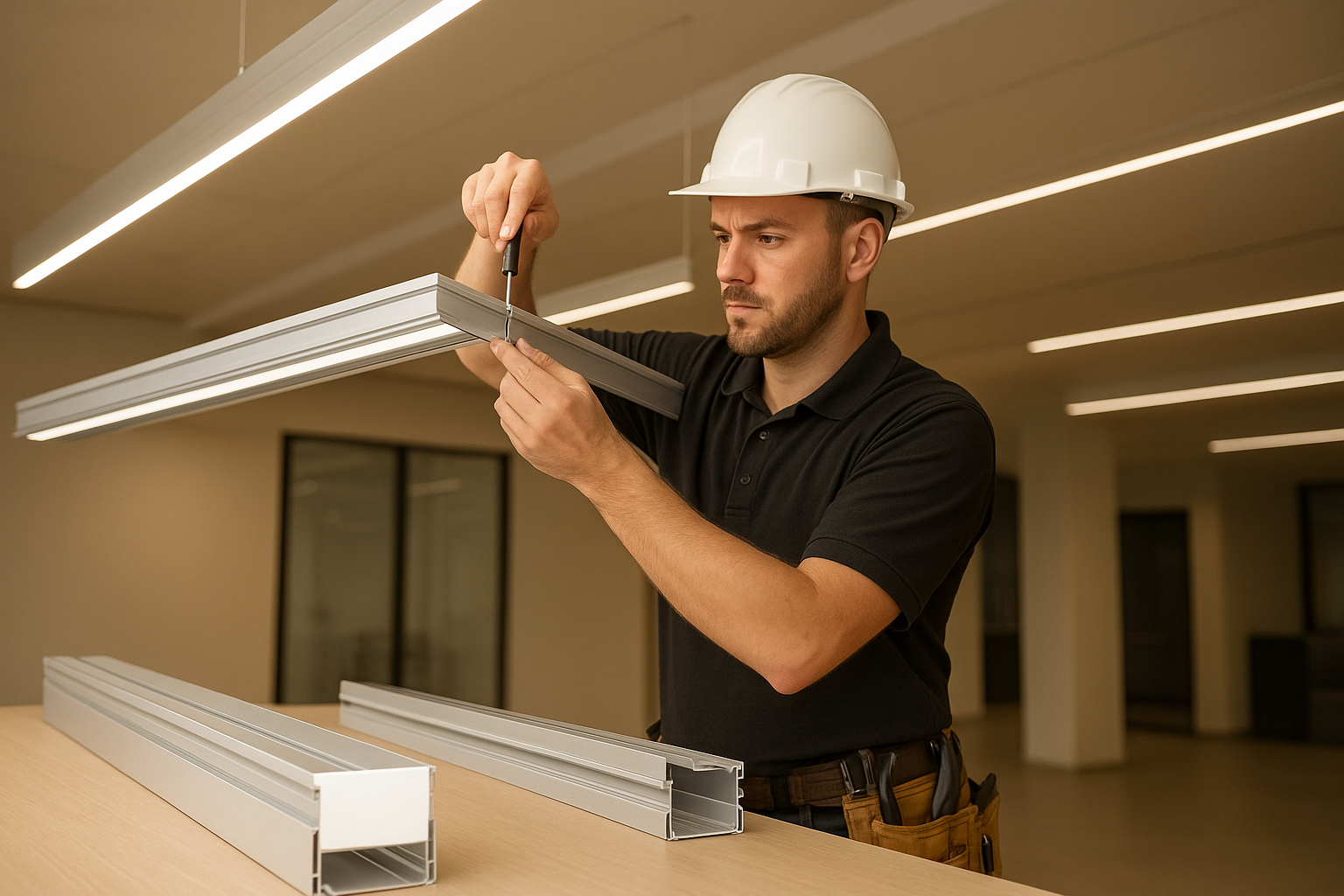
Not every extrusion is the right one for every project. The correct choice depends on the mounting position, viewing angle, strip wattage, and desired lighting effect.
Typical profile types include:
- surface-mounted profiles for visible linear details
- recessed profiles for flush architectural integration
- corner profiles for under-cabinet or display lighting
- deep profiles for better dot-free diffusion
- wide profiles for multiple strips or high-output applications
Key questions to ask:
- Will the strip be directly visible?
- Is dot-free appearance required?
- How much heat does the strip generate?
- Is the profile in a vulnerable physical location?
- Does the diffuser and depth support the intended finish?
A cheap shallow profile may solve mounting, but not glare or thermal performance. The profile needs to match the actual application.
Common Project Mistakes When Specifying Bare Strips or Weak Profiles
Several recurring specification mistakes lead to callbacks:
- choosing no profile at all for visible installations
- using shallow diffusers with high-density dot-sensitive applications
- selecting decorative profiles with poor heat mass for high-wattage strips
- assuming waterproof coating removes the need for thermal management
- ignoring how the substrate affects adhesion and heat transfer
The usual pattern is that procurement treats the profile as an accessory, while the installer and end client experience it as a core performance issue.
FAQ
Can LED strips be installed without aluminum profiles?
Yes, but that does not mean they should be. In low-risk hidden applications it may be acceptable. In most commercial projects, profiles improve thermal management, protection, and finished appearance enough to justify their inclusion.
Do aluminum profiles really increase LED strip lifespan?
In many cases, yes. By improving heat dissipation, they reduce thermal stress on the LEDs and PCB, which can help preserve output and reduce early failure risk.
Are profiles only needed for high-power LED strips?
No. High-power strips benefit most thermally, but even lower-power strips often benefit visually and mechanically from profile installation.
What makes a profile dot-free?
Usually a combination of LED density, diffuser quality, and profile depth. A shallow profile with a thin diffuser may still show hot spots.
Is a plastic channel enough instead of aluminum?
Plastic channels may offer some mechanical protection, but they do not provide the same heat dissipation as aluminum. For demanding commercial use, aluminum is normally the better choice.
Conclusion
Bare LED strips fail in commercial projects not because the LEDs are bad, but because the installation leaves too much unmanaged. Heat, dotting, adhesion, and physical exposure all become bigger problems once the project is occupied and operating daily.
Aluminum profiles and extrusions solve several of those problems at once. They improve thermal behavior, protect the strip, support better diffusion, and create a cleaner architectural finish. In many commercial applications, that makes them part of the lighting system itself, not an optional accessory.
Related: How to Calculate Voltage Drop in LED Strip Lighting Runs | What CRI Means for LED Strip Lights and Why It Matters in Commercial Projects
External References
- Illuminating Engineering Society (IES)
- U.S. Department of Energy — LED Lighting
- Cree LED — Technical Resources
- DesignLights Consortium (DLC)
- LightingEurope
Recommended Products
Request a Project or Trade Quote
Sourcing for an installation project, resale or OEM production? Share your requirements below. You can discuss project samples before committing to a bulk order.
Related Articles
LED Strip Lighting After a Power Outage: Designing a Reliable Restart
Plan LED strip power restoration beyond total watts. Review driver inrush, switching limits, restart scenes, and commissioning before project handover.

Why LED Strip Lights Buzz When Dimmed: A Guide for Quiet Spaces
Diagnose LED strip buzzing without guessing. Review drivers, PWM controls, mounting resonance, and low-level acoustic acceptance for quiet interiors.
LED Strip Lighting for Modular Retail Shelves: Design for Reconfiguration
Specify modular shelf lighting beyond driver wattage. Check shared-feed current, connector durability, cable movement, controls, and approved configurations.