
Constant Current vs Constant Voltage LED Strips: The Secret to Ultra-Long Runs
Ultra-long linear lighting runs are where many LED strip specifications start to fail. What looks fine on a 5-metre sample board often produces brightness drop, uneven output, and feed complexity once the real installation stretches across corridors, façades, joinery lines, or large ceiling details.
For project teams trying to maintain uniform output across long distances, one of the most important but often overlooked decisions is whether the strip system is constant voltage (CV) or constant current (CC).
This article explains the practical difference, why it matters for long runs, and when contractors and specifiers should consider CC strip technology instead of defaulting to conventional CV products.
Why Long Runs Are Difficult with Standard LED Strip Systems
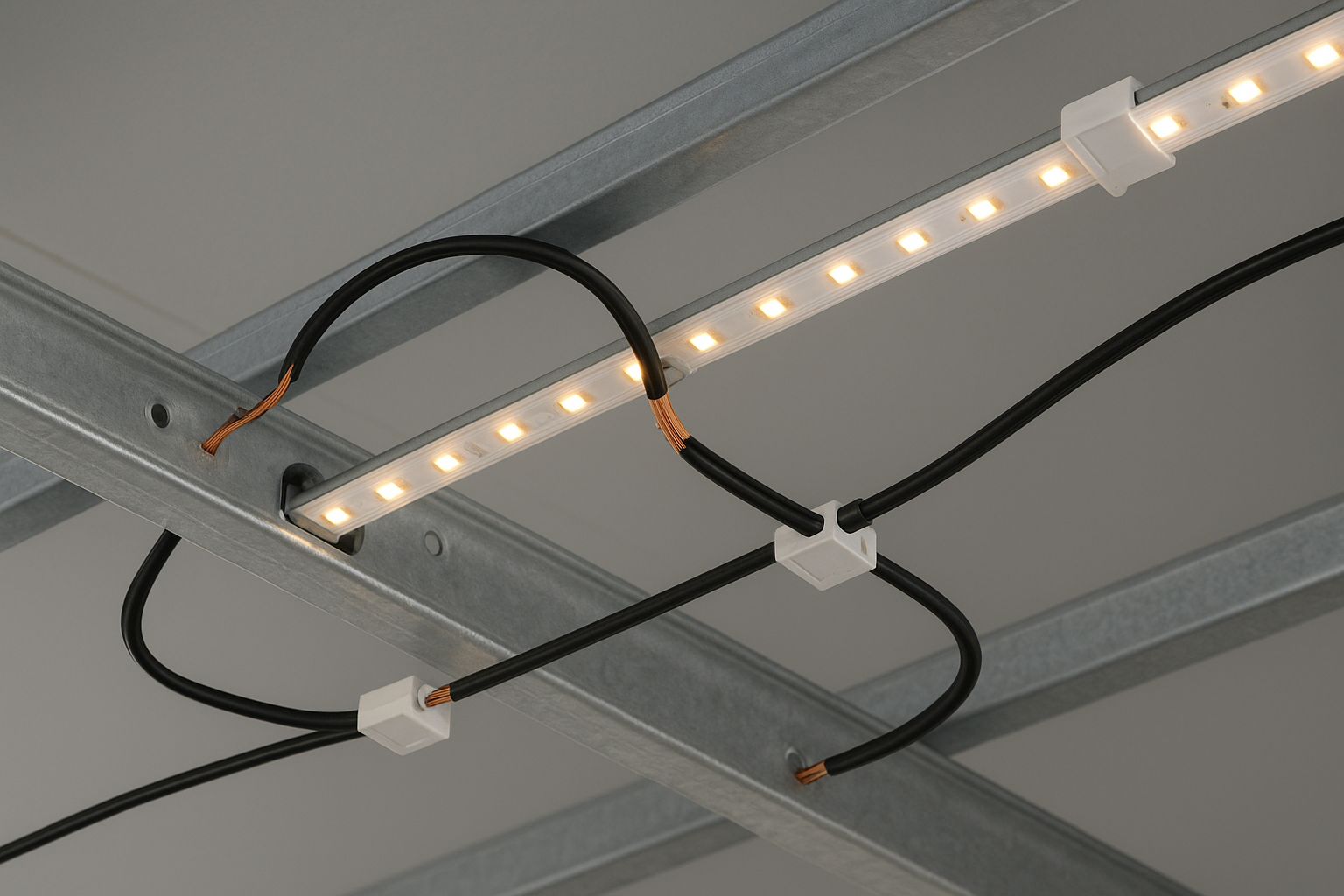
Long runs create two recurring problems: voltage drop and brightness inconsistency. In a typical constant-voltage strip, the LEDs along the run rely on the same supply voltage being available through the copper conductors. As current travels farther, resistance causes voltage to drop, and the far end becomes dimmer.
That is why standard CV strip systems usually require:
- shorter run lengths
- feed from both ends
- intermediate power injection
- higher supply voltage choices such as 24V or 48V
These methods work, but they add wiring, planning, and labor.
What Constant Voltage LED Strips Are
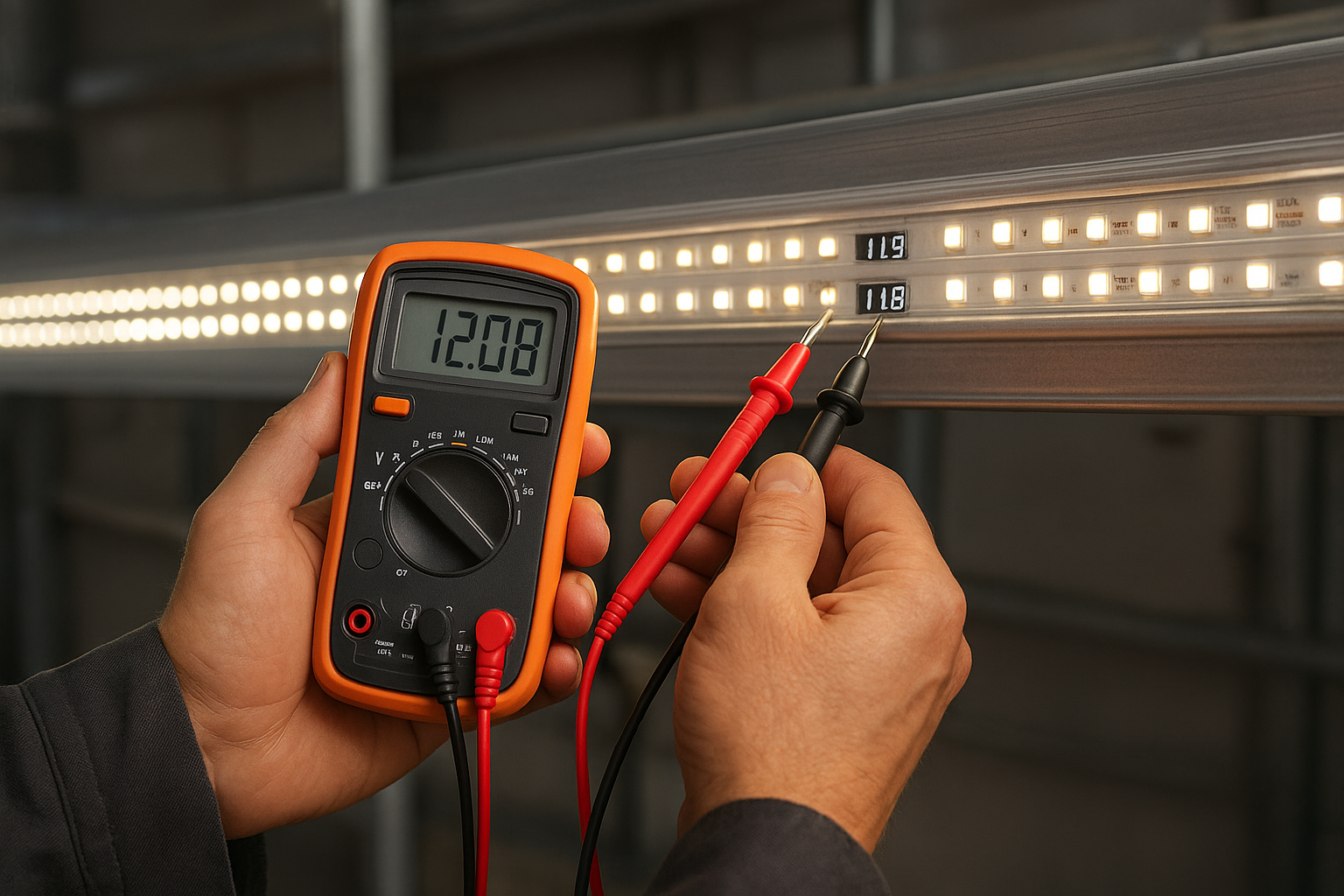
Constant-voltage LED strips are the most common type on the market. Typical system voltages are 12V, 24V, and sometimes 48V. They are designed to operate from a fixed-voltage driver, while current is managed by circuit design and resistor groupings on the strip.
Why CV strips remain popular:
- broad product availability
- straightforward driver selection
- wide compatibility with common dimmers and controls
- lower upfront product cost in many cases
CV strips are practical and widely used, but they are not automatically the best solution when the project requires very long, visually continuous runs.
What Constant Current LED Strips Are
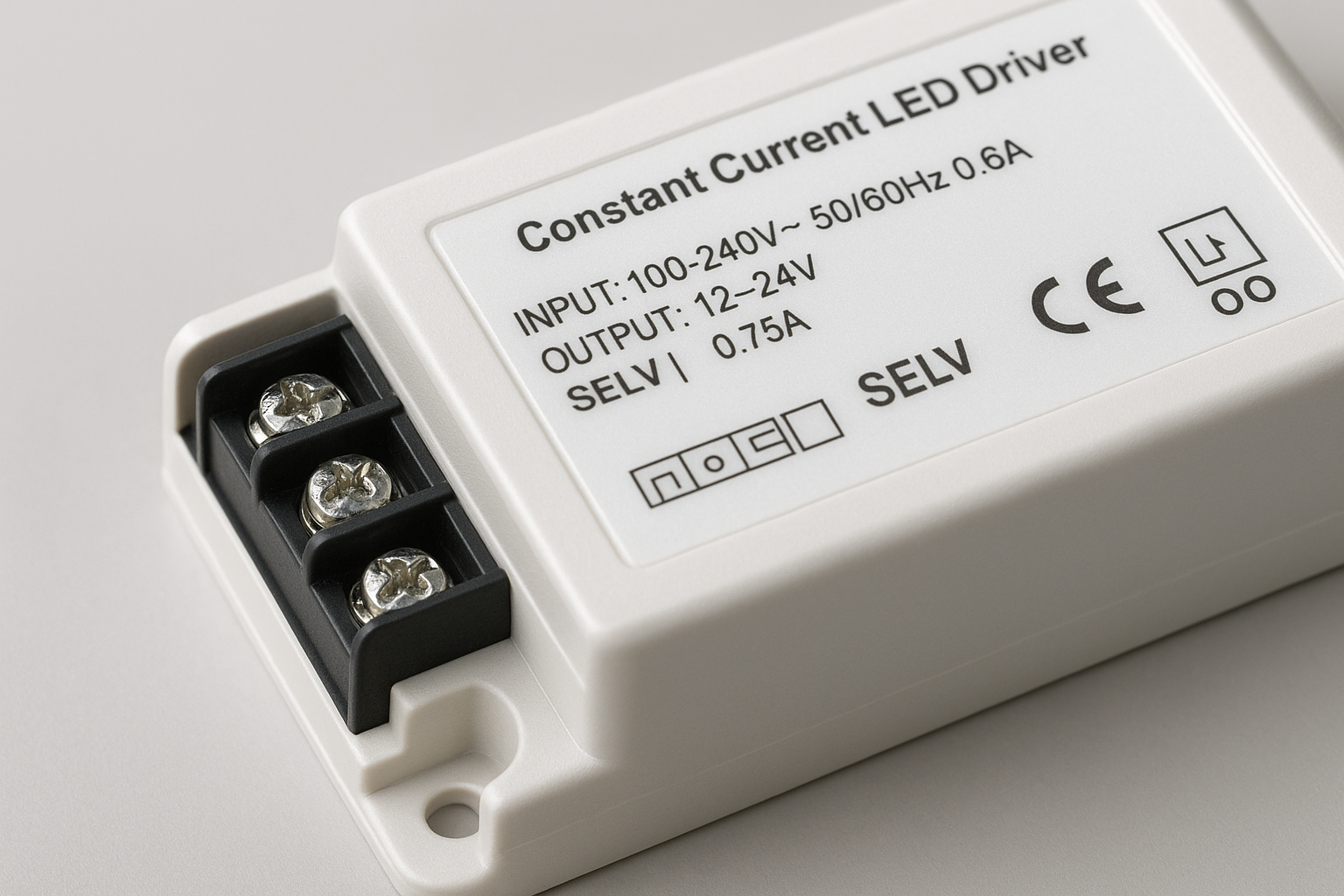
Constant-current LED strip systems are designed so the current through the LEDs is regulated more actively along the strip. Depending on product design, they may use integrated current-balancing components or segmented control architecture to maintain more uniform output across longer distances.
In practical project terms, CC strips are built to reduce the visible brightness drop that becomes common in long CV runs.
The benefit is not that electrical laws disappear. The benefit is that the strip design compensates more effectively, allowing longer continuous runs before visible inconsistency becomes unacceptable.
Why CC Strips Perform Better in Ultra-Long Runs
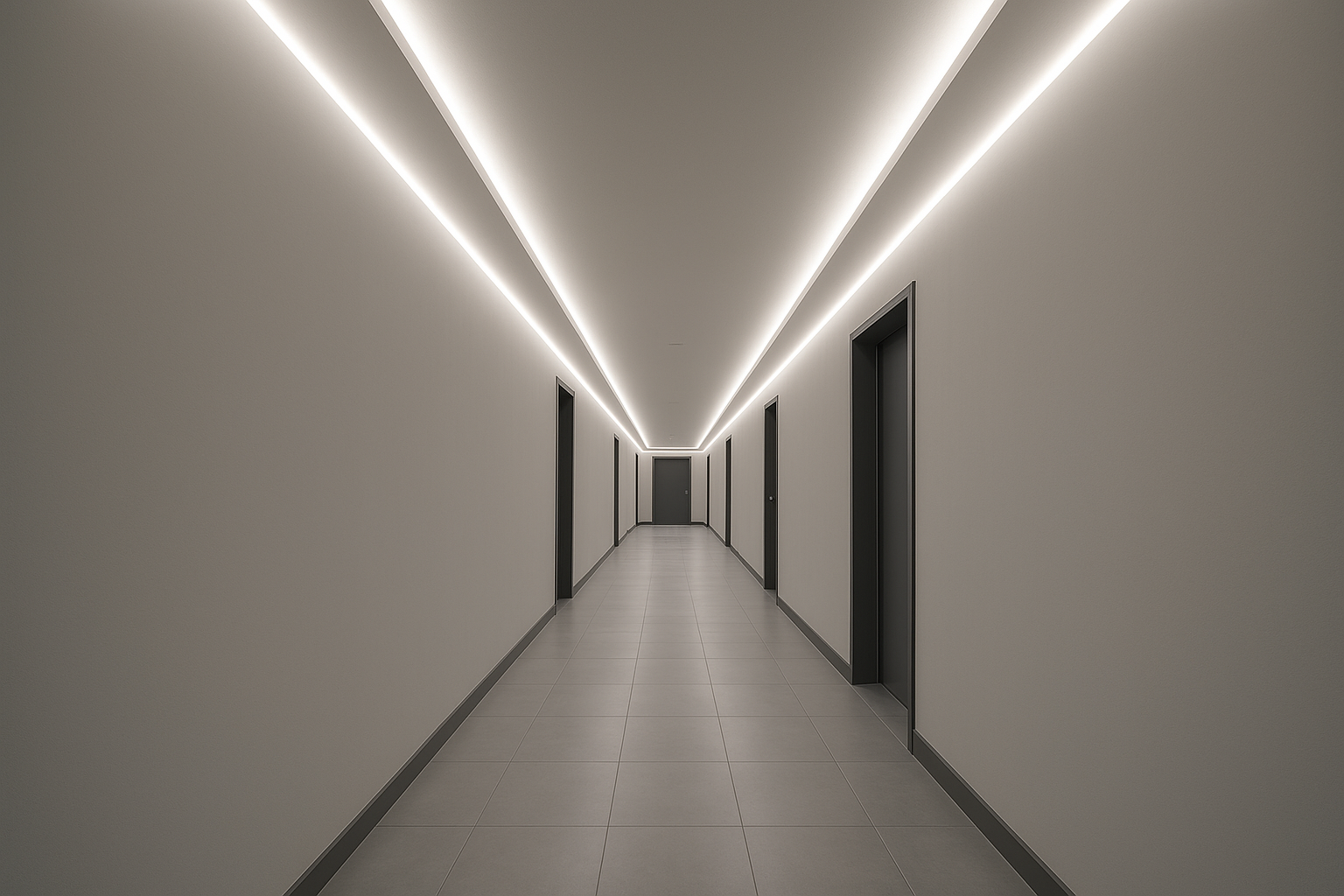
The strongest argument for CC strips is output uniformity across distance. Where a CV strip may start showing noticeable end-to-end variation after a limited run length, a CC strip can often maintain much more consistent brightness over substantially longer sections.
That can reduce the need for:
- extra injection points
- hidden feed cables
- split runs in sensitive architectural details
- rework caused by visible dimming
In applications such as long corridors, uninterrupted cove lighting, or façade outlines, that cleaner system design can be a major project advantage.
Where CV Still Makes More Sense
CC is not automatically the right answer for every job. CV systems still make sense when:
- runs are short to moderate
- driver and control compatibility must stay simple
- replacement parts need to be widely available
- budget sensitivity outweighs long-run optimization
- installers are already working with a proven CV platform
For many standard projects, a well-designed 24V or 48V CV system with proper power injection remains completely appropriate.
Specification Questions Buyers Should Ask Before Choosing CC or CV
Before approving the strip type, buyers should ask:
- What is the maximum continuous run length with acceptable uniformity?
- At what dimming level was that run length validated?
- Does the strip require a special driver or control method?
- How does the supplier define acceptable end-to-end variation?
- What happens if replacement material is needed later?
These questions matter because some marketing claims about long runs look impressive until the system is assessed under real project conditions.
FAQ
Are constant-current LED strips better for long runs?
In many cases, yes. They are specifically designed to maintain more consistent output across longer distances than standard constant-voltage strips.
Do CC strips eliminate voltage drop completely?
No. They reduce the visible effect through circuit design, but they do not remove the underlying electrical realities of long conductor runs.
Are CV strips still suitable for commercial projects?
Absolutely. CV strips remain the mainstream choice and work very well when run lengths, injection strategy, and system voltage are specified properly.
Is 48V CV better than 24V CV for long runs?
Generally yes, because higher voltage reduces current for the same wattage and improves run-length performance. That said, CC systems may still outperform CV when uniformity is the top priority.
Do CC strips cost more?
Often they do at product level, but they may reduce installation complexity and visible-performance risk in long-run applications.
Conclusion
The secret to ultra-long runs is not one single product category. It is choosing the electrical approach that best matches the run length, output expectations, and installation constraints of the project.
Constant-voltage strips remain practical and widely useful, especially in well-planned 24V and 48V systems. But when the design depends on long continuous lines with minimal visible brightness shift, constant-current strips deserve serious attention. In those cases, they can reduce wiring complexity and improve visual results in ways a standard CV strip may struggle to match.
Related: How to Calculate Voltage Drop in LED Strip Lighting Runs | How to Specify LED Strip Lighting for a Commercial Office Project
External References
- U.S. Department of Energy — LED Lighting
- Illuminating Engineering Society (IES)
- LEDs Magazine — Industry Technical Resource
- DesignLights Consortium (DLC)
- LightingEurope
Recommended Products
Request a Project or Trade Quote
Sourcing for an installation project, resale or OEM production? Share your requirements below. You can discuss project samples before committing to a bulk order.
Related Articles

LED Strip Lighting After a Power Outage: Designing a Reliable Restart
Plan LED strip power restoration beyond total watts. Review driver inrush, switching limits, restart scenes, and commissioning before project handover.

Why LED Strip Lights Buzz When Dimmed: A Guide for Quiet Spaces
Diagnose LED strip buzzing without guessing. Review drivers, PWM controls, mounting resonance, and low-level acoustic acceptance for quiet interiors.

LED Strip Lighting for Modular Retail Shelves: Design for Reconfiguration
Specify modular shelf lighting beyond driver wattage. Check shared-feed current, connector durability, cable movement, controls, and approved configurations.